


An-Lun Huang
Artist Info
Role:ComposerGenre:ConcertoAn-Lun Huang is a Chinese-Canadian composer who has made significant contributions to the world of classical music. Born on July 14, 1949, in Chongqing, China, Huang grew up in a family of musicians. His father was a composer and conductor, and his mother was a pianist. Huang began playing the piano at the age of four and showed a natural talent for music. Huang's family moved to Taiwan when he was nine years old, and he continued his music education there. He studied piano with Ching-Yun Hu and composition with Chou Wen-Chung. In 1968, Huang won first prize in the Taiwan National Piano Competition, which helped launch his career as a musician. In 1972, Huang moved to the United States to study at the Juilliard School in New York City. He studied piano with Rosina Lhevinne and composition with Vincent Persichetti. Huang's time at Juilliard was a formative period in his career, and he developed a unique style that blended Western classical music with Chinese folk music. Huang's early compositions were heavily influenced by Chinese folk music. His first major work, the Piano Concerto No. 1, was premiered in 1975 and featured traditional Chinese instruments such as the erhu and pipa. The concerto was well-received and helped establish Huang as a rising star in the classical music world. In the 1980s, Huang began to incorporate more Western classical music elements into his compositions. His Symphony No. 1, which premiered in 1982, was a fusion of Chinese and Western musical traditions. The symphony was praised for its innovative use of orchestration and its ability to seamlessly blend different musical styles. Huang's music has been performed by some of the world's leading orchestras, including the New York Philharmonic, the Boston Symphony Orchestra, and the London Symphony Orchestra. He has also collaborated with many renowned musicians, including Yo-Yo Ma, Lang Lang, and Sarah Chang. One of Huang's most famous works is the Piano Concerto No. 2, which was premiered in 1985. The concerto is a virtuosic showcase for the soloist and features a wide range of musical styles, including Chinese folk music, jazz, and classical music. The concerto has been performed by many of the world's leading pianists, including Lang Lang and Yundi Li. Huang's music has been recognized with numerous awards and honors. In 1987, he was awarded the National Endowment for the Arts Composer Fellowship, and in 1991, he was awarded the Guggenheim Fellowship. In 2002, he was awarded the Order of Canada, one of the country's highest honors. Huang has continued to compose music throughout his career, and his recent works have explored new musical territories. His Symphony No. 5, which premiered in 2015, is a tribute to the victims of the 2011 earthquake and tsunami in Japan. The symphony features a hauntingly beautiful melody that is repeated throughout the work, creating a sense of unity and hope in the face of tragedy. Huang's music has had a profound impact on the world of classical music. His unique blend of Chinese and Western musical traditions has inspired many composers and musicians, and his innovative use of orchestration and musical styles has pushed the boundaries of classical music. Huang's legacy as a composer and musician will continue to inspire future generations of musicians and music lovers.More....
Recent Artist Music
2
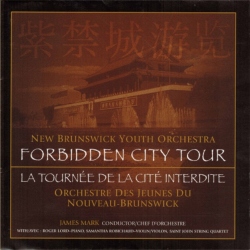
Saibei Suite No. 2 & orchestra
Saibei Dance, Suite No. 2, Op. 21 / Danse Saibei, suite no. 2, op. 21
4:38
Copyright Ⓒ 2013 Davinci Finger. All rights reseved
Service Terms & Policy