


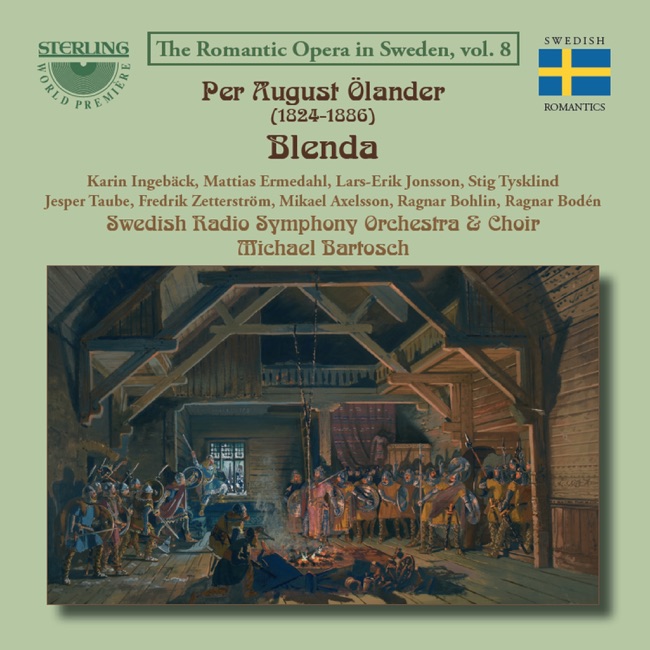
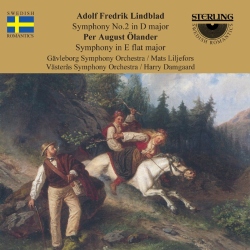
Per August Ölander
Released Album
Opera
-
 May 3, 2019
Artist Info
Role:ComposerPer August Ölander was a Swedish composer born on August 28, 1860, in the town of Växjö. He was the son of a music teacher and grew up in a musical family. His father, August Ölander, was a well-known music teacher and composer in the region, and his mother, Maria Ölander, was a singer. Ölander showed an early interest in music and began studying the piano and violin at a young age. He also showed a talent for composition and began writing his own music as a teenager. In 1878, he moved to Stockholm to study at the Royal College of Music, where he studied composition with Johan Lindegren and piano with Richard Andersson. After completing his studies, Ölander worked as a music teacher and composer in Stockholm. He also became involved in the city's musical life, performing as a pianist and conductor and writing music for various ensembles and orchestras. In 1892, he was appointed as the conductor of the Stockholm Philharmonic Society, a position he held for several years. Ölander's music was influenced by the Romantic composers of his time, particularly Johannes Brahms and Richard Wagner. His compositions were characterized by their lyrical melodies, rich harmonies, and expressive use of orchestration. He wrote music in a variety of genres, including symphonies, chamber music, and songs. One of Ölander's most famous works is his Symphony No. 1 in C minor, which he composed in 1895. The symphony is a large-scale work that showcases Ölander's skill as a composer. It is characterized by its dramatic opening, lush harmonies, and sweeping melodies. The symphony was well-received by audiences and critics alike and helped establish Ölander as one of Sweden's leading composers. Ölander also wrote a number of chamber music works, including several string quartets and a piano trio. His String Quartet No. 1 in D minor, composed in 1889, is a particularly notable work. It is a lyrical and expressive piece that showcases Ölander's skill at writing for string instruments. In addition to his instrumental music, Ölander also wrote a number of songs. His songs were often set to Swedish poetry and were characterized by their simple, yet expressive melodies. One of his most famous songs is "Tonerna," which was set to a poem by Carl Snoilsky. The song became a popular hit and is still performed today. Ölander continued to compose throughout his life, but his output slowed in his later years. He died on December 23, 1939, in Stockholm, at the age of 79. Despite his relatively small output, Ölander is remembered as one of Sweden's most important composers of the late 19th and early 20th centuries. His music continues to be performed and recorded today, and his legacy as a composer and teacher lives on.More....
Recent Artist Music
Copyright Ⓒ 2013 Davinci Finger. All rights reseved
Service Terms & Policy