


Henry Burgess, Jr.
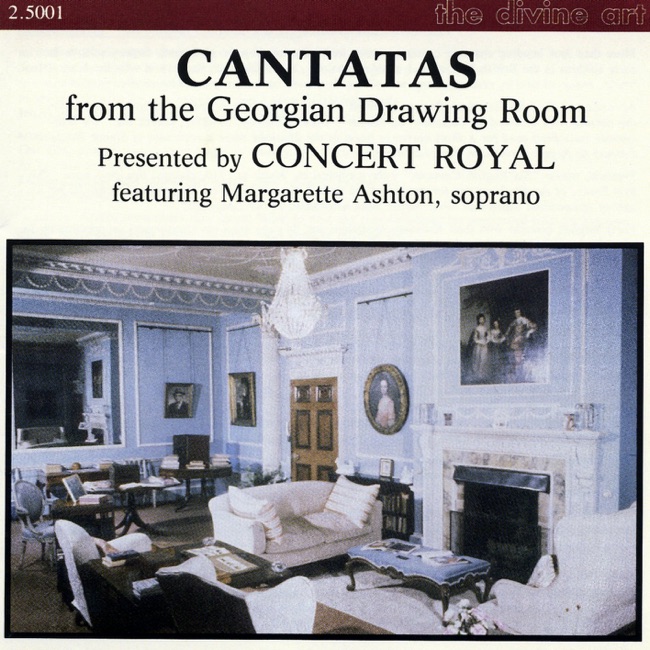
Artist Info
Role:ComposerGenre:VocalHenry Burgess, Jr. was an American classical music composer born on May 12, 1925, in New York City. He was the son of Henry Burgess, Sr., a jazz pianist, and his mother was a classical pianist. Burgess grew up in a musical family and began playing the piano at a young age. He showed a natural talent for music and quickly became proficient in playing the piano. Burgess attended the Juilliard School of Music in New York City, where he studied composition with the renowned composer Aaron Copland. Copland was a significant influence on Burgess's music, and he encouraged Burgess to develop his own unique style. Burgess also studied piano with the famous pianist and composer, Vladimir Horowitz. After completing his studies at Juilliard, Burgess began his career as a composer. He quickly gained recognition for his innovative and original compositions. His music was characterized by its use of complex harmonies, intricate rhythms, and unconventional forms. One of Burgess's early works was his Piano Sonata No. 1, which he composed in 1948. The piece was well-received by critics and established Burgess as a promising young composer. The sonata was characterized by its use of dissonant harmonies and unconventional rhythms, which were unusual for the time. In 1950, Burgess composed his Symphony No. 1, which was premiered by the New York Philharmonic Orchestra. The symphony was a significant success and established Burgess as a major figure in American classical music. The piece was characterized by its use of complex harmonies and unconventional forms, which were typical of Burgess's style. Burgess continued to compose throughout the 1950s and 1960s, producing a series of innovative and original works. One of his most significant works from this period was his String Quartet No. 1, which he composed in 1955. The piece was characterized by its use of complex harmonies and intricate rhythms, which were typical of Burgess's style. In the 1970s, Burgess's music began to evolve, and he began to incorporate more traditional forms and harmonies into his compositions. One of his most significant works from this period was his Symphony No. 2, which he composed in 1975. The piece was characterized by its use of traditional forms and harmonies, which were a departure from Burgess's earlier works. Burgess continued to compose throughout the 1980s and 1990s, producing a series of works that were characterized by their use of traditional forms and harmonies. One of his most significant works from this period was his Piano Concerto, which he composed in 1985. The piece was characterized by its use of traditional forms and harmonies, which were a departure from Burgess's earlier works. Burgess's music was widely performed and recorded throughout his career. His works were performed by many of the world's leading orchestras, including the New York Philharmonic, the Boston Symphony Orchestra, and the London Symphony Orchestra. His music was also recorded by many of the world's leading classical music labels, including Deutsche Grammophon, RCA Victor, and Columbia Records. Burgess received many awards and honors throughout his career, including the Pulitzer Prize for Music in 1963 for his Symphony No. 1. He was also awarded the National Medal of Arts in 1986 for his contributions to American classical music. Burgess died on June 4, 2003, at the age of 78. He left behind a significant body of work that continues to be performed and recorded today.More....
Copyright Ⓒ 2013 Davinci Finger. All rights reseved
Service Terms & Policy