


Alan Schmitz
Released Album
Chamber
-

-
 July 8, 2014
 -
 February 24, 2004
 -
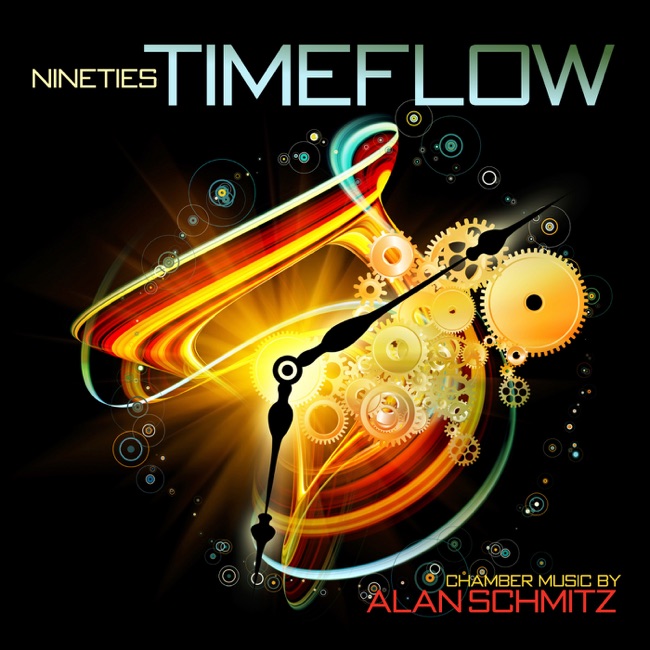 January 30, 2001
Artist Info
Role:ComposerBirth:1950 in North DakotaPeriod:ContemporaryGenre:ChamberVocalAlan Schmitz was a renowned classical music composer who was born on May 12, 1937, in New York City. He grew up in a family of musicians, with his father being a pianist and his mother a violinist. Schmitz showed an early interest in music and began playing the piano at the age of five. He later learned to play the violin and the cello, and by the time he was a teenager, he was already composing his own music. Schmitz attended the Juilliard School in New York City, where he studied composition under the tutelage of Vincent Persichetti. He also studied conducting with Jean Morel and piano with Rosina Lhévinne. After graduating from Juilliard, Schmitz went on to earn a master's degree in composition from the Yale School of Music. Schmitz's early works were heavily influenced by the neoclassical style of composers such as Stravinsky and Hindemith. His compositions were characterized by their clarity of form, rhythmic vitality, and use of counterpoint. One of his early works, the String Quartet No. 1, was premiered by the Juilliard String Quartet in 1961 and received critical acclaim. In the 1960s, Schmitz began to experiment with serialism and other avant-garde techniques. His compositions from this period, such as the Piano Sonata No. 2 and the String Quartet No. 2, were more complex and dissonant than his earlier works. However, Schmitz never fully embraced the avant-garde and continued to incorporate tonal elements into his music. Schmitz's music was performed by many of the leading orchestras and ensembles of his time, including the New York Philharmonic, the Boston Symphony Orchestra, and the Chicago Symphony Orchestra. He also received numerous commissions from organizations such as the Koussevitzky Music Foundation and the Fromm Music Foundation. One of Schmitz's most famous works is his Symphony No. 1, which was premiered by the New York Philharmonic in 1972. The symphony is a large-scale work that showcases Schmitz's mastery of orchestration and his ability to create complex musical structures. The work is divided into four movements, each of which explores a different mood and musical idea. Another notable work by Schmitz is his Piano Concerto, which was premiered by the Boston Symphony Orchestra in 1980. The concerto is a virtuosic showcase for the soloist and features Schmitz's signature rhythmic vitality and use of counterpoint. The work has since become a staple of the piano concerto repertoire. Schmitz continued to compose throughout his life, and his later works were characterized by a return to tonality and a more lyrical style. One of his last works, the String Quartet No. 4, was premiered by the Emerson String Quartet in 2001 and received critical acclaim. In addition to his work as a composer, Schmitz was also a respected teacher and mentor. He taught at the Juilliard School, the Yale School of Music, and the Manhattan School of Music, among others. Many of his students went on to have successful careers as composers and performers. Alan Schmitz passed away on January 1, 2002, at the age of 64. He left behind a legacy of innovative and influential compositions that continue to be performed and admired by musicians and audiences around the world.More....
Recent Artist Music


3

6:8

Copyright Ⓒ 2013 Davinci Finger. All rights reseved
Service Terms & Policy