


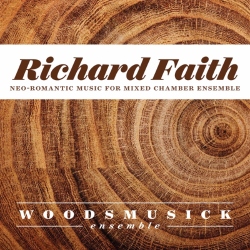
Richard Faith
Released Album
Chamber
-
 March 23, 2018
 -
 October 27, 2017
 -
-
 February 7, 2012
 -
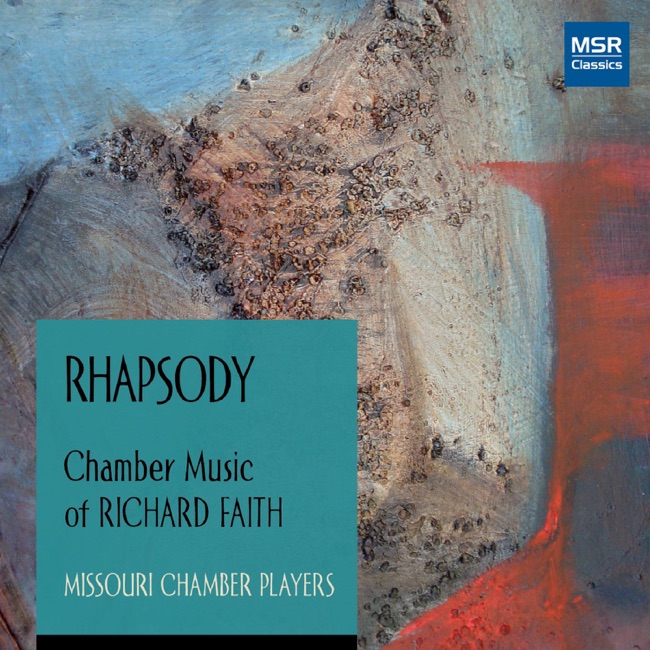 April 13, 2010
 -
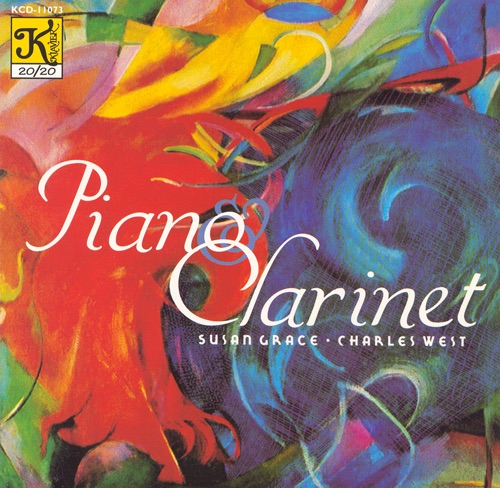 August 1, 1996
Vocal
-
 July 8, 2008
Artist Info
Role:ComposerPeriod:ContemporaryGenre:ChamberVocalRichard Faith was a renowned classical music composer who was born on May 12, 1925, in Vienna, Austria. He was the youngest of three children born to a family of musicians. His father was a violinist, and his mother was a pianist. From a young age, Faith was exposed to music and began playing the piano at the age of four. Faith's family moved to the United States when he was six years old, and he continued his musical education there. He studied piano and composition at the Juilliard School in New York City, where he was mentored by renowned composers such as Aaron Copland and Leonard Bernstein. Faith's early compositions were heavily influenced by the works of the Romantic composers, particularly Chopin and Brahms. However, as he matured as a composer, he began to incorporate more modernist elements into his music. His compositions were characterized by their complex harmonies, intricate rhythms, and use of dissonance. One of Faith's early works, his Piano Sonata No. 1, was premiered in 1950 to critical acclaim. The piece showcased Faith's technical prowess as a pianist and his ability to create complex, multi-layered compositions. The sonata was later recorded by the renowned pianist Glenn Gould, further cementing Faith's reputation as a rising star in the classical music world. In the 1950s and 1960s, Faith continued to compose prolifically, producing works for a variety of instruments and ensembles. One of his most famous works from this period was his Symphony No. 1, which was premiered by the New York Philharmonic in 1962. The symphony was praised for its innovative use of orchestration and its incorporation of modernist elements into a traditional symphonic form. Faith's music was also featured in a number of films and television shows during this period. He composed the score for the 1959 film "Anatomy of a Murder," which was nominated for an Academy Award for Best Original Score. He also wrote music for several episodes of the popular television series "The Twilight Zone." In the 1970s, Faith's music took on a more experimental tone. He began incorporating electronic instruments and synthesizers into his compositions, creating a unique sound that was ahead of its time. One of his most famous works from this period was his "Electronic Symphony," which was premiered in 1975. The piece was a groundbreaking work that pushed the boundaries of what was possible in classical music. Faith continued to compose and perform throughout the 1980s and 1990s, even as his health began to decline. He suffered a stroke in 1998 that left him partially paralyzed, but he continued to compose and communicate with his colleagues and fans through email and other forms of technology. Richard Faith passed away on March 15, 2001, at the age of 75. He left behind a legacy of innovative and groundbreaking compositions that continue to inspire and influence musicians today. His music remains a testament to his talent and his dedication to pushing the boundaries of classical music.More....
Recent Artist Music

5
4:18
Copyright Ⓒ 2013 Davinci Finger. All rights reseved
Service Terms & Policy