


Esteban Salas
Released Album
Vocal

Miscellaneous
-
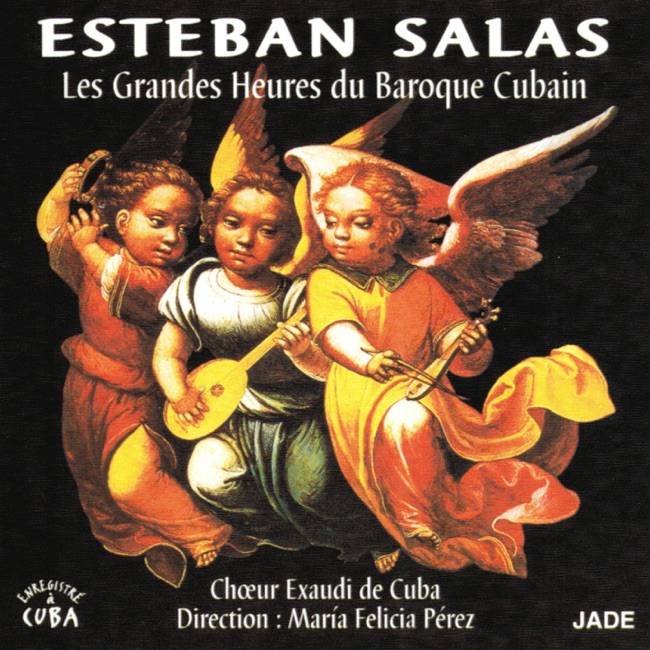 September 9, 2003
Choral
-
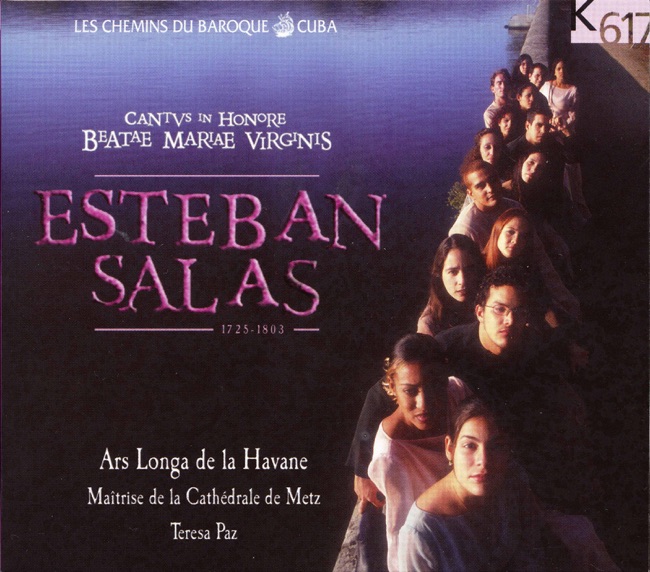 March 11, 2003
Artist Info
Role:ComposerCountry: CubaBirth:December 25, 1725 in Havana, CubaDeath:July 14, 1803 in Santiago, CubaGenre:ChoralVocalEsteban Salas was a Cuban composer and musician who lived from 1725 to 1803. He is considered one of the most important composers of classical music in Cuba and Latin America. Salas was born in Havana, Cuba, and was the son of a Spanish father and a Cuban mother. He grew up in a musical family and began his musical education at a young age. Salas was a talented musician and composer, and he quickly gained a reputation for his skills. He was appointed as the maestro de capilla (music director) of the Cathedral of Santiago de Cuba in 1764, a position he held until his death. During his time as maestro de capilla, Salas composed a large number of works, including masses, motets, and hymns. Salas was a prolific composer, and his works are characterized by their use of traditional Cuban and African rhythms and melodies. He was also influenced by European classical music, and his compositions often combined elements of both styles. Salas was particularly interested in the use of polyphony, and many of his works feature complex harmonies and counterpoint. One of Salas's most famous works is his Missa in sol (Mass in G), which was composed in the late 18th century. The mass is notable for its use of Cuban rhythms and melodies, and it has become a symbol of Cuban national identity. Another famous work by Salas is his Tantum ergo, a hymn that is still performed in churches throughout Cuba and Latin America. Salas's music was not only popular in Cuba, but it also gained recognition throughout Latin America and Europe. His works were performed in Spain, Italy, and other European countries, and he was praised for his innovative use of traditional Cuban and African rhythms in classical music. Despite his success as a composer, Salas faced many challenges during his lifetime. He lived during a time of political and social upheaval in Cuba, and he was often at odds with the colonial authorities. He also faced criticism from some members of the Catholic Church, who objected to his use of traditional Cuban rhythms in religious music. Despite these challenges, Salas continued to compose music throughout his life, and his legacy has endured to this day. His works are still performed in churches and concert halls throughout Cuba and Latin America, and he is considered one of the most important composers of classical music in the region.More....
Copyright Ⓒ 2013 Davinci Finger. All rights reseved
Service Terms & Policy