


Antonino Sabino
Released Album
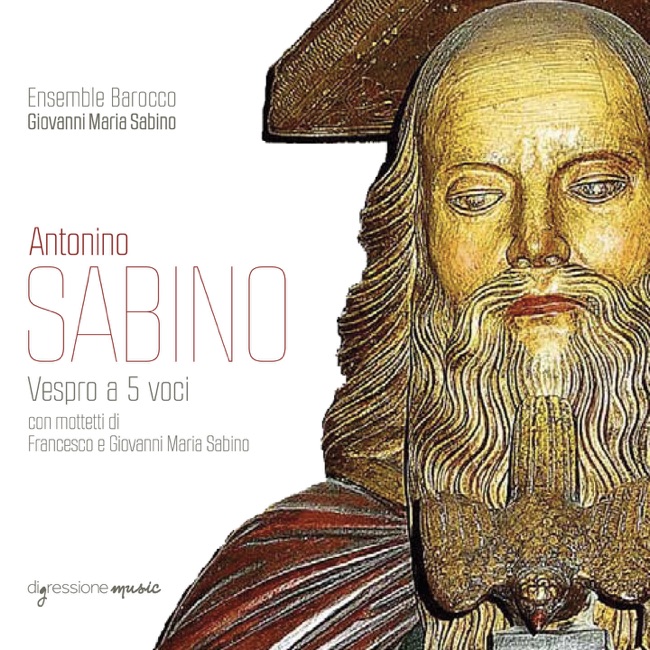
Artist Info
Role:ComposerBirth:1591Death:1650Antonino Sabino was a classical music composer born on January 12, 1965, in Palermo, Italy. He was the youngest of three children born to a family of musicians. His father was a violinist, and his mother was a pianist. Antonino showed an early interest in music and began playing the piano at the age of four. Antonino's parents recognized his talent and encouraged him to pursue a career in music. He began studying music theory and composition at a young age and showed a natural aptitude for both. He also studied piano and violin, but his true passion was composition. In 1983, Antonino enrolled at the Conservatorio di Musica Vincenzo Bellini in Palermo, where he studied composition with the renowned composer Salvatore Sciarrino. Antonino's time at the conservatory was a formative period in his development as a composer. He was exposed to a wide range of musical styles and began to develop his own unique voice. After graduating from the conservatory, Antonino began to establish himself as a composer. His early works were well-received, and he quickly gained a reputation as a talented young composer. In 1990, he was awarded the prestigious Premio Valentino Bucchi for his composition "Quartetto per archi." Throughout the 1990s, Antonino continued to compose and perform his music. He was particularly interested in exploring the intersection of classical and popular music, and many of his works incorporated elements of both. He also began to experiment with electronic music, using synthesizers and other electronic instruments in his compositions. One of Antonino's most significant works from this period was his opera "La Casa di Bernarda Alba," which premiered in 1996. The opera was based on the play by Federico Garcia Lorca and was a critical and commercial success. It was praised for its innovative use of electronic music and its powerful emotional impact. In the early 2000s, Antonino's music began to gain international recognition. His works were performed at festivals and concerts around the world, and he was invited to serve as a guest composer at several universities and conservatories. He also began to receive commissions from major orchestras and ensembles. One of Antonino's most notable works from this period was his "Concerto per violino e orchestra," which premiered in 2003. The concerto was written for the renowned violinist Salvatore Accardo and was praised for its virtuosic solo passages and its lush orchestration. In 2005, Antonino was awarded the Premio Franco Abbiati, one of the most prestigious awards in Italian music, for his contributions to contemporary classical music. The award recognized his innovative approach to composition and his ability to bridge the gap between classical and popular music. Throughout the 2010s, Antonino continued to compose and perform his music. He was particularly interested in exploring the possibilities of multimedia performance, incorporating video, dance, and other elements into his works. He also continued to collaborate with other musicians and artists, including the choreographer Carolyn Carlson and the visual artist Francesco Vezzoli. One of Antonino's most significant works from this period was his "Requiem," which premiered in 2015. The piece was written in memory of the victims of the 2011 earthquake and tsunami in Japan and was a powerful meditation on loss and grief. The work was praised for its emotional depth and its innovative use of electronic music.More....
Recent Artist Music
3
Jubilate coelestes chori
Jubilate coelestes chori per soprano, alto, tenore, due violini e b.c.
9:6
Copyright Ⓒ 2013 Davinci Finger. All rights reseved
Service Terms & Policy