


Ricardo Lamote de Grignon y Ribas
Released Album
Chamber
-
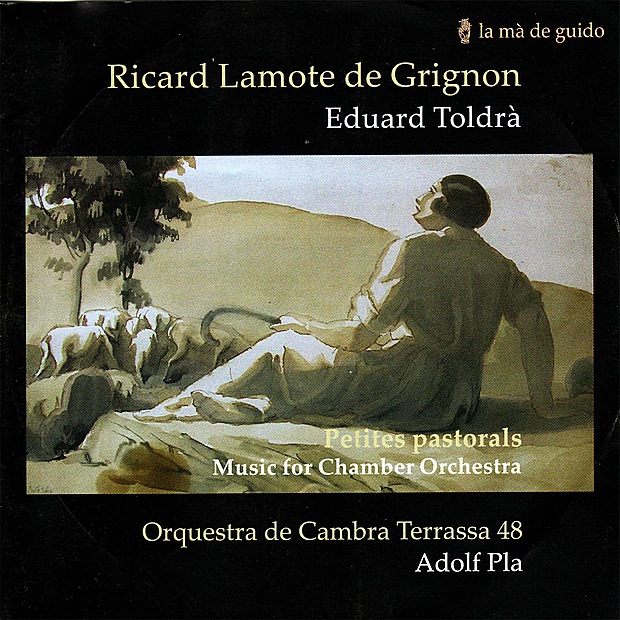 August 11, 2009
 -
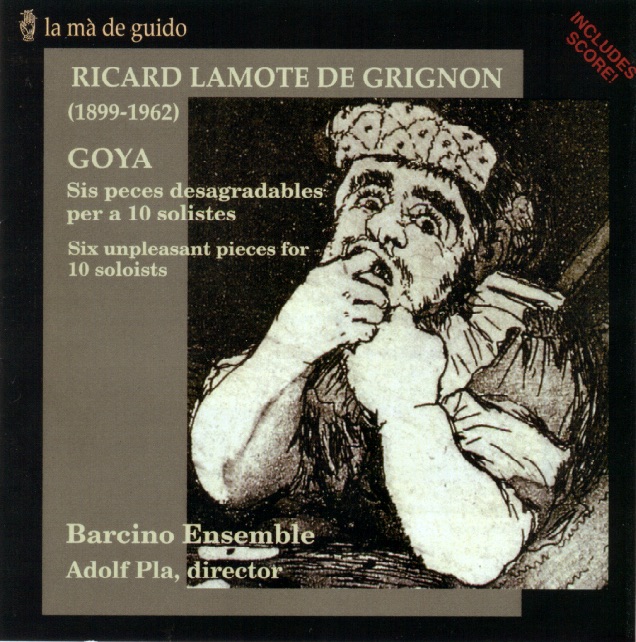
Vocal
-
 April 8, 2014
Opera
-
 May 10, 2011
Keyboard
-
 October 30, 2007
Artist Info
Role:Composer ConductorCountry: SpainBirth:September 23, 1899 in Barcelona, SpainDeath:February 5, 1962 in Barcelona, SpainPeriod:ModernGenre:ChamberRicardo Lamote de Grignon y Ribas was a Spanish composer, pianist, and conductor who was born on September 23, 1899, in Barcelona, Spain. He was born into a family of musicians, and his father, Ricardo Lamote de Grignon y Peris, was a renowned composer and conductor. From a young age, Lamote de Grignon showed a great interest in music, and he began studying piano and composition with his father. Lamote de Grignon's musical education continued at the Barcelona Conservatory, where he studied piano with Frank Marshall and composition with Felip Pedrell. He also studied harmony and counterpoint with Enric Granados, who was one of the most important Spanish composers of the time. Granados had a significant influence on Lamote de Grignon's musical style, and he encouraged him to explore the traditional Catalan music that was so important to the cultural identity of Catalonia. In 1918, Lamote de Grignon made his debut as a pianist, performing a recital of his own compositions at the Ateneu Barcelonès. He continued to perform as a pianist throughout his career, and he was known for his virtuosic technique and expressive playing. However, Lamote de Grignon's true passion was composition, and he went on to write a significant body of work that included orchestral music, chamber music, vocal music, and operas. One of Lamote de Grignon's most significant works is his opera "El retablo de Maese Pedro," which is based on a story from Cervantes' "Don Quixote." The opera was premiered in 1923 and was an immediate success, receiving critical acclaim for its innovative use of traditional Spanish music and its modernist approach to opera. The opera was later performed in Paris, where it was praised by the French composer Maurice Ravel, who called it "a masterpiece of Spanish music." Lamote de Grignon's other operas include "La sirena," which was premiered in 1928, and "El mozo de mulas," which was premiered in 1935. Both operas were well-received, but they did not achieve the same level of success as "El retablo de Maese Pedro." Lamote de Grignon also wrote a significant amount of vocal music, including songs, choral works, and cantatas. His "Cantata de la Paz" was premiered in 1937 and was dedicated to the victims of the Spanish Civil War. In addition to his vocal music, Lamote de Grignon wrote a significant amount of instrumental music, including orchestral works, chamber music, and solo piano music. His orchestral works include his "Sinfonía en si bemol mayor," which was premiered in 1925, and his "Concierto para piano y orquesta," which was premiered in 1933. His chamber music includes his "Cuarteto de cuerda en sol mayor," which was premiered in 1921, and his "Sonata para violín y piano," which was premiered in 1923. Lamote de Grignon's music is characterized by its use of traditional Spanish music, particularly the music of Catalonia. He was deeply influenced by the folk music of his homeland, and he incorporated elements of Catalan music into his compositions. However, his music also reflects his modernist sensibilities, and he was known for his innovative approach to harmony, rhythm, and form. Despite his significant contributions to Spanish music, Lamote de Grignon's career was interrupted by the Spanish Civil War. He was a supporter of the Republican government, and he was forced to flee Spain in 1939 when General Franco's forces took control of the country.More....
Recent Artist Music
1
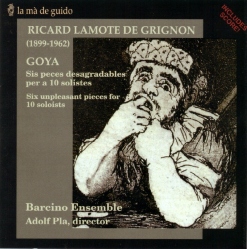
4:27
3
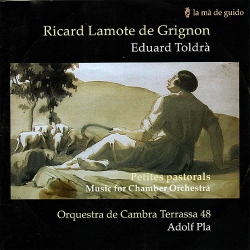
2:35

Copyright Ⓒ 2013 Davinci Finger. All rights reseved
Service Terms & Policy