


Nicolas de la Grotte
Artist Info
Role:ComposerGenre:VocalNicolas de la Grotte was a French composer of the Baroque era, born in Paris in 1674. He was the son of a musician and grew up in a musical family, which likely influenced his early interest in music. He began his musical education at a young age, studying with his father and other local musicians. As a young man, de la Grotte moved to Italy to further his musical studies. He spent several years in Rome, where he studied with some of the leading composers of the time, including Arcangelo Corelli and Alessandro Scarlatti. During this time, he also became familiar with the works of other Italian composers, such as Antonio Vivaldi and Giuseppe Tartini. After completing his studies in Italy, de la Grotte returned to France and began working as a composer and musician. He quickly gained a reputation for his skill as a composer, and his works were performed in some of the most prestigious venues in Paris. He also worked as a music teacher, and many of his students went on to become successful musicians in their own right. De la Grotte's music is characterized by its elegance and sophistication, as well as its use of intricate counterpoint and harmonies. He was particularly skilled at writing for string instruments, and many of his works feature complex and virtuosic violin parts. His music was also notable for its use of ornamentation and embellishment, which was a hallmark of the Baroque era. One of de la Grotte's most famous works is his Sonata in D Major for Violin and Continuo. This piece is a prime example of his skill as a composer, featuring a complex and intricate violin part that is both technically challenging and musically satisfying. The piece is also notable for its use of ornamentation and embellishment, which adds to its overall beauty and elegance. Another notable work by de la Grotte is his Suite in G Major for Harpsichord. This piece is a collection of dances, including a minuet, a gavotte, and a sarabande. The suite is notable for its use of intricate counterpoint and harmonies, as well as its elegant and refined melodies. De la Grotte's music was highly regarded during his lifetime, and he was considered one of the leading composers of his time. However, his music fell out of favor in the years following his death, and it was not until the 20th century that his works began to be rediscovered and performed again. Today, de la Grotte is recognized as one of the most important composers of the Baroque era, and his music continues to be performed and enjoyed by audiences around the world. His legacy as a composer and musician is a testament to his skill and dedication to his craft, and his works remain a vital part of the classical music canon.More....
Recent Artist Music
3
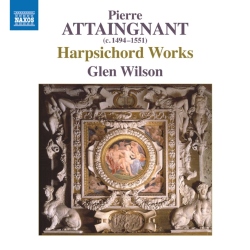
Fantasia a 4 sopra 'Anchor che col départe' (MSS of Jacques Cellier)
MSS of Jacques Cellier: Fantasia A 4 sopra Anchor che col partire
3:32
Copyright Ⓒ 2013 Davinci Finger. All rights reseved
Service Terms & Policy