


Julius Weissenborn
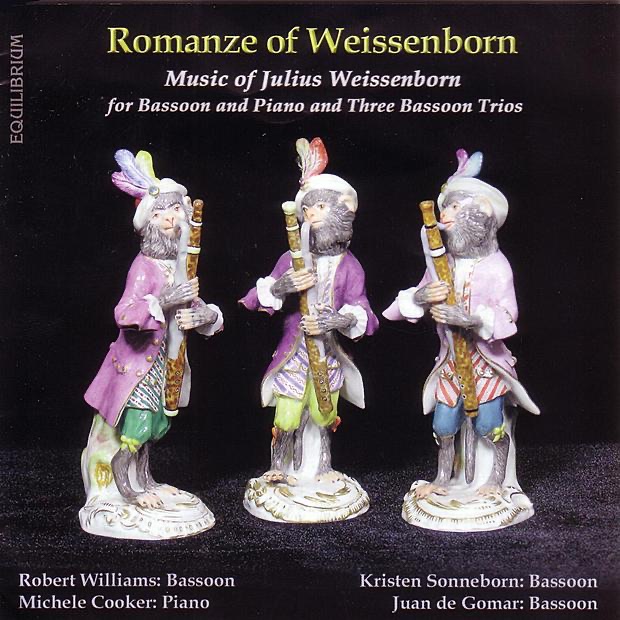
Artist Info
Role:ComposerCountry: GermanyBirth:April 13, 1837 in Friedrichs-TanneckDeath:April 21, 1888 in Leipzig, GermanyPeriod:RomanticGenre:ChamberJulius Weissenborn was a German composer and bassoonist who lived from 1837 to 1888. He was born in the town of Oldenburg, Germany, and showed an early interest in music. His father was a musician, and he began studying the piano and violin at a young age. However, it was the bassoon that captured his imagination, and he began studying the instrument seriously when he was 14 years old. Weissenborn's talent on the bassoon quickly became apparent, and he was soon performing in local orchestras. In 1855, he moved to Leipzig to study at the Leipzig Conservatory, where he studied with the renowned bassoonist and composer Carl Traugott Queisser. Weissenborn's time at the conservatory was a formative period in his life, and he developed a deep understanding of music theory and composition. After completing his studies, Weissenborn began performing as a bassoonist in various orchestras throughout Germany. He also began composing music for the bassoon, and his works quickly gained popularity among other bassoonists. In 1868, he was appointed as the principal bassoonist of the Gewandhaus Orchestra in Leipzig, one of the most prestigious orchestras in Europe at the time. Weissenborn's compositions for the bassoon are some of the most important works in the instrument's repertoire. His music is characterized by its technical demands and its lyrical beauty. He wrote a number of solo pieces for the bassoon, including two concertos, as well as chamber music and orchestral works that feature the bassoon prominently. One of Weissenborn's most famous works is his Bassoon Concerto in F major, Op. 8. The concerto is a virtuosic showcase for the bassoon, and it has become a staple of the bassoon repertoire. The piece is notable for its beautiful melodies and its technical demands, which require the bassoonist to play with great agility and precision. Weissenborn also wrote a number of other works for the bassoon, including his Bassoon Sonata in G major, Op. 34, and his Fantasie for Bassoon and Orchestra, Op. 26. These works are also highly regarded by bassoonists and are frequently performed today. In addition to his compositions for the bassoon, Weissenborn also wrote a number of other works, including chamber music and orchestral pieces. His String Quartet in G minor, Op. 4, is a particularly notable work, and it is considered one of the finest examples of German chamber music from the late 19th century. Weissenborn's music was highly regarded during his lifetime, and he was recognized as one of the leading composers for the bassoon. However, his music fell out of favor in the years following his death, and it was not until the mid-20th century that his works began to be rediscovered and performed again. Today, Weissenborn's music is once again appreciated by bassoonists and music lovers around the world. His compositions for the bassoon are considered some of the most important works in the instrument's repertoire, and his other works are also highly regarded. Weissenborn's legacy as a composer and bassoonist continues to be celebrated, and his music remains an important part of the classical music canon.More....
Recent Artist Music
Copyright Ⓒ 2013 Davinci Finger. All rights reseved
Service Terms & Policy