


Paul Crabtree
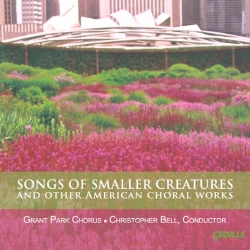
Released Album
Choral
-
 August 28, 2012
 -
Artist Info
Role:ComposerPaul Crabtree was a British composer born on May 14, 1953, in London, England. He grew up in a family of musicians, with his father being a professional violinist and his mother a pianist. From a young age, Crabtree showed a keen interest in music and began playing the piano at the age of five. He later learned to play the violin and the guitar. Crabtree attended the Royal Academy of Music in London, where he studied composition with Richard Rodney Bennett and piano with Gordon Green. He graduated with a Bachelor of Music degree in 1975 and went on to pursue a career as a composer. Crabtree's early works were influenced by the music of Benjamin Britten and Igor Stravinsky. His first major composition was a ballet score titled "The Tempest," which was commissioned by the Royal Ballet School in London in 1978. The ballet was well-received and helped establish Crabtree as a promising young composer. In the 1980s, Crabtree began to experiment with different musical styles and techniques. He became interested in the music of the Baroque period and began incorporating elements of Baroque music into his compositions. He also began to explore the use of electronic music and computer-generated sounds in his works. One of Crabtree's most notable works from this period is his "Concerto for Harpsichord and Strings," which was commissioned by the English Chamber Orchestra in 1985. The concerto is a fusion of Baroque and contemporary styles and features virtuosic solo passages for the harpsichord. In the 1990s, Crabtree continued to explore new musical styles and techniques. He became interested in the music of the Middle East and began incorporating Middle Eastern scales and rhythms into his compositions. He also began to experiment with microtonal music, which uses intervals smaller than the traditional Western twelve-tone scale. One of Crabtree's most significant works from this period is his "Concerto for Oud and Orchestra," which was commissioned by the BBC Symphony Orchestra in 1997. The concerto features the oud, a Middle Eastern stringed instrument, as the soloist and incorporates Middle Eastern scales and rhythms into the orchestral score. Crabtree's later works continued to push the boundaries of traditional classical music. He became interested in the music of India and began incorporating Indian classical music into his compositions. He also continued to experiment with microtonal music and electronic music. One of Crabtree's most recent works is his "Concerto for Sitar and Orchestra," which was commissioned by the London Symphony Orchestra in 2015. The concerto features the sitar, an Indian stringed instrument, as the soloist and incorporates Indian classical music into the orchestral score. Throughout his career, Crabtree received numerous commissions and awards for his compositions. He was awarded the Royal Philharmonic Society Composition Prize in 1986 and the British Composer Award for Choral Music in 2014. His works have been performed by major orchestras and ensembles around the world, including the London Symphony Orchestra, the BBC Symphony Orchestra, and the English Chamber Orchestra. Crabtree was also a respected music educator and taught composition at the Royal Academy of Music and the Guildhall School of Music and Drama in London. He was known for his innovative teaching methods and for encouraging his students to explore new musical styles and techniques.More....
Copyright Ⓒ 2013 Davinci Finger. All rights reseved
Service Terms & Policy