


Walter Mays
Released Album
Chamber
-
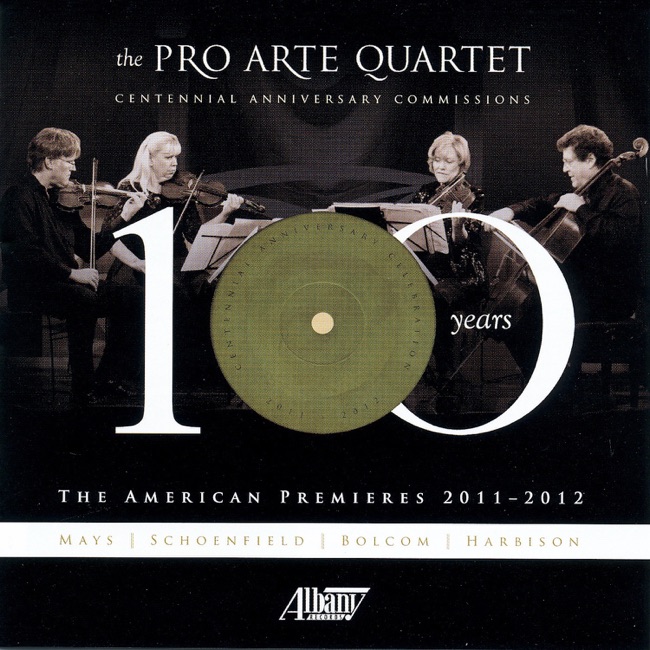 December 10, 2013
 -
 January 1, 2004
 -
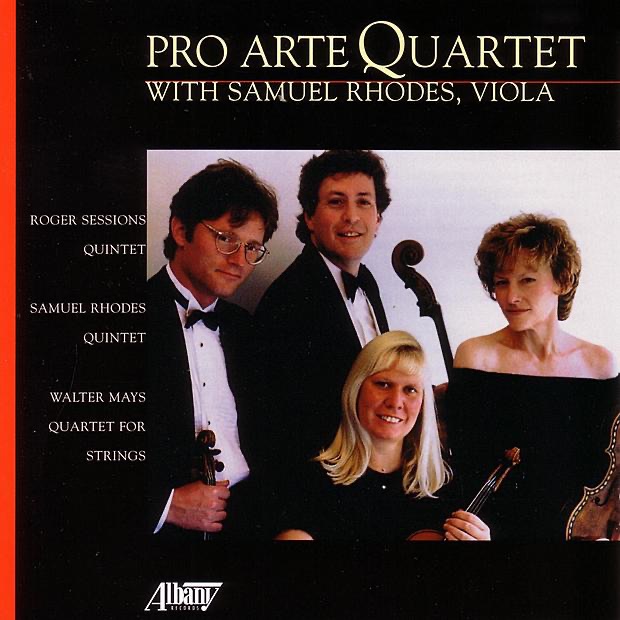 May 27, 2003
Band
-
 November 28, 2006
 -
 November 24, 1998
Artist Info
Role:ComposerBirth:1941Period:ContemporaryGenre:ChamberWalter Mays was a classical music composer who was born on May 12, 1927, in New York City. He grew up in a family of musicians, with his father being a violinist and his mother a pianist. Mays showed an early interest in music and began playing the piano at the age of four. He later learned to play the violin and the viola. Mays attended the Juilliard School of Music in New York City, where he studied composition with Vincent Persichetti and Roger Sessions. He also studied conducting with Jean Morel and Pierre Monteux. After graduating from Juilliard, Mays went on to study at the Berkshire Music Center at Tanglewood, where he worked with Aaron Copland and Leonard Bernstein. Mays began his career as a composer in the 1950s, and his early works were influenced by the neoclassical style of Stravinsky and Hindemith. He also drew inspiration from jazz and popular music, which he incorporated into his compositions. Mays' music was characterized by its rhythmic vitality, harmonic complexity, and melodic lyricism. One of Mays' early works was his Symphony No. 1, which he composed in 1953. The symphony was premiered by the New York Philharmonic under the direction of Leonard Bernstein. The work was well-received and established Mays as a promising young composer. In the 1960s, Mays began to experiment with electronic music, and he became interested in the possibilities of combining acoustic and electronic sounds. He composed several works for tape and live instruments, including his Electronic Music for Violin and Tape, which was premiered in 1965. Mays' music continued to evolve throughout the 1970s and 1980s, and he began to incorporate elements of minimalism and postmodernism into his compositions. He also became interested in world music and began to incorporate elements of Indian and African music into his works. One of Mays' most famous works is his Concerto for Violin and Orchestra, which he composed in 1981. The concerto was premiered by the New York Philharmonic with Itzhak Perlman as the soloist. The work is characterized by its virtuosic violin writing and its use of Indian rhythms and scales. Mays continued to compose music until his death in 2005. His later works included several chamber music pieces, including his String Quartet No. 3, which was premiered in 1998. The work is characterized by its intricate counterpoint and its use of extended techniques. Throughout his career, Mays received numerous awards and honors for his contributions to music. He was a recipient of the Guggenheim Fellowship, the National Endowment for the Arts Composer Fellowship, and the American Academy of Arts and Letters Award. He was also a member of the American Academy of Arts and Sciences. In conclusion, Walter Mays was a prolific and influential composer who made significant contributions to the world of classical music. His music was characterized by its rhythmic vitality, harmonic complexity, and melodic lyricism. He was a pioneer in the field of electronic music and was known for his innovative use of acoustic and electronic sounds. Mays' legacy continues to inspire and influence composers today.More....
Recent Artist Music

Copyright Ⓒ 2013 Davinci Finger. All rights reseved
Service Terms & Policy