


George Frederick McKay
Released Album
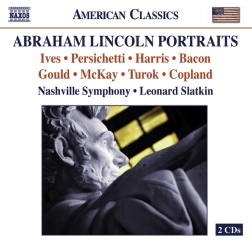
Orchestral
-
 February 24, 2009
 -
 January 18, 2005
 -
 May 1, 2001
 -
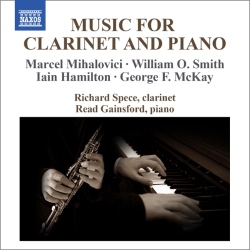
Chamber
-
 July, 2014
 -
 April 26, 2007
Artist Info
Role:ComposerBirth:1899Death:1970Period:ModernGenre:KeyboardOrchestralSymphonyVocalGeorge Frederick McKay was an American composer, conductor, and educator who was born on April 11, 1899, in Harrington, Washington. He was the youngest of six children and grew up in a musical family. His father was a violinist and his mother was a pianist, and they encouraged their children to pursue music. McKay began his musical education at an early age, studying piano and violin with his parents. He also played in his high school band and orchestra, where he developed an interest in composition. After graduating from high school, McKay attended the University of Washington, where he studied composition with John Verrall and piano with Bessie Porter Head. In 1923, McKay received a scholarship to study composition at the Eastman School of Music in Rochester, New York. There, he studied with Howard Hanson and Bernard Rogers, and he also conducted the Eastman-Rochester Symphony Orchestra. After completing his studies at Eastman, McKay returned to the University of Washington, where he taught composition and conducted the university orchestra. McKay's early compositions were influenced by the music of Debussy, Ravel, and Stravinsky, but he also incorporated elements of American folk music into his works. His first major composition, "Suite on Native American Themes," was premiered by the Seattle Symphony Orchestra in 1929. The suite was based on Native American melodies and rhythms, and it was well-received by audiences and critics alike. In the 1930s, McKay became interested in the music of the Pacific Northwest, and he began incorporating elements of the region's natural environment into his compositions. His "Symphony No. 1, Epochs," which was premiered by the Seattle Symphony Orchestra in 1933, was inspired by the geological history of the Pacific Northwest. The symphony was divided into four movements, each representing a different geological epoch, and it featured a large orchestra and chorus. McKay's interest in the natural environment also led him to compose works that incorporated sounds from nature. His "Prelude to a New Day," which was premiered by the Seattle Symphony Orchestra in 1937, featured bird calls and other natural sounds. McKay also composed a series of works for solo piano that were inspired by the natural environment, including "Mountain Idylls" and "Cascade Idylls." During World War II, McKay served in the U.S. Army, where he conducted the 7th Army Symphony Orchestra. After the war, he returned to the University of Washington, where he continued to teach composition and conduct the university orchestra. He also became involved in the Seattle Symphony Orchestra, serving as its composer-in-residence from 1954 to 1956. In the 1950s and 1960s, McKay's compositions became more experimental, incorporating elements of serialism and aleatoric music. His "Concerto for Jazz Band and Symphony Orchestra," which was premiered by the Seattle Symphony Orchestra in 1957, featured improvisation by the jazz band and a structured score for the orchestra. McKay's later works also reflected his interest in spirituality and mysticism. His "Symphony No. 9, Mystic Chant," which was premiered by the Seattle Symphony Orchestra in 1972, was inspired by the music of the medieval mystic Hildegard von Bingen. The symphony featured a large orchestra, chorus, and soloists, and it was one of McKay's most ambitious works.More....
Recent Artist Music
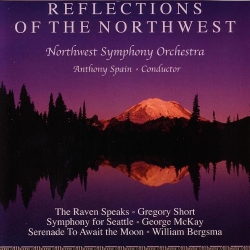

3
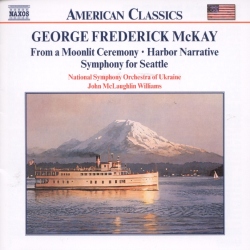
3:47
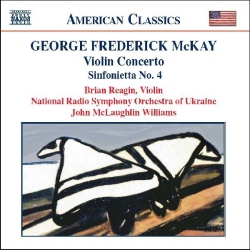
Copyright Ⓒ 2013 Davinci Finger. All rights reseved
Service Terms & Policy