


Kaspar Ulenberg
Artist Info
Role:ComposerKaspar Ulenberg was a German composer of the Baroque era, born in 1678 in the city of Leipzig. He was the son of a musician and grew up in a musical family, which greatly influenced his interest in music. Ulenberg began his musical education at a young age, studying the violin and keyboard with his father. He later went on to study composition with Johann Kuhnau, who was the cantor of the Thomaskirche in Leipzig and a well-known composer of the time. Ulenberg's early works were heavily influenced by the music of his teacher, Kuhnau, as well as the works of other Baroque composers such as Johann Sebastian Bach and Georg Philipp Telemann. His compositions were characterized by their intricate counterpoint and use of polyphony, which were hallmarks of the Baroque style. One of Ulenberg's most notable works is his Sonata in D Major for Violin and Continuo, which was composed in 1702. This piece showcases Ulenberg's skill as a composer, with its complex harmonies and virtuosic violin passages. The sonata was well-received by audiences and helped to establish Ulenberg as a prominent composer of his time. In addition to his instrumental works, Ulenberg also composed a number of vocal pieces, including cantatas and oratorios. One of his most famous vocal works is his oratorio, "Die Auferstehung Christi" (The Resurrection of Christ), which was composed in 1710. This piece tells the story of Christ's resurrection and features a large choir, soloists, and orchestra. The oratorio was performed in Leipzig and other cities throughout Germany, and was praised for its powerful and moving music. Throughout his career, Ulenberg was known for his dedication to his craft and his commitment to the Baroque style. He was a prolific composer, producing a large number of works in a variety of genres. His music was highly regarded by his contemporaries, and his influence can be seen in the works of later composers such as Johann Joachim Quantz and Johann Friedrich Fasch. Despite his success as a composer, Ulenberg's life was not without its challenges. He struggled with financial difficulties throughout his career, and was forced to take on various teaching positions in order to support himself. He also suffered from health problems in his later years, which limited his ability to compose and perform. Despite these challenges, Ulenberg remained dedicated to his music until the end of his life. He continued to compose and teach until his death in 1740, leaving behind a legacy of beautiful and influential music. Today, his works are still performed and studied by musicians and music lovers around the world, and he is remembered as one of the great composers of the Baroque era.More....
Recent Artist Music
1
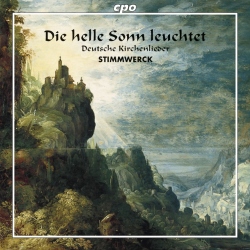
Raise anyone heupt ye all gates, hymn for chorus (attrib.)
Hebt ewer heupt ihr pforten all (attrib.)
2:45
Copyright Ⓒ 2013 Davinci Finger. All rights reseved
Service Terms & Policy