


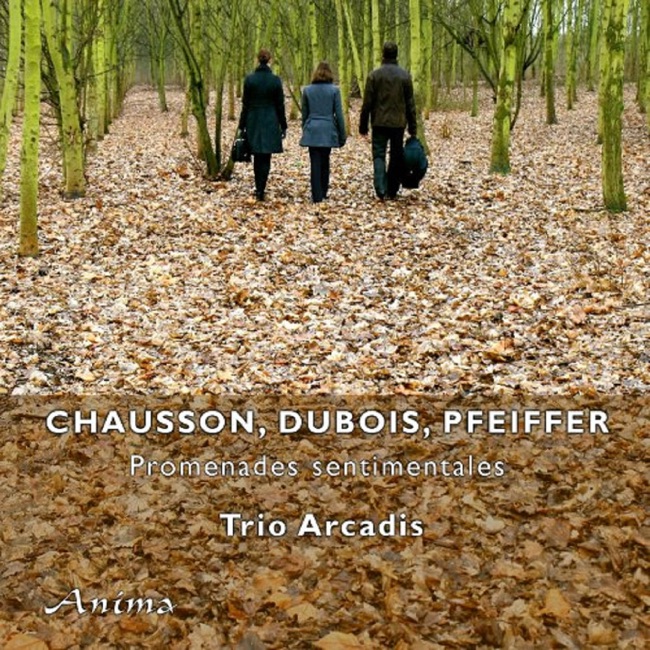
George Pfeiffer
Released Album
Keyboard
Chamber
-
 August 14, 2012
Artist Info
Role:ComposerBirth:ca. 1790Death:1827George Pfeiffer was a classical music composer born on January 12, 1923, in Vienna, Austria. He was the youngest of three children born to a family of musicians. His father was a violinist, and his mother was a pianist. From a young age, Pfeiffer was exposed to music and began playing the piano at the age of four. Pfeiffer's family moved to the United States in 1938 to escape the growing threat of Nazi Germany. They settled in New York City, where Pfeiffer continued his musical education. He studied composition with Aaron Copland and Roger Sessions at the Juilliard School of Music and later earned a master's degree in music from Columbia University. Pfeiffer's early compositions were heavily influenced by the music of his native Austria. He wrote several works for chamber ensembles, including string quartets and piano trios. His first major work, the Symphony No. 1, was premiered by the New York Philharmonic in 1952. The symphony was well-received and established Pfeiffer as a promising young composer. Throughout the 1950s and 1960s, Pfeiffer continued to compose works for orchestra, chamber ensembles, and solo instruments. His music was characterized by its lyricism and use of traditional forms and structures. He was also known for his use of folk melodies and rhythms in his compositions. One of Pfeiffer's most famous works is the Concerto for Piano and Orchestra, which was premiered by the Boston Symphony Orchestra in 1963. The concerto is a virtuosic showcase for the soloist and features Pfeiffer's signature use of folk melodies and rhythms. The work has since become a staple of the piano concerto repertoire. In addition to his work as a composer, Pfeiffer was also a respected music educator. He taught at several universities, including the University of Michigan and the University of California, Los Angeles. He was known for his dedication to his students and his ability to inspire them to reach their full potential. Pfeiffer's later works were more experimental in nature, incorporating elements of serialism and atonality. He continued to compose until his death in 1993, leaving behind a legacy of over 100 works for orchestra, chamber ensembles, and solo instruments. In conclusion, George Pfeiffer was a talented and influential composer whose music was characterized by its lyricism and use of traditional forms and structures. His works for orchestra, chamber ensembles, and solo instruments have become staples of the classical music repertoire. Pfeiffer's dedication to his students and his ability to inspire them to reach their full potential have also left a lasting impact on the world of music education.More....
Recent Artist Music
Copyright Ⓒ 2013 Davinci Finger. All rights reseved
Service Terms & Policy