


Carl Axel Strindberg
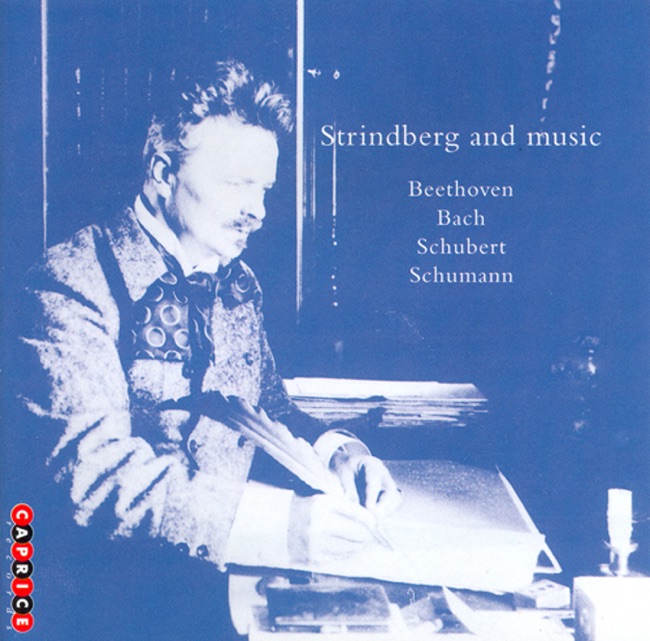
Artist Info
Role:ComposerGenre:KeyboardVocalCarl Axel Strindberg was a Swedish composer born on August 17, 1886, in Stockholm. He was the son of a wealthy businessman and grew up in a family that valued education and culture. Strindberg showed an early interest in music and began taking piano lessons at the age of six. He later studied composition with the renowned Swedish composer Wilhelm Stenhammar. In 1908, Strindberg traveled to Berlin to study music at the Hochschule für Musik. He studied composition with Max Bruch and piano with Ferruccio Busoni. During his time in Berlin, Strindberg was exposed to the music of the Second Viennese School, which had a significant influence on his own compositions. After completing his studies in Berlin, Strindberg returned to Sweden and began working as a composer and pianist. He quickly gained a reputation as one of Sweden's most promising young composers. In 1913, he was awarded the Royal Swedish Academy of Music's prize for young composers. Strindberg's early compositions were heavily influenced by the music of Richard Strauss and Gustav Mahler. His first major work, the Symphony in C minor, was premiered in 1912 and was well received by audiences and critics alike. The symphony is a large-scale work that showcases Strindberg's skill as an orchestrator and his ability to create powerful, dramatic music. In the years that followed, Strindberg continued to compose orchestral works, including the Symphony No. 2 and the Suite for Orchestra. He also wrote chamber music, including a string quartet and a piano trio. Strindberg's music was characterized by its lush harmonies, complex rhythms, and dramatic intensity. During World War I, Strindberg served in the Swedish army as a musician. He played the piano and conducted the army band, which gave him the opportunity to continue composing while serving his country. After the war, Strindberg returned to his career as a composer and pianist. In the 1920s, Strindberg's music began to show the influence of the neoclassical movement. He wrote several works that were inspired by the music of Bach and Handel, including the Concerto Grosso for String Orchestra and the Suite for Harpsichord. These works showcased Strindberg's skill as a contrapuntalist and his ability to write music that was both modern and rooted in tradition. In the 1930s, Strindberg's music became more introspective and personal. He wrote several works that were inspired by Swedish folk music, including the Suite for Violin and Piano and the Three Swedish Dances for Orchestra. These works showcased Strindberg's ability to incorporate folk melodies into his compositions in a way that was both authentic and modern. During World War II, Strindberg continued to compose despite the difficult circumstances. He wrote several works that were inspired by the war, including the Symphony No. 3, which was dedicated to the Swedish Red Cross. The symphony is a powerful work that reflects the turmoil and uncertainty of the time. After the war, Strindberg continued to compose and perform. He wrote several works that were inspired by his travels, including the Suite for Flute and Piano, which was inspired by his trip to Italy. He also wrote several works for the theater, including the ballet The Tempest and the opera The Enchanted Island. Strindberg's music was highly regarded in Sweden and he was awarded several honors during his lifetime, including the Litteris et Artibus medal and the Order of the Polar Star.More....
Recent Artist Music
Copyright Ⓒ 2013 Davinci Finger. All rights reseved
Service Terms & Policy