


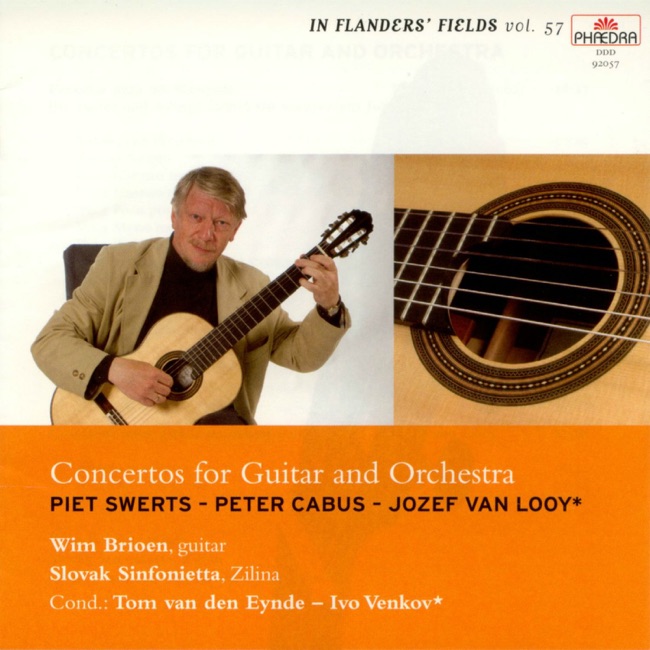
Peter Cabus
Released Album
Concerto
Chamber
-
 April 24, 2001
Artist Info
Role:ComposerGenre:ChamberConcertoKeyboardPeter Cabus was a Belgian composer who was born on January 22, 1923, in Antwerp, Belgium. He was the son of a music teacher and grew up in a musical family. Cabus began his musical education at a young age, studying piano and music theory with his father. He later went on to study composition at the Royal Conservatory of Antwerp, where he was a student of Flor Peeters. Cabus began his career as a composer in the 1940s, and his early works were heavily influenced by the music of his teacher, Peeters. However, as he matured as a composer, Cabus began to develop his own unique style, which was characterized by a blend of traditional and modern elements. One of Cabus's most significant works is his Symphony No. 1, which he composed in 1951. The symphony is a large-scale work that showcases Cabus's skill as a composer. It is a four-movement work that is characterized by its use of lush harmonies and intricate counterpoint. The symphony was well-received by audiences and critics alike and helped to establish Cabus as one of the leading composers of his generation. In addition to his symphonies, Cabus also composed a number of other works for orchestra, including concertos for various instruments. One of his most notable concertos is his Concerto for Violin and Orchestra, which he composed in 1956. The concerto is a virtuosic work that showcases the technical abilities of the soloist. It is characterized by its use of complex rhythms and harmonies, as well as its lyrical melodies. Cabus was also a prolific composer of chamber music, and he wrote a number of works for various ensembles. One of his most significant chamber works is his String Quartet No. 1, which he composed in 1953. The quartet is a four-movement work that is characterized by its use of intricate counterpoint and rich harmonies. It is a challenging work for the performers, but it is also highly rewarding for audiences. In addition to his instrumental works, Cabus also composed a number of vocal works, including choral music and art songs. One of his most significant vocal works is his Requiem, which he composed in 1963. The Requiem is a large-scale work that is scored for chorus, soloists, and orchestra. It is a powerful and emotional work that is characterized by its use of lush harmonies and soaring melodies. Throughout his career, Cabus was recognized for his contributions to the world of classical music. He received numerous awards and honors, including the Prix de Rome in 1950 and the Belgian State Prize for Music in 1963. He was also a member of the Royal Academy of Belgium and served as the director of the Royal Conservatory of Antwerp from 1977 to 1988. Cabus continued to compose music throughout his life, and his later works were characterized by a more experimental approach. He passed away on December 3, 2000, but his music continues to be performed and admired by audiences around the world. Cabus's legacy as a composer is a testament to his skill and dedication to the art of classical music.More....
Copyright Ⓒ 2013 Davinci Finger. All rights reseved
Service Terms & Policy