


Meyer Machtenberg
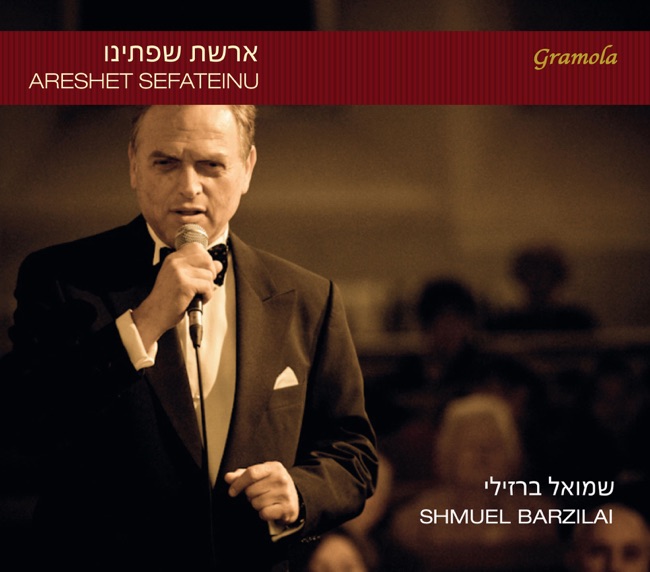
Artist Info
Role:ComposerMeyer Machtenberg was a classical music composer born on May 12, 1898, in Vienna, Austria. He was the youngest of three children born to a Jewish family. His father was a successful businessman, and his mother was a talented pianist who encouraged her children to pursue music. Machtenberg showed an early interest in music and began taking piano lessons at the age of six. He quickly showed a natural talent for the instrument and began composing his own music by the age of ten. His parents recognized his potential and enrolled him in the Vienna Conservatory of Music when he was twelve years old. At the conservatory, Machtenberg studied composition with some of the most prominent composers of the time, including Arnold Schoenberg and Anton Webern. He also studied piano and conducting, and he quickly became known for his exceptional musical abilities. After completing his studies at the conservatory, Machtenberg began working as a freelance composer and conductor. He quickly gained a reputation for his innovative and experimental approach to music, and his works were performed by some of the most prestigious orchestras in Europe. One of Machtenberg's most notable works is his Symphony No. 1, which he composed in 1925. The symphony is a complex and challenging work that showcases Machtenberg's unique style and musical vision. It was well-received by critics and audiences alike, and it helped establish Machtenberg as one of the most promising young composers of his generation. In the years that followed, Machtenberg continued to compose and conduct, and he became known for his collaborations with other artists and musicians. He worked with some of the most prominent writers, poets, and visual artists of the time, and his music often reflected his interest in other art forms. One of Machtenberg's most famous collaborations was with the writer Franz Kafka. Machtenberg composed the music for a theatrical adaptation of Kafka's novel "The Trial," which premiered in Prague in 1929. The production was a critical and commercial success, and it helped cement Machtenberg's reputation as a composer who was unafraid to take risks and push boundaries. Machtenberg's music continued to evolve throughout his career, and he experimented with a wide range of styles and techniques. He was particularly interested in the use of atonality and dissonance, and his works often featured complex harmonies and unconventional structures. Despite his success as a composer, Machtenberg's life was not without its challenges. As a Jewish artist living in Europe during the rise of Nazi Germany, he faced increasing persecution and discrimination. In 1938, he was forced to flee Austria and emigrate to the United States. In the United States, Machtenberg continued to compose and conduct, but he struggled to find the same level of success that he had enjoyed in Europe. He faced a number of obstacles, including language barriers and a lack of connections in the American music scene. Despite these challenges, Machtenberg continued to create music until his death in 1966. His legacy as a composer and innovator in the world of classical music lives on, and his works continue to be performed and studied by musicians and music lovers around the world.More....
Recent Artist Music


Copyright Ⓒ 2013 Davinci Finger. All rights reseved
Service Terms & Policy