


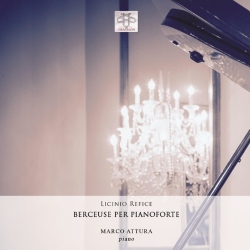
Licinio Refice
Released Album
Vocal
-
 June 25, 2022
 -
 November 13, 2020
 -
 June 18, 2013
Opera
-
 March 1, 2024
 -
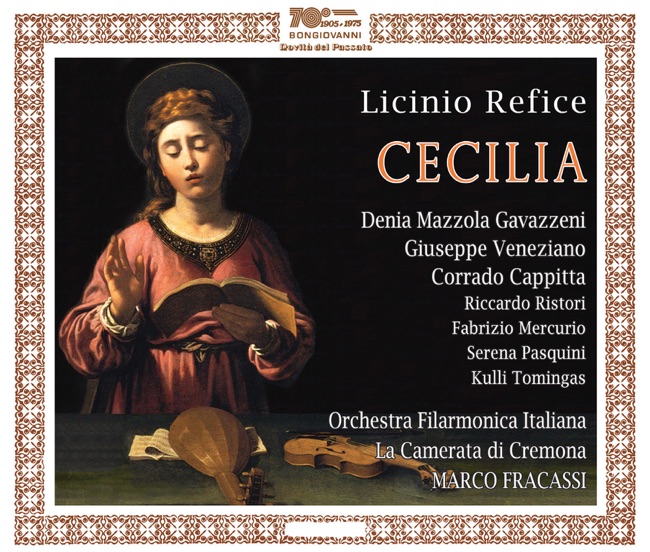 January 13, 2015
 -
 September 5, 2011
 -
 May 27, 2010
 -
 October 14, 1997
 -
 January 1, 1991
Keyboard
-
 October 19, 2018
 -
 January 1, 2013
Artist Info
Role:Composer ConductorBirth:February 12, 1885Death:September 11, 1954Period:ModernGenre:OperaVocalLicinio Refice was an Italian composer of classical music who was born on October 12, 1883, in the town of Campofilone, in the province of Fermo, Italy. He was the son of a music teacher, and his father was his first teacher. Refice showed an early interest in music, and he began composing at a young age. Refice studied at the Conservatory of San Pietro a Majella in Naples, where he studied composition with Giuseppe Martucci and piano with Beniamino Cesi. He graduated in 1906 with a diploma in composition. After graduation, Refice worked as a music teacher in various schools in Italy. In 1913, Refice composed his first opera, "Margherita da Cortona," which was based on the life of a 13th-century saint. The opera was well-received, and it was performed in several Italian cities. In 1914, Refice composed his second opera, "Cecilia," which was based on the life of Saint Cecilia, the patron saint of music. The opera was also well-received, and it was performed in several Italian cities. In 1915, Refice was drafted into the Italian army to fight in World War I. He served as a medic and was stationed in various parts of Italy. During his time in the army, Refice continued to compose music, and he wrote several songs and piano pieces. After the war, Refice returned to his career as a composer. In 1920, he composed his third opera, "Chiara di Rosemberg," which was based on the life of a 14th-century noblewoman. The opera was performed in several Italian cities and was well-received. In 1921, Refice was appointed as the director of the Conservatory of Music in Lecce, a city in southern Italy. He held this position for several years and was responsible for the education of many young musicians. In 1923, Refice composed his fourth opera, "Sant'Agostino," which was based on the life of Saint Augustine. The opera was performed in several Italian cities and was well-received. In 1925, Refice composed his fifth opera, "Cecilia e il diavolo," which was based on the legend of Saint Cecilia and the devil. The opera was performed in several Italian cities and was well-received. In 1928, Refice composed his sixth opera, "La fiamma," which was based on the life of a 16th-century Italian poet. The opera was performed in several Italian cities and was well-received. In 1930, Refice composed his seventh opera, "Margherita da Cortona," which was a revised version of his first opera. The revised version was performed in several Italian cities and was well-received. In 1931, Refice composed his eighth opera, "Cecilia," which was a revised version of his second opera. The revised version was performed in several Italian cities and was well-received. In 1932, Refice composed his ninth opera, "Il processo di Maria Antonietta," which was based on the trial of Marie Antoinette. The opera was performed in several Italian cities and was well-received. In 1933, Refice composed his tenth opera, "La madre," which was based on a play by Giovanni Verga. The opera was performed in several Italian cities and was well-received. In 1934, Refice composed his eleventh opera, "La serva padrona," which was based on a play by Carlo Goldoni. The opera was performed in several Italian cities and was well-received. In 1935, Refice composed his twelfth opera, "La cena delle beffe," which was based on a play by Sem Benelli.More....
Recent Artist Music
10
2:30

Copyright Ⓒ 2013 Davinci Finger. All rights reseved
Service Terms & Policy