


Alberto Savinio
Released Album
Keyboard
-
 May 15, 2000
Chamber
-
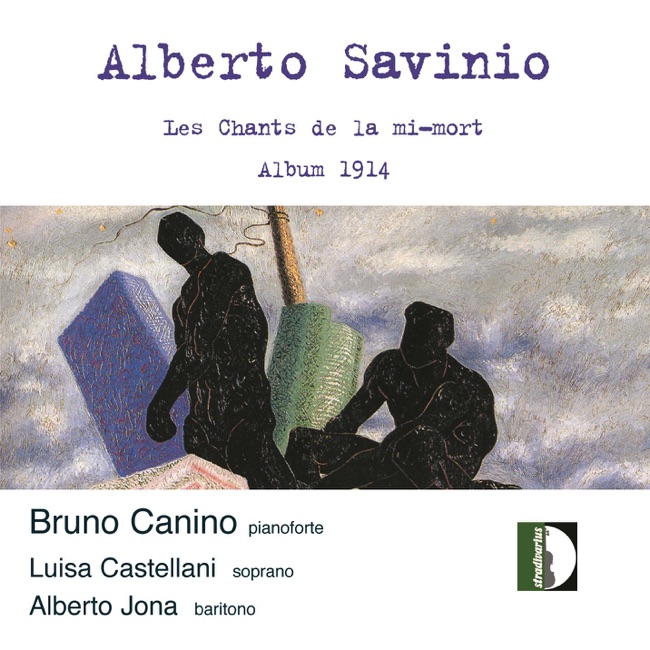 January 2, 1993
Artist Info
Role:ComposerPeriod:RomanticModernGenre:ChamberKeyboardOrchestralAlberto Savinio was an Italian composer, writer, and painter who was born on August 25, 1891, in Athens, Greece. He was the younger brother of the famous surrealist painter Giorgio de Chirico, and the two brothers were known for their close relationship and artistic collaboration. Savinio's father was an Italian engineer who worked in Greece, and his mother was a Greek woman of Italian descent. Savinio spent his childhood in Athens and later moved to Italy with his family. Savinio showed an early interest in music and began studying piano at a young age. He also showed a talent for writing and painting, and he pursued all three of these artistic disciplines throughout his life. In 1910, Savinio moved to Munich, Germany, to study music at the Royal Academy of Music. He studied composition with the famous composer Max Reger and piano with the renowned pianist and composer Ferruccio Busoni. Savinio's time in Munich was a formative period in his musical development, and he was exposed to a wide range of musical styles and traditions. After completing his studies in Munich, Savinio returned to Italy and began composing music in earnest. He was influenced by a variety of musical styles, including classical music, folk music, and popular music. His early works were characterized by a lyrical and romantic style, and he often incorporated elements of Italian folk music into his compositions. Some of his early works include the piano pieces "Serenata" and "Notturno," as well as the song cycle "Tre Liriche." In the 1920s, Savinio began to experiment with more avant-garde musical styles. He was influenced by the emerging modernist movement in art and literature, and he sought to incorporate these ideas into his music. He began to use dissonance and unconventional harmonies in his compositions, and he also experimented with new forms and structures. Some of his most notable works from this period include the ballet "La Favola del Figlio Cambiato" and the opera "Il Signor Oggetto." Savinio's music was often associated with the surrealist movement, which was led by his brother Giorgio de Chirico. The surrealists were interested in exploring the subconscious mind and the irrational aspects of human experience, and they sought to create art that was dreamlike and mysterious. Savinio's music was often characterized by a similar sense of mystery and ambiguity, and he was known for his use of unusual sounds and textures. Despite his innovative approach to music, Savinio's work was not always well-received by critics and audiences. Some critics found his music too unconventional and difficult to understand, while others criticized him for not adhering to traditional musical forms and structures. However, Savinio continued to compose music throughout his life, and he remained committed to exploring new ideas and pushing the boundaries of musical expression. In addition to his work as a composer, Savinio was also a prolific writer and painter. He wrote several books, including the novel "Hermaphrodito" and the collection of essays "La Vita Sovversiva." He also painted a number of surrealist works, many of which were inspired by his brother's paintings. Savinio's work as a writer and painter was closely connected to his music, and he often drew inspiration from his other artistic pursuits. Savinio died on May 5, 1952, in Rome, Italy.More....
Recent Artist Music

Copyright Ⓒ 2013 Davinci Finger. All rights reseved
Service Terms & Policy