


Werner Steinmetz
Released Album
Concerto
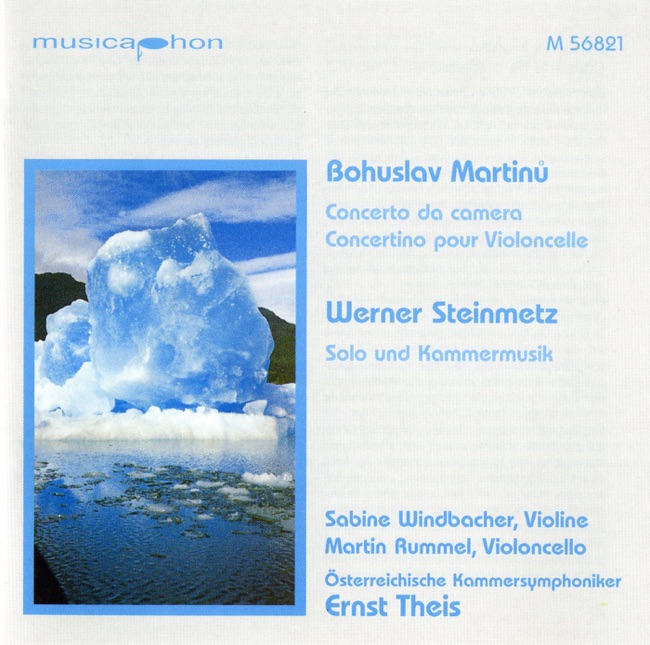
Chamber
-
 August 26, 2016
Artist Info
Role:ComposerGenre:ConcertoWerner Steinmetz was a German composer and pianist who lived from 1908 to 1996. He was born in the city of Leipzig, which was a hub of classical music during his lifetime. Steinmetz showed an early aptitude for music, and began studying piano at the age of six. He was a prodigious talent, and by the time he was a teenager, he was already performing in public concerts. Steinmetz continued his musical education at the Leipzig Conservatory, where he studied composition with the renowned composer Max Reger. Reger was a major influence on Steinmetz's early work, and his music shows the influence of Reger's dense, contrapuntal style. Steinmetz also studied piano with the pianist and composer Robert Teichmüller, who was a close friend of Reger's. After completing his studies at the conservatory, Steinmetz began a career as a concert pianist. He performed extensively throughout Germany and Europe, and was known for his virtuosic technique and sensitive interpretations of classical repertoire. However, he also continued to compose throughout his career, and his works were performed by many of the leading orchestras and ensembles of his time. Steinmetz's music is characterized by its lyricism, harmonic richness, and contrapuntal complexity. He was deeply influenced by the music of Bach, Beethoven, and Brahms, and his works often show the influence of these composers. However, he also had a distinctive voice of his own, and his music is marked by its individuality and originality. One of Steinmetz's most famous works is his Piano Concerto No. 1, which he composed in 1935. The concerto is a virtuosic tour de force for the soloist, and is marked by its sweeping melodies, lush harmonies, and intricate counterpoint. The concerto was premiered by Steinmetz himself, and was an immediate success. It has since become one of the most frequently performed piano concertos of the 20th century. Another notable work by Steinmetz is his Symphony No. 1, which he composed in 1942. The symphony is a large-scale work that showcases Steinmetz's mastery of orchestration and his ability to create complex, multi-layered textures. The symphony is marked by its dramatic contrasts, its rich harmonies, and its powerful emotional impact. In addition to his concert works, Steinmetz also composed a number of chamber music pieces, including several string quartets and sonatas for various instruments. These works are marked by their intimacy and their intricate interplay between the instruments. Despite his success as a composer and pianist, Steinmetz's career was interrupted by the outbreak of World War II. He was drafted into the German army in 1943, and spent the remainder of the war serving as a medic on the Eastern Front. The experience had a profound impact on him, and he later described it as the most difficult period of his life. After the war, Steinmetz resumed his career as a composer and pianist. He continued to compose prolifically, and his works were performed by many of the leading musicians of his time. However, he also became increasingly interested in teaching, and spent many years teaching composition and piano at the Leipzig Conservatory. Steinmetz's later works show a greater simplicity and clarity than his earlier works, and are marked by their directness and emotional immediacy. He continued to compose until the end of his life, and his music remains an important part of the classical repertoire.More....
Recent Artist Music

Copyright Ⓒ 2013 Davinci Finger. All rights reseved
Service Terms & Policy