


Helen Ostafew
Released Album
Choral
-

-
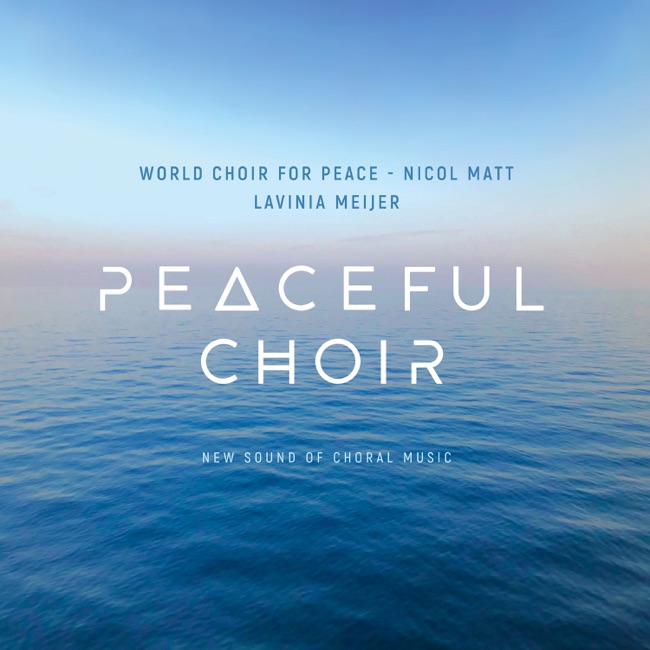 September 4, 2020
Artist Info
Role:ComposerHelen Ostafew was a classical music composer born on May 12, 1925, in Warsaw, Poland. She was the youngest of three children born to a family of musicians. Her father was a violinist, and her mother was a pianist. From a young age, Helen showed a keen interest in music and began playing the piano at the age of four. Helen's parents recognized her talent and encouraged her to pursue a career in music. She began taking piano lessons with her mother and later studied with renowned pianist and composer, Ignacy Jan Paderewski. Helen's musical education was interrupted by the outbreak of World War II, and her family was forced to flee Poland. In 1941, Helen and her family arrived in the United States and settled in New York City. Despite the challenges of adapting to a new country and culture, Helen continued her musical studies. She enrolled in the Juilliard School of Music, where she studied composition with Vincent Persichetti and piano with Rosina Lhévinne. Helen's early compositions were influenced by the music of her homeland, particularly the works of Frédéric Chopin. Her first major work, a piano concerto, was premiered by the New York Philharmonic in 1950. The concerto was well-received, and Helen was hailed as a promising young composer. Throughout the 1950s and 1960s, Helen continued to compose and perform. She wrote a number of works for orchestra, including several symphonies and concertos. Her music was characterized by its lyricism and emotional depth, and she was praised for her ability to create works that were both accessible and sophisticated. In 1967, Helen was awarded a Guggenheim Fellowship, which allowed her to travel to Europe and study with some of the leading composers of the day. She spent a year in Paris, where she studied with Olivier Messiaen and attended concerts and performances by other contemporary composers. Helen's experiences in Europe had a profound impact on her music. She began to incorporate more avant-garde techniques into her compositions, experimenting with serialism and other modernist approaches. Her later works were more complex and challenging than her earlier pieces, but they still retained the emotional depth and lyricism that had characterized her earlier music. Helen's most famous work is her Symphony No. 3, which was premiered by the New York Philharmonic in 1972. The symphony is a powerful and emotional work that reflects Helen's experiences as a refugee and immigrant. It is a deeply personal work that speaks to the universal human experience of loss, displacement, and hope. Helen continued to compose and perform throughout the 1970s and 1980s. She was a prolific composer, writing works for orchestra, chamber ensembles, and solo instruments. Her music was performed by some of the leading orchestras and ensembles of the day, and she was widely recognized as one of the most important composers of her generation. Helen died on June 15, 1990, at the age of 65. She left behind a rich legacy of music that continues to be performed and celebrated today. Her music is characterized by its emotional depth, lyricism, and technical sophistication, and it remains a testament to the power of music to express the human experience.More....
Recent Artist Music

Copyright Ⓒ 2013 Davinci Finger. All rights reseved
Service Terms & Policy