


Antonio Giménez Manjón
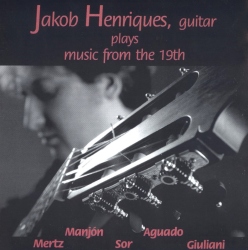
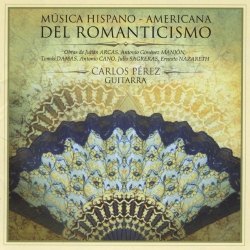
Released Album
Chamber
-
 November 12, 2019
 -
 October 28, 2015
 -
 July 31, 2015
 -
 March 31, 2015
 -
 April 30, 2002
Artist Info
Role:ComposerCountry: SpainBirth:1866 in Villacarrillo, SpainDeath:January 3, 1919 in Buenos Aires, ArgentinaGenre:ChamberAntonio Giménez Manjón was a Spanish composer and pianist who lived from 1860 to 1911. He was born in the city of Granada, Spain, on December 4, 1860, to a family of musicians. His father, Antonio Giménez, was a well-known composer and conductor, and his mother, María Manjón, was a pianist and singer. From a young age, Antonio showed a great interest in music and began studying piano with his mother. He quickly showed a natural talent for the instrument and began composing his own music at the age of 12. He continued his studies at the Granada Conservatory, where he studied piano with Rafael Rodríguez Albert and composition with Francisco Alonso. In 1880, Antonio moved to Madrid to further his musical education. He studied piano with José Tragó and composition with Emilio Arrieta at the Madrid Royal Conservatory. During this time, he also began performing as a pianist and became known for his virtuosic playing. Antonio's early compositions were heavily influenced by the Romantic style of the time, with lush harmonies and sweeping melodies. His first major work, the Piano Concerto in A minor, was premiered in Madrid in 1883 to great acclaim. The concerto showcased Antonio's technical prowess as a pianist and his skill as a composer. In 1885, Antonio moved to Paris to study with the renowned composer and pianist Franz Liszt. Liszt was impressed with Antonio's talent and took him on as a student. Under Liszt's guidance, Antonio's compositions began to take on a more modernist style, with complex harmonies and innovative use of form. During his time in Paris, Antonio also became involved with the Symbolist movement, a literary and artistic movement that emphasized the use of metaphor and symbolism in art. This influence can be seen in his later works, which often have titles that suggest a deeper meaning or hidden message. Antonio's most famous work is his Symphony in D minor, which was premiered in Paris in 1892. The symphony is a complex and ambitious work, with four movements that showcase Antonio's mastery of orchestration and form. The symphony was well-received by critics and cemented Antonio's reputation as one of the leading composers of his time. In addition to his symphony, Antonio composed a number of other works for orchestra, including several tone poems and a ballet. He also wrote chamber music, including string quartets and piano trios, as well as vocal music, including art songs and choral works. Despite his success as a composer, Antonio struggled with health problems throughout his life. He suffered from tuberculosis, which forced him to take extended breaks from his work. He also suffered from depression and anxiety, which affected his ability to compose. Antonio died on January 2, 1911, at the age of 50. His legacy as a composer has endured, however, and his music continues to be performed and recorded today. His contributions to the development of Spanish classical music are significant, and his influence can be heard in the works of later Spanish composers such as Manuel de Falla and Joaquín Rodrigo.More....
Recent Artist Music


8

7:3




Copyright Ⓒ 2013 Davinci Finger. All rights reseved
Service Terms & Policy