


Siegfried Borris
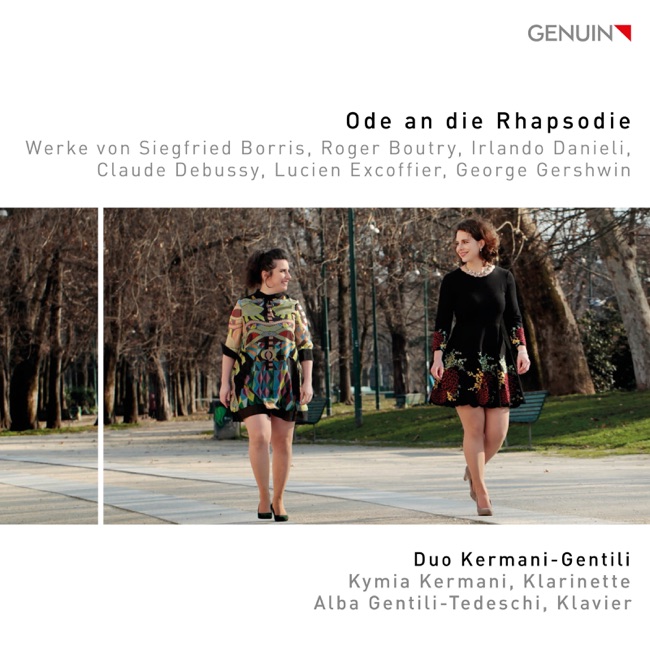
Artist Info
Role:ComposerSiegfried Borris was a German composer born on January 12, 1897, in Berlin. He was the son of a music teacher and grew up in a musical family. His father recognized his son's talent for music at an early age and began teaching him piano and music theory. Borris showed great promise as a musician and went on to study at the Berlin Conservatory. Borris's early compositions were heavily influenced by the Romantic era, particularly the works of Richard Wagner. He was also influenced by the music of his contemporaries, including Arnold Schoenberg and Igor Stravinsky. Borris's music was characterized by its lush harmonies, complex rhythms, and use of unconventional instruments. In 1920, Borris moved to Paris, where he became part of the city's vibrant artistic community. He began to experiment with new musical forms, including atonality and serialism. His compositions from this period, including his String Quartet No. 1 and his Piano Sonata No. 2, were well-received by critics and helped establish him as a leading figure in the avant-garde music scene. Borris's career was interrupted by the outbreak of World War II. He was conscripted into the German army and served on the Eastern Front. During this time, he continued to compose music, often using his experiences in the war as inspiration. His Symphony No. 3, which he composed during his time in the army, is a powerful and haunting work that reflects the horrors of war. After the war, Borris returned to Berlin and resumed his career as a composer. He continued to experiment with new musical forms, including electronic music. His Symphony No. 4, which he composed in 1952, was one of the first works to incorporate electronic instruments. Borris's later works were characterized by their simplicity and clarity. He returned to more traditional forms, such as the sonata and the concerto, and focused on melody and harmony. His Symphony No. 5, which he composed in 1960, is a beautiful and lyrical work that showcases his mastery of traditional forms. Borris died on December 23, 1975, in Berlin. He left behind a rich legacy of music that continues to be performed and admired today. His contributions to the development of modern classical music are significant, and his influence can be heard in the works of many contemporary composers.More....
Recent Artist Music

Copyright Ⓒ 2013 Davinci Finger. All rights reseved
Service Terms & Policy