


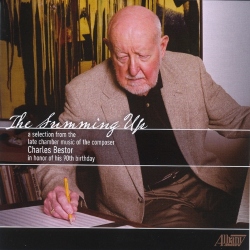
Charles Bestor
Released Album
Chamber
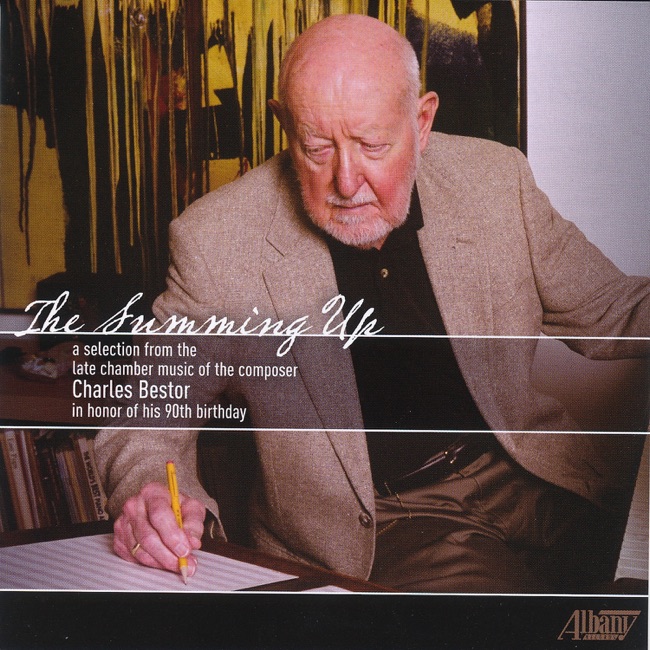
Orchestral
-
 April 12, 2011
 -
 June 20, 1995
Artist Info
Role:Composer PerformerBirth:December 21, 1924 in New York City, NYGenre:Avant-GardeChamberKeyboardOrchestralCharles Bestor was a renowned classical music composer who was born on May 12, 1925, in New York City. He was the youngest of three children born to a family of musicians. His father was a violinist, and his mother was a pianist. Bestor's parents recognized his musical talent at an early age and encouraged him to pursue a career in music. Bestor began his musical education at the age of five when he started taking piano lessons. He showed a natural aptitude for the instrument and quickly progressed. By the time he was ten, he had already composed his first piece of music. Bestor continued to study piano throughout his childhood and adolescence, and he also began to study composition. In 1943, Bestor enrolled at the Juilliard School of Music in New York City. He studied composition with the renowned composer Aaron Copland, who had a profound influence on Bestor's musical style. Bestor also studied piano with Rosina Lhévinne, one of the most respected piano teachers of the time. After graduating from Juilliard in 1947, Bestor began his career as a composer. He quickly gained a reputation for his innovative and expressive compositions. His music was characterized by its use of unconventional harmonies and rhythms, as well as its emotional intensity. One of Bestor's early works, the Piano Sonata No. 1, was premiered in 1949 by the pianist William Kapell. The piece was well-received by audiences and critics alike, and it established Bestor as a rising star in the classical music world. Throughout the 1950s and 1960s, Bestor continued to compose prolifically. He wrote music for a variety of ensembles, including orchestras, chamber groups, and solo instruments. Some of his most notable works from this period include the Symphony No. 1, the String Quartet No. 2, and the Piano Concerto No. 2. Bestor's music was often inspired by his personal experiences and emotions. For example, his Symphony No. 1 was written in response to the death of his father, and it reflects the composer's grief and sense of loss. Similarly, his Piano Concerto No. 2 was written during a period of personal turmoil, and it expresses the composer's feelings of anxiety and uncertainty. In addition to his work as a composer, Bestor was also a respected music educator. He taught composition at several universities, including the University of Michigan and the University of California, Los Angeles. Many of his students went on to become successful composers in their own right. Bestor's music continued to be performed and recorded throughout the latter half of the 20th century. His works were praised for their emotional depth and technical sophistication. He received numerous awards and honors for his contributions to the classical music world, including the Pulitzer Prize for Music in 1972. One of Bestor's most famous works is the opera "The Crucible," which was premiered in 1961. The opera is based on the play by Arthur Miller and tells the story of the Salem witch trials. Bestor's music captures the drama and tension of the story, and the opera has become a staple of the operatic repertoire. Another notable work by Bestor is the Symphony No. 2, which was premiered in 1970. The symphony is a powerful and emotional work that reflects the composer's personal struggles with depression and anxiety. The piece has been praised for its innovative use of orchestration and its expressive power. Bestor continued to compose music until his death in 1981.More....
Copyright Ⓒ 2013 Davinci Finger. All rights reseved
Service Terms & Policy