


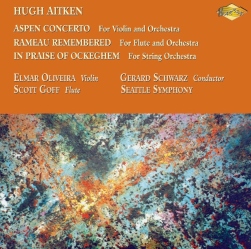
Hugh Aitken
Released Album
Concerto
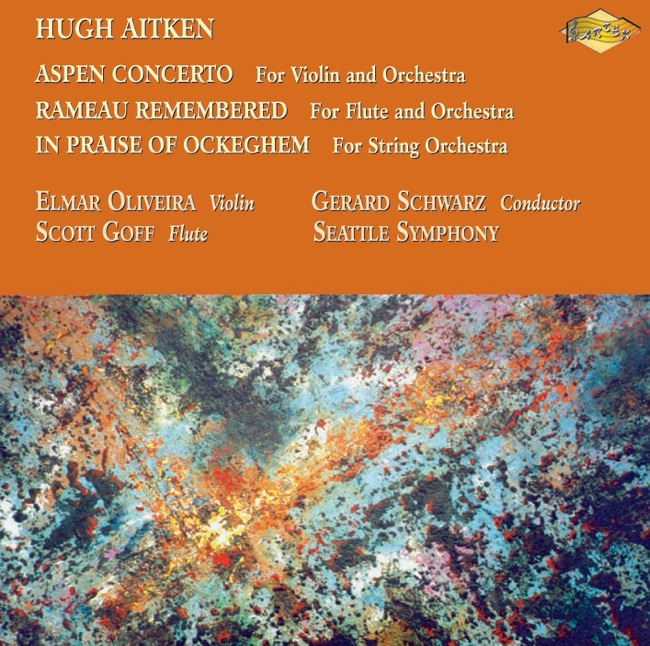
Choral
-
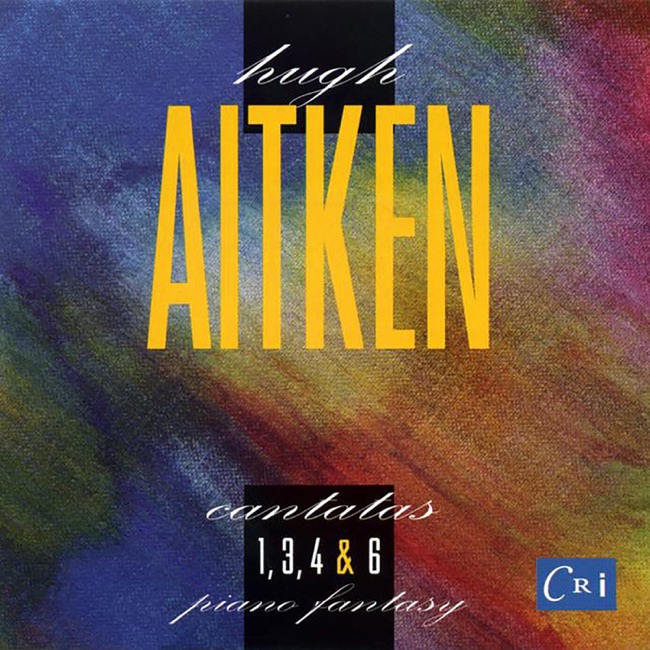 February 17, 1998
Artist Info
Role:ComposerBirth:September 7, 1924 in New York City, NYPeriod:ContemporaryGenre:ChoralConcertoKeyboardHugh Aitken was a Canadian composer who was born on October 28, 1924, in Toronto, Ontario. He was the son of Scottish immigrants and grew up in a musical family. His father played the bagpipes, and his mother was a pianist. Aitken began playing the piano at a young age and showed an early interest in music. Aitken attended the University of Toronto, where he studied composition with John Weinzweig and piano with Alberto Guerrero. He graduated with a Bachelor of Music degree in 1948 and went on to study at the Juilliard School in New York City. There, he studied composition with Bernard Wagenaar and Vincent Persichetti and piano with Rosina Lhévinne. After completing his studies, Aitken returned to Toronto and began a career as a composer and pianist. He became a member of the Canadian League of Composers and the Canadian Music Centre and was a founding member of the Canadian Electronic Music Association. Aitken's early works were influenced by the neoclassical style of Stravinsky and Hindemith. His first major work, the Symphony No. 1, was premiered by the Toronto Symphony Orchestra in 1952. The symphony was well-received and established Aitken as a promising young composer. In the 1960s, Aitken began to experiment with electronic music. He was one of the first Canadian composers to work with electronic music, and his works in this genre were groundbreaking. His electronic works include "Electronic Composition No. 1" (1961), "Electronic Composition No. 2" (1962), and "Electronic Composition No. 3" (1963). Aitken's music is characterized by its clarity and precision. He was a master of orchestration and was able to create complex textures with a minimum of instruments. His music is often described as "cool" or "objective," and he was known for his use of mathematical structures and serial techniques. Aitken's most famous work is probably his "Concerto for Piano and Orchestra" (1967). The concerto is a virtuosic tour-de-force for the soloist and features complex rhythms and intricate textures. The work has been performed by many of the world's leading pianists, including Glenn Gould and Anton Kuerti. Aitken's other notable works include the "Symphony No. 2" (1956), "String Quartet No. 1" (1957), "String Quartet No. 2" (1960), and "String Quartet No. 3" (1964). He also wrote several works for solo piano, including "Piano Sonata No. 1" (1950) and "Piano Sonata No. 2" (1952). In addition to his work as a composer, Aitken was also a respected music educator. He taught at the University of Toronto from 1952 to 1989 and was a mentor to many young composers. He was also a frequent guest lecturer at universities and music festivals around the world. Aitken received many awards and honors during his lifetime. He was made a Member of the Order of Canada in 1975 and was awarded the Canadian Music Council Medal in 1984. He was also a Fellow of the Royal Society of Canada and a member of the Order of Ontario. Hugh Aitken died on March 21, 2002, in Toronto, Ontario. He was 77 years old. His legacy as a composer and educator continues to be felt in Canada and around the world. His music remains an important part of the Canadian classical music canon, and his influence can be heard in the work of many contemporary composers.More....
Recent Artist Music
Copyright Ⓒ 2013 Davinci Finger. All rights reseved
Service Terms & Policy