


Roger Hemingway
Artist Info
Role:ComposerGenre:ChoralRoger Hemingway was a British classical music composer who was born on May 12, 1929, in London, England. He was the son of a music teacher and grew up in a musical family. His father was a pianist and his mother was a singer, and they both encouraged him to pursue a career in music. Hemingway began his musical education at an early age, studying piano and composition with his father. He later attended the Royal Academy of Music in London, where he studied composition with Alan Bush and piano with Harold Craxton. He also studied conducting with Sir Adrian Boult and Sir John Barbirolli. Hemingway's early compositions were influenced by the music of his contemporaries, including Benjamin Britten and Michael Tippett. His first major work was a piano concerto, which he composed while still a student at the Royal Academy of Music. The concerto was well-received and helped establish Hemingway as a promising young composer. After completing his studies, Hemingway worked as a freelance composer and conductor, writing music for a variety of ensembles and orchestras. He also taught composition at the Royal Academy of Music and the Guildhall School of Music and Drama. Hemingway's music was characterized by its lyrical melodies, rich harmonies, and inventive use of orchestration. He was particularly skilled at writing for the piano, and many of his works feature virtuosic piano parts. His music was also influenced by his interest in literature and poetry, and he often set texts by poets such as W.H. Auden and Dylan Thomas to music. One of Hemingway's most famous works is his Symphony No. 1, which he composed in 1958. The symphony is a large-scale work that showcases Hemingway's skill as an orchestrator and his ability to create powerful emotional effects through music. The symphony was premiered by the London Symphony Orchestra under the direction of Sir John Barbirolli and was well-received by audiences and critics alike. Hemingway also wrote a number of chamber works, including several string quartets and a piano trio. His chamber music is characterized by its intimate, conversational style and its use of intricate counterpoint. One of his most famous chamber works is his String Quartet No. 2, which was composed in 1965. The quartet is a complex, multi-movement work that showcases Hemingway's skill as a composer of chamber music. In addition to his instrumental works, Hemingway also wrote a number of vocal works, including several song cycles and choral works. His vocal music is characterized by its sensitivity to text and its use of expressive melodies and harmonies. One of his most famous vocal works is his song cycle "Songs of Innocence and Experience," which sets poems by William Blake to music. Hemingway continued to compose and teach throughout his life, and his music remains popular with audiences and performers today. He died on January 17, 2008, at the age of 78. His legacy as a composer and teacher continues to inspire new generations of musicians.More....
Recent Artist Music
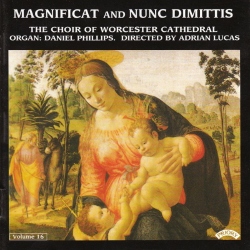
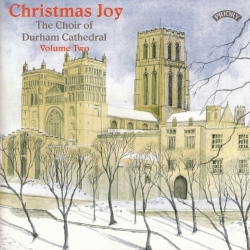
Copyright Ⓒ 2013 Davinci Finger. All rights reseved
Service Terms & Policy