


José Lidón
Released Album
Keyboard
-
-
-
 August 31, 2010
 -
 July 14, 2009
 -
-
 January 26, 1998
Vocal
-
-
 March 13, 2020
Artist Info
Role:ComposerCountry: SpainBirth:1746 in Béjar, SpainDeath:February 11, 1827Period:ClassicalGenre:KeyboardJosé Lidón was a Spanish composer and organist who lived during the 18th century. He was born on August 18, 1748, in the town of Jérica, located in the province of Castellón, Spain. Lidón was the son of a musician, and he began his musical education at a young age. He studied under his father, who was the organist at the local church, and later under the tutelage of the renowned composer and organist, Francisco Pérez. Lidón's musical talent was evident from a young age, and he quickly became known for his exceptional skills as an organist. He was appointed as the organist at the Cathedral of Valencia when he was just 18 years old, and he held this position for the rest of his life. In addition to his work as an organist, Lidón also composed music, and he became known for his contributions to the Spanish Baroque and Classical music genres. Lidón's compositions were heavily influenced by the music of his time, and he was particularly inspired by the works of Johann Sebastian Bach and George Frideric Handel. His music was characterized by its intricate harmonies, complex counterpoint, and use of the organ as a solo instrument. Lidón's compositions were also notable for their use of Spanish folk melodies and rhythms, which he incorporated into his works to create a unique and distinctly Spanish sound. One of Lidón's most famous works is his Sonata for Organ in C Major, which is considered to be one of the finest examples of Spanish Baroque music. The sonata is composed of three movements, each of which showcases Lidón's skill as an organist and composer. The first movement is a lively and energetic allegro, while the second movement is a slow and contemplative adagio. The final movement is a lively and joyful allegro, which features a virtuosic organ solo. Another notable work by Lidón is his Missa Solemnis, which is a Mass for choir and orchestra. The Mass is composed of six movements, each of which features intricate choral harmonies and complex orchestration. The Mass is notable for its use of Spanish folk melodies and rhythms, which give the work a distinctly Spanish flavor. Lidón's music was highly regarded during his lifetime, and he was considered to be one of the most important composers of his time. His works were performed throughout Spain and Europe, and he was highly respected by his contemporaries. Despite his success, Lidón remained humble and dedicated to his craft, and he continued to compose music until his death on April 1, 1827. In conclusion, José Lidón was a highly talented composer and organist who made significant contributions to the Spanish Baroque and Classical music genres. His music was characterized by its intricate harmonies, complex counterpoint, and use of Spanish folk melodies and rhythms. Lidón's works were highly regarded during his lifetime, and he remains an important figure in the history of Spanish music.More....
Recent Artist Music
1
4:35
3
Piezas (4) near the Misa
Cantabile para organo al alzar en la Misa (Cantabile for the Organ upon the Elevation of the Host d
3:35
8
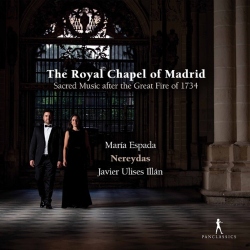
Lamentación Primera del Miércoles Santo (First Lamentation for Holy Wednesday)
Lamentación Primera del Miércoles Santo
9:23
9
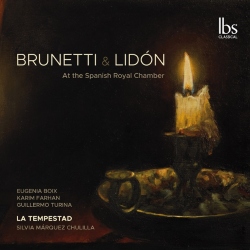
Il trionfo (The Triumph) on the translation of the Psalm 'Diligam te Domine'
Escena "Si queste voci rispettose"
6:15
Copyright Ⓒ 2013 Davinci Finger. All rights reseved
Service Terms & Policy