


Claudio Veggio
Released Album
Keyboard
-
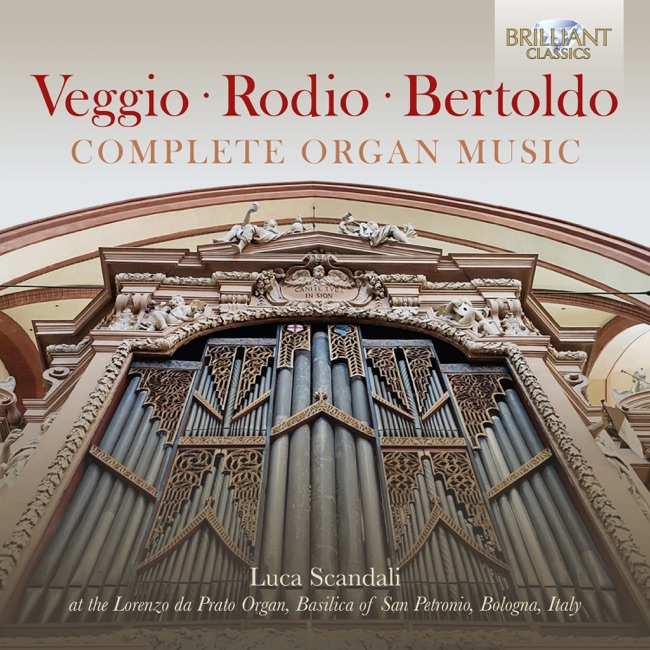 June 25, 2021
 -
 October 13, 2017
 -
 April 28, 2017
 -
 April 24, 2007
Miscellaneous
-
 October 1, 2012
Artist Info
Role:ComposerClaudio Veggio was a renowned Italian composer of classical music who lived from 1920 to 1998. He was born in the city of Naples, Italy, on May 12, 1920, to a family of musicians. His father was a violinist, and his mother was a pianist. From a young age, Veggio showed a keen interest in music and began studying the piano and violin under the guidance of his parents. Veggio's musical talent was evident from an early age, and he quickly became a prodigy. He made his public debut as a pianist at the age of six and performed his first composition at the age of nine. His parents recognized his talent and encouraged him to pursue a career in music. In 1938, Veggio enrolled at the Conservatory of San Pietro a Majella in Naples, where he studied composition under the guidance of the renowned composer Achille Longo. He also studied piano and violin at the conservatory and graduated with top honors in 1942. After completing his studies, Veggio began his career as a composer and pianist. He quickly gained recognition for his compositions, which were characterized by their lyrical melodies, rich harmonies, and intricate counterpoint. His music was heavily influenced by the works of the great Italian composers of the past, such as Vivaldi, Scarlatti, and Pergolesi. One of Veggio's early works, the Piano Concerto in A minor, was premiered in Naples in 1945 and was well-received by audiences and critics alike. The concerto showcased Veggio's virtuosity as a pianist and his skill as a composer. It was later performed by several orchestras throughout Italy and Europe. In the 1950s, Veggio began to gain international recognition for his compositions. His works were performed by orchestras in the United States, Canada, and South America. In 1956, he was invited to the United States to conduct the New York Philharmonic Orchestra in a performance of his Symphony No. 1. Veggio's music continued to evolve throughout the 1960s and 1970s. He began to experiment with new forms and techniques, incorporating elements of jazz and rock music into his compositions. His Symphony No. 3, which was premiered in 1968, was a departure from his earlier works and was characterized by its use of electronic instruments and unconventional harmonies. Despite his experimentation, Veggio remained true to his Italian roots and continued to draw inspiration from the music of his homeland. His opera La Traviata, which was premiered in Naples in 1972, was a tribute to the great Italian opera composers of the past, such as Verdi and Puccini. Veggio's later works were marked by a return to his classical roots. His Symphony No. 5, which was premiered in 1985, was a tribute to the great composers of the Baroque era, such as Bach and Handel. The symphony was characterized by its use of contrapuntal techniques and its intricate interplay between the different sections of the orchestra. Throughout his career, Veggio received numerous awards and honors for his contributions to classical music. In 1980, he was awarded the prestigious Order of Merit of the Italian Republic for his services to music. He was also a member of the Accademia Nazionale di Santa Cecilia, one of the oldest and most prestigious musical institutions in Italy. Veggio continued to compose and perform until his death in 1998. His legacy as one of Italy's greatest composers of classical music lives on through his works, which continue to be performed and admired by musicians and audiences around the world.More....
Recent Artist Music
Copyright Ⓒ 2013 Davinci Finger. All rights reseved
Service Terms & Policy