


Simeon Ten Holt
Released Album
Keyboard
-
 September 24, 2024
 -
 May 29, 2024
 -
 April 26, 2024
 -
 April 19, 2024
 -
 January 19, 2024
 -
 November 10, 2023
Chamber
-
 February 25, 2003
 -
 April 25, 2000
 -
 December 1, 1995
Artist Info
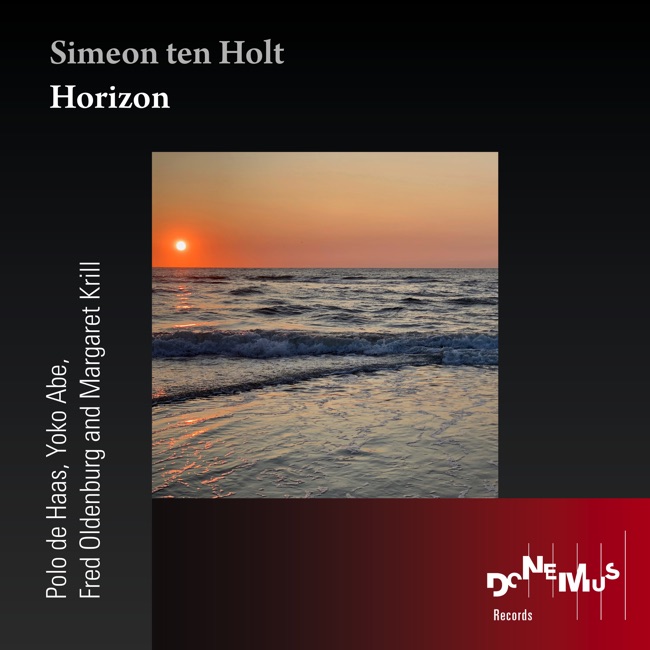
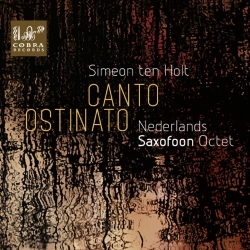
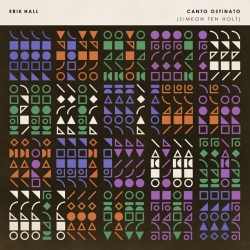
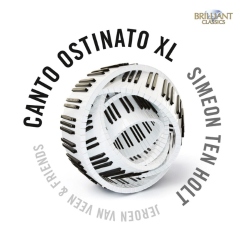
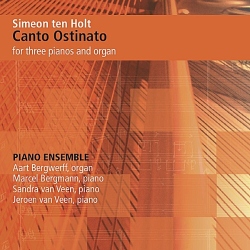
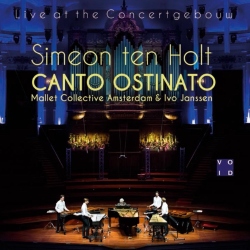
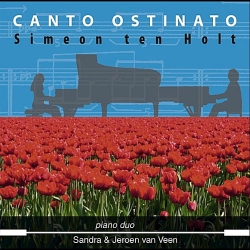
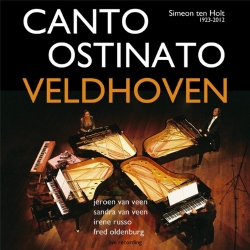
Role:ComposerBirth:January 24, 1923 in Bergen, NorwayDeath:November 25, 2012 in Alkmaar, The NetherlandsPeriod:ContemporaryModernGenre:ChamberKeyboardSimeon Ten Holt was a Dutch composer who was born on January 24, 1923, in Bergen, North Holland. He was the son of a painter and a pianist, and his parents encouraged him to pursue music from a young age. He began playing the piano at the age of six and went on to study at the Amsterdam Conservatory, where he was taught by Jakob van Domselaer, a composer who was known for his use of repetitive structures in his music. Ten Holt was deeply influenced by van Domselaer's work, and he began to experiment with repetitive structures in his own compositions. He also drew inspiration from the minimalist music of American composers such as Steve Reich and Philip Glass, as well as the music of Indian classical music. Ten Holt's early works were characterized by their use of repetitive patterns and their exploration of the relationship between sound and silence. His first major composition was "Canto Ostinato," which he began working on in 1976 and completed in 1979. The piece is scored for multiple pianos and is built around a series of repeating patterns that are played by the performers in a flexible, improvisational manner. "Canto Ostinato" quickly became one of Ten Holt's most popular works and has been performed around the world by a wide range of musicians. In the years that followed, Ten Holt continued to explore the possibilities of repetitive structures in his music. He composed a number of other works for multiple pianos, including "Lemniscaat" (1983), "Horizon" (1984), and "Incantatie IV" (1986). He also wrote several pieces for solo piano, including "Soloduiveldans I" (1980) and "Soloduiveldans II" (1982), which are both characterized by their use of repetitive patterns and their exploration of the piano's sonic possibilities. Ten Holt's music was often described as "minimalist," but he rejected this label, preferring to describe his work as "tonal" or "post-minimalist." He was interested in exploring the emotional and spiritual dimensions of music, and he believed that his repetitive structures allowed listeners to enter into a meditative state and experience a sense of transcendence. In addition to his work as a composer, Ten Holt was also a teacher and a writer. He taught composition at the Utrecht Conservatory from 1970 to 1983, and he wrote several books on music theory and composition, including "Muziek en Getal" (Music and Number) and "De Nieuwe Wilden in de Nederlandse Muziek" (The New Wild Ones in Dutch Music). Ten Holt continued to compose music throughout his life, and his later works were characterized by their use of more complex harmonic structures and their incorporation of electronic sounds. He died on November 25, 2012, at the age of 89, leaving behind a legacy as one of the most innovative and influential composers of his generation.More....
Recent Artist Music
12
18:33


Copyright Ⓒ 2013 Davinci Finger. All rights reseved
Service Terms & Policy