


Lionel Ginoux
Released Album
Vocal
-
 November 17, 2017
Chamber
-
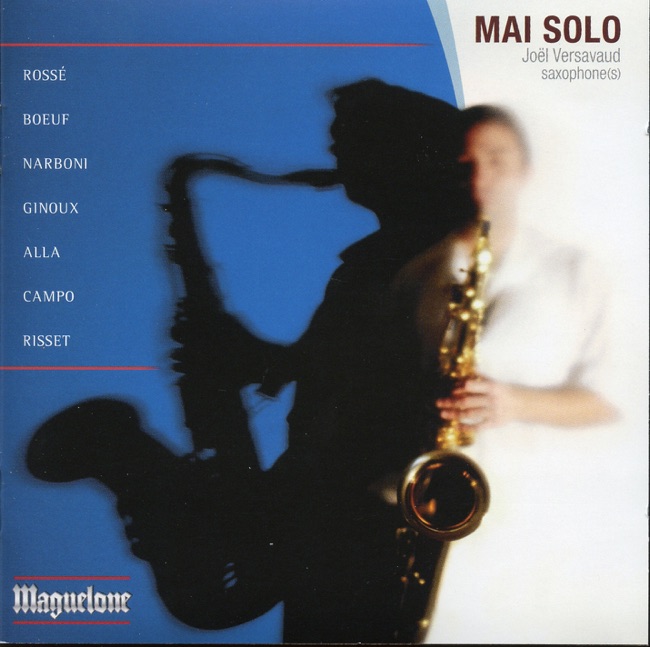 June 25, 2013
Artist Info
Role:ComposerLionel Ginoux was a French composer of classical music who was born on December 12, 1926, in Marseille, France. He was the son of a music teacher and grew up in a family that was deeply involved in music. From a young age, Ginoux showed a great interest in music and began studying the piano and the violin. He also showed a talent for composition and began writing his own music at a young age. Ginoux's musical education began at the Marseille Conservatory, where he studied under the tutelage of the renowned composer and conductor Darius Milhaud. Milhaud was a major influence on Ginoux's musical style, and he encouraged him to explore new and innovative approaches to composition. Ginoux also studied with other notable composers, including Olivier Messiaen and Arthur Honegger. After completing his studies, Ginoux began his career as a composer and quickly gained recognition for his innovative and experimental approach to music. His early works were characterized by their use of unconventional harmonies and rhythms, as well as their incorporation of elements from jazz and other popular music genres. One of Ginoux's most notable early works was his Piano Concerto, which he composed in 1952. The concerto was a groundbreaking work that showcased Ginoux's unique musical style and established him as one of the most promising young composers of his generation. The piece was well-received by critics and audiences alike, and it helped to establish Ginoux's reputation as a composer of great talent and originality. Throughout the 1950s and 1960s, Ginoux continued to compose a wide range of works, including symphonies, chamber music, and operas. His music was characterized by its complex harmonies and rhythms, as well as its use of unconventional instrumentation and electronic sounds. One of Ginoux's most notable works from this period was his opera, "Le Roi des Aulnes," which he composed in 1963. The opera was based on the poem of the same name by the German poet Johann Wolfgang von Goethe and was a powerful exploration of themes of death, love, and the human condition. The opera was a critical and commercial success, and it helped to establish Ginoux as one of the leading composers of his generation. In the 1970s and 1980s, Ginoux continued to compose a wide range of works, including several large-scale orchestral works and a number of chamber music pieces. His music during this period was characterized by its use of unconventional instrumentation and its incorporation of electronic sounds and other experimental techniques. One of Ginoux's most notable works from this period was his Symphony No. 3, which he composed in 1978. The symphony was a powerful exploration of themes of love, loss, and redemption, and it showcased Ginoux's unique musical style and his ability to create complex and emotionally powerful works. In addition to his work as a composer, Ginoux was also a respected music educator and conductor. He taught at several prestigious music schools throughout his career, including the Paris Conservatory and the Juilliard School in New York City. He also conducted a number of orchestras and ensembles, including the Orchestre National de France and the New York Philharmonic. Ginoux's contributions to the world of classical music were recognized with a number of awards and honors throughout his career. He was awarded the Prix de Rome in 1952, and he was made a Chevalier of the Legion of Honor in 1972.More....
Recent Artist Music
Copyright Ⓒ 2013 Davinci Finger. All rights reseved
Service Terms & Policy