


Charles Whittenberg
Released Album
Chamber
-
 January 14, 2014
 -
 February 26, 2010
 -
 August 3, 2004
 -
 December 26, 2000
 -
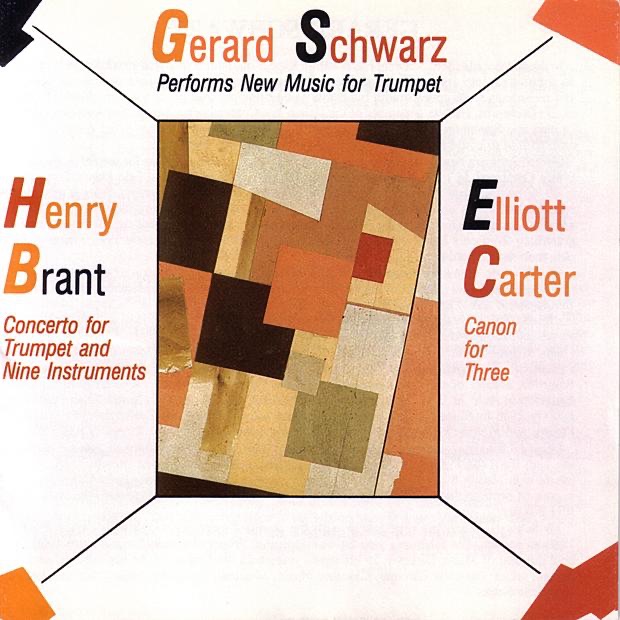 June 2, 1995
Artist Info
Role:ComposerBirth:July 6, 1927 in St. Louis, MODeath:August 22, 1984 in Hartford, CTPeriod:ModernGenre:ChamberCharles Whittenberg was a renowned classical music composer who was born on May 12, 1925, in New York City. He was the youngest of three children born to a family of musicians. His father was a violinist, and his mother was a pianist. Whittenberg's parents recognized his musical talent at an early age and encouraged him to pursue a career in music. Whittenberg began his musical education at the age of six when he started taking piano lessons. He showed a natural aptitude for the instrument and quickly progressed. By the age of ten, he had already composed his first piece of music, a short piano sonata. His parents were impressed by his talent and arranged for him to study with some of the best music teachers in the city. Whittenberg's formal musical education began at the Juilliard School of Music, where he studied composition with the renowned composer Aaron Copland. Copland recognized Whittenberg's talent and encouraged him to pursue a career in composition. Whittenberg also studied piano and conducting at Juilliard and graduated with honors in 1946. After graduation, Whittenberg worked as a freelance composer and pianist in New York City. He composed music for films, television, and the theater. He also performed as a pianist in various venues around the city. In 1950, he was awarded a Guggenheim Fellowship, which allowed him to travel to Europe to study music. Whittenberg spent two years in Europe, studying with some of the best composers of the time, including Igor Stravinsky and Olivier Messiaen. He also attended concerts and operas and immersed himself in the European music scene. His experiences in Europe had a profound influence on his music, and he returned to the United States with a new perspective on composition. Whittenberg's music is characterized by its lyrical melodies, rich harmonies, and complex rhythms. He was influenced by a wide range of musical styles, including jazz, folk music, and classical music from various periods. His compositions are often described as being both modern and accessible, with a strong emotional impact. One of Whittenberg's most famous works is his Symphony No. 1, which he composed in 1955. The symphony is a four-movement work that showcases Whittenberg's mastery of orchestration and his ability to create powerful musical themes. The symphony was premiered by the New York Philharmonic under the direction of Leonard Bernstein and was met with critical acclaim. Whittenberg's other notable works include his Piano Concerto, which he composed in 1962, and his String Quartet No. 2, which he composed in 1970. The Piano Concerto is a virtuosic work that showcases Whittenberg's skill as a pianist and his ability to create complex musical textures. The String Quartet No. 2 is a more introspective work that explores themes of loss and redemption. Throughout his career, Whittenberg received numerous awards and honors for his contributions to music. He was awarded the Pulitzer Prize for Music in 1968 for his Symphony No. 2, which was inspired by the civil rights movement. He was also awarded the National Medal of Arts in 1985 for his contributions to American music. Whittenberg continued to compose music until his death in 1995. His music remains popular today and is performed by orchestras and ensembles around the world. His legacy as a composer and musician is a testament to his talent and dedication to the art of music.More....
Recent Artist Music
5
Little Fantasy (after Bach's Advent Chorale 'Nun komm, der Helden Heiland')
Little Fantasy on Bach's Advent Chorale 'Nun komm, der Helden Heiland' (Cantata 62)
3:8
Copyright Ⓒ 2013 Davinci Finger. All rights reseved
Service Terms & Policy