


Feliks Nowowiejski
Released Album
Keyboard
-
-
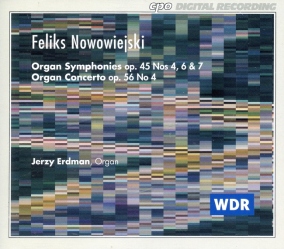
 April 6, 2018
 -
 April 6, 2018
 -
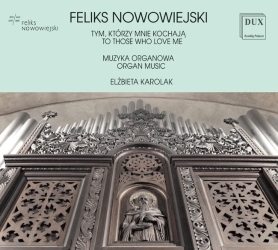
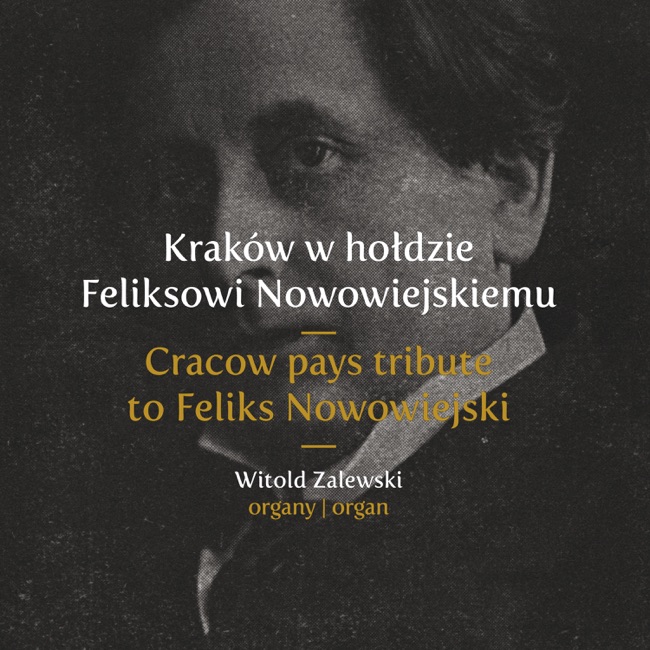 May 24, 2016
 -
 January 6, 2014
 -
 August 1, 2013
Choral
-
 October 6, 2017
 -
 April 21, 2017
 -
 January 1, 2009
Orchestral
-
 June 17, 2022
 -
 May 25, 2018
 -
 March 16, 2018
Artist Info
Role:ComposerBirth:February 7, 1877Death:January 23, 1946Period:ModernGenre:KeyboardFeliks Nowowiejski was a Polish composer, conductor, and organist who was born on February 7, 1877, in Wartenburg, East Prussia (now Barczewo, Poland). He was the son of a Polish father and a German mother, and he grew up in a bilingual environment. His father was a music teacher, and he introduced Feliks to music at an early age. Feliks showed a great talent for music, and he began to study piano and organ with his father. In 1895, Feliks moved to Berlin to study music at the Royal Academy of Music. He studied composition with Friedrich Kiel and organ with Karl August Haupt. He also studied conducting with Arthur Nikisch, who was one of the most famous conductors of his time. Feliks was an excellent student, and he graduated with honors in 1899. After graduation, Feliks returned to Poland and began his career as a composer and conductor. He became the organist at the St. Mary's Church in Gdańsk, and he also conducted the Gdańsk Philharmonic Orchestra. In 1906, he became the conductor of the Poznań Philharmonic Orchestra, which was one of the most prestigious orchestras in Poland at that time. Feliks was a prolific composer, and he wrote music in many different genres. He wrote symphonies, operas, oratorios, cantatas, chamber music, and organ music. His music was influenced by Polish folk music, and he often used folk melodies in his compositions. He was also influenced by German Romanticism, and his music was characterized by lush harmonies and rich orchestration. One of Feliks's most famous works is his oratorio "Quo Vadis." The oratorio is based on the novel of the same name by Henryk Sienkiewicz, which tells the story of a Roman soldier who converts to Christianity. The oratorio was first performed in 1907, and it was a great success. It has since become one of the most popular works in the Polish choral repertoire. Another famous work by Feliks is his Symphony No. 1 "Polonia." The symphony was written in 1909, and it is a tribute to Poland. The symphony is divided into four movements, and each movement is based on a different Polish folk melody. The symphony was first performed in 1910, and it was a great success. It has since become one of the most popular symphonies in the Polish repertoire. Feliks also wrote several operas, including "Legenda Bałtyku" (The Legend of the Baltic) and "Król Maciuś Pierwszy" (King Matt the First). "Legenda Bałtyku" is based on a Polish legend about a mermaid who falls in love with a fisherman. The opera was first performed in 1929, and it was a great success. "Król Maciuś Pierwszy" is based on a children's book by Janusz Korczak, and it tells the story of a young king who tries to make his kingdom a better place. The opera was first performed in 1936, and it was also a great success. In addition to his work as a composer, Feliks was also a respected conductor. He conducted many of his own works, as well as works by other composers. He was known for his passionate and expressive conducting style, and he was highly regarded by his colleagues and audiences alike. Feliks died on January 18, 1946, in Poznań, Poland. He left behind a rich legacy of music that continues to be performed and appreciated today. His music is an important part of the Polish classical music tradition, and it has influenced many composers who have come after him.More....
Recent Artist Music
3
7:56
4
Entry into the cathedral, no. 3, for organ Op. 8/3
Marsz uroczysty Wejscie do Katedry (Einzug in den Dom) (Ceremonial march Entry into the Cathedral), Op. 8 No. 3
3:49
8
Folk Paintings (Polish Dances), Op. 18
I. Wedding Procession (March) Moderato. Lento. Con moto
4:19
11
13:4
12

6:36
13
4:23
Recommend Playlist


Copyright Ⓒ 2013 Davinci Finger. All rights reseved
Service Terms & Policy