


Janis Medins
Released Album
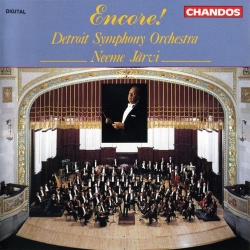
Orchestral
-
 August 28, 2001
 -
 July 1, 1993
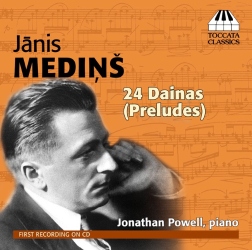
Keyboard
-
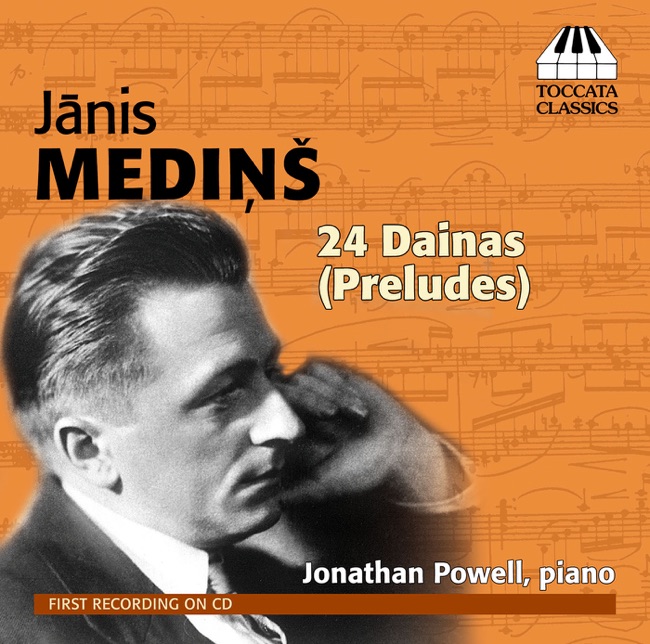 October 1, 2012
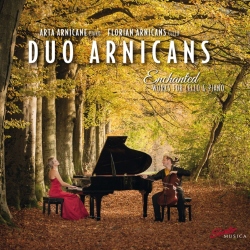
Chamber
-
 April 27, 2018
Artist Info
Role:ComposerPeriod:ModernGenre:OrchestralJanis Medins was a Latvian composer born on January 19, 1890, in the small town of Durbe, located in the western part of Latvia. He was the youngest of six children in a family of farmers. His father was a self-taught musician who played the accordion and the violin, and his mother was a singer. Medins showed an early interest in music and began playing the piano at the age of six. Medins received his first formal music education at the Durbe Parish School, where he studied the piano and the violin. In 1904, he moved to the city of Liepaja to continue his studies at the Liepaja Music School. There, he studied composition with the Latvian composer Jazeps Vitols, who was a prominent figure in the Latvian music scene at the time. Vitols recognized Medins' talent and encouraged him to pursue a career in music. In 1910, Medins moved to St. Petersburg, Russia, to study at the St. Petersburg Conservatory. There, he studied composition with Nikolai Rimsky-Korsakov, one of the most influential Russian composers of the time. Rimsky-Korsakov's teaching had a profound impact on Medins, and he later described him as his "musical father." After completing his studies in St. Petersburg, Medins returned to Latvia and began working as a music teacher. He also became involved in the Latvian cultural scene and was a member of the Latvian Writers' Union and the Latvian Composers' Union. In 1924, he was appointed the director of the Latvian State Conservatory, a position he held until 1944. Medins' music is characterized by its lyricism, harmonic richness, and use of Latvian folk melodies. He was particularly interested in the music of the Latvian peasantry and incorporated many folk elements into his compositions. His music is also notable for its use of polyphonic textures and complex harmonies. One of Medins' most famous works is his Symphony No. 1, which he composed in 1925. The symphony is in four movements and is based on Latvian folk melodies. It was well-received by audiences and critics alike and helped establish Medins as one of the leading composers in Latvia. Another notable work by Medins is his opera "Baiba," which he composed in 1932. The opera is based on a Latvian folk tale and tells the story of a young woman who is forced to marry a wealthy merchant but falls in love with a poor fisherman. The opera was a great success and is still performed in Latvia today. Medins also composed a number of choral works, including his "Cantata for the 20th Anniversary of Latvian Independence," which he composed in 1938. The cantata is a celebration of Latvian culture and history and features a large choir, orchestra, and soloists. During World War II, Latvia was occupied by the Soviet Union, and Medins' career was severely impacted. He was forced to resign from his position at the Latvian State Conservatory, and many of his works were banned by the Soviet authorities. Despite these challenges, Medins continued to compose and remained an important figure in the Latvian music scene. Medins died on August 7, 1966, in Riga, Latvia. His legacy as one of the most important Latvian composers of the 20th century lives on, and his music continues to be performed and celebrated in Latvia and beyond.More....
Recent Artist Music

Copyright Ⓒ 2013 Davinci Finger. All rights reseved
Service Terms & Policy