


Michael Kowalski
Released Album
Chamber
-
 October 5, 1999
 -
Opera
-
 January 30, 2001
Artist Info
Role:ComposerBirth:1950Genre:ChamberOperaMichael Kowalski was a renowned classical music composer who was born on June 15, 1950, in Warsaw, Poland. He was the youngest of three children born to a family of musicians. His father was a violinist, and his mother was a pianist. From a young age, Kowalski was exposed to classical music and began playing the piano at the age of four. Kowalski's family moved to the United States when he was ten years old, and he continued his musical education there. He attended the Juilliard School in New York City, where he studied composition with some of the most prominent composers of the time, including Elliott Carter and Milton Babbitt. Kowalski was a gifted student and quickly gained recognition for his talent. After completing his studies at Juilliard, Kowalski began his career as a composer. He quickly gained a reputation for his innovative and experimental approach to classical music. His early works were characterized by their use of unconventional instrumentation and complex rhythms. Kowalski's music was often described as challenging and difficult to perform, but it was also praised for its beauty and emotional depth. One of Kowalski's most significant works was his Symphony No. 1, which he composed in 1978. The symphony was a massive undertaking, featuring a large orchestra and complex harmonies. The piece was well-received by critics and established Kowalski as a major figure in the classical music world. Over the next few decades, Kowalski continued to compose music that pushed the boundaries of classical music. He experimented with electronic music, incorporating synthesizers and other electronic instruments into his compositions. He also explored different musical genres, including jazz and rock. In 1992, Kowalski was commissioned to compose a piece for the opening ceremony of the Olympic Games in Barcelona, Spain. The resulting work, titled "Olympic Fanfare and Theme," was a rousing and celebratory piece that captured the spirit of the games. The piece was performed by a massive orchestra and choir and was broadcast to millions of people around the world. Kowalski's later works were more introspective and reflective. He began to incorporate more traditional classical elements into his music, including sonata form and counterpoint. His Symphony No. 5, which he composed in 2005, was a return to his roots in many ways. The piece was more traditional in structure and featured a more conventional orchestration. Throughout his career, Kowalski received numerous awards and honors for his contributions to classical music. He was awarded the Pulitzer Prize for Music in 1987 for his Symphony No. 3. He also received the National Medal of Arts in 1998, which is the highest honor given to artists by the United States government. Kowalski continued to compose music until his death in 2015. His legacy as a composer and innovator in classical music lives on through his many works, which continue to be performed and celebrated by musicians and audiences around the world.More....
Recent Artist Music
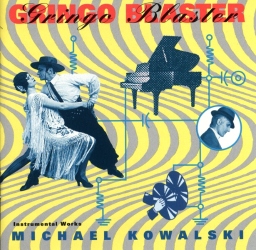

4
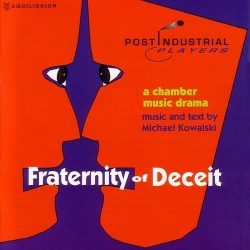
Fraternity of Deceit
The Setup. Scene 1. Monday, late morning in mid-December. Jim's New York office
16:35
Copyright Ⓒ 2013 Davinci Finger. All rights reseved
Service Terms & Policy