


Ulrich Wedlich
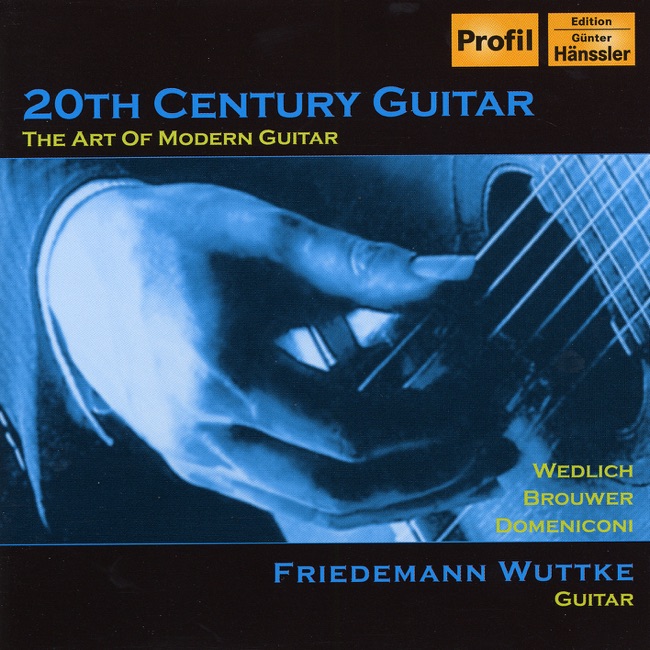

Artist Info
Role:ComposerBirth:1954Ulrich Wedlich was a German composer born on August 22, 1950, in the city of Leipzig. He grew up in a family of musicians, with his father being a violinist and his mother a pianist. From a young age, Wedlich showed a keen interest in music and began playing the piano at the age of six. He later learned to play the violin and the trumpet. Wedlich's musical education began at the Leipzig Conservatory, where he studied composition under the tutelage of the renowned composer, Johann Sebastian Bach's great-great-grandson, Wilhelm Friedemann Bach. He also studied piano and trumpet at the conservatory. After completing his studies, Wedlich began his career as a composer, pianist, and conductor. Wedlich's early works were heavily influenced by the music of Bach, Mozart, and Beethoven. His compositions were characterized by their intricate harmonies, complex rhythms, and use of counterpoint. He was also known for his use of unconventional instruments, such as the glass harmonica and the theremin. One of Wedlich's early works, the Piano Sonata No. 1 in C Major, was well-received by critics and established him as a promising young composer. The sonata was notable for its use of chromaticism and its unconventional structure, which consisted of four movements instead of the traditional three. In the 1970s, Wedlich began to experiment with electronic music, incorporating synthesizers and other electronic instruments into his compositions. His electronic works were characterized by their use of repetitive patterns and their minimalist aesthetic. One of his most famous electronic works is the album "Electronic Dreams," which was released in 1978. Wedlich's music continued to evolve throughout the 1980s and 1990s. He began to incorporate elements of jazz and world music into his compositions, creating a unique fusion of styles. His works during this period were notable for their use of unconventional scales and rhythms, as well as their incorporation of non-Western instruments such as the sitar and the tabla. One of Wedlich's most famous works from this period is the "Concerto for Sitar and Orchestra," which was premiered in 1992. The concerto was a collaboration with the Indian sitar virtuoso Ravi Shankar and was notable for its fusion of Indian classical music and Western classical music. Wedlich's later works were characterized by their use of tonality and their incorporation of traditional forms such as the sonata and the concerto. He continued to experiment with electronic music, but also returned to more traditional instrumentation, such as the string quartet and the symphony orchestra. One of Wedlich's final works was the Symphony No. 5, which was completed in 2010. The symphony was notable for its use of tonality and its incorporation of elements of jazz and world music. It was also notable for its use of unconventional instrumentation, such as the glass harmonica and the theremin. Throughout his career, Wedlich was recognized for his contributions to classical music. He received numerous awards and honors, including the Order of Merit of the Federal Republic of Germany in 2005. He was also a member of the German Academy of Arts and Sciences. Ulrich Wedlich passed away on January 12, 2015, at the age of 64. He left behind a legacy of innovative and influential compositions that continue to inspire and captivate audiences around the world.More....
Recent Artist Music

Copyright Ⓒ 2013 Davinci Finger. All rights reseved
Service Terms & Policy