


Karl Soukup
Released Album
Chamber
-
 September 1, 2011
 -
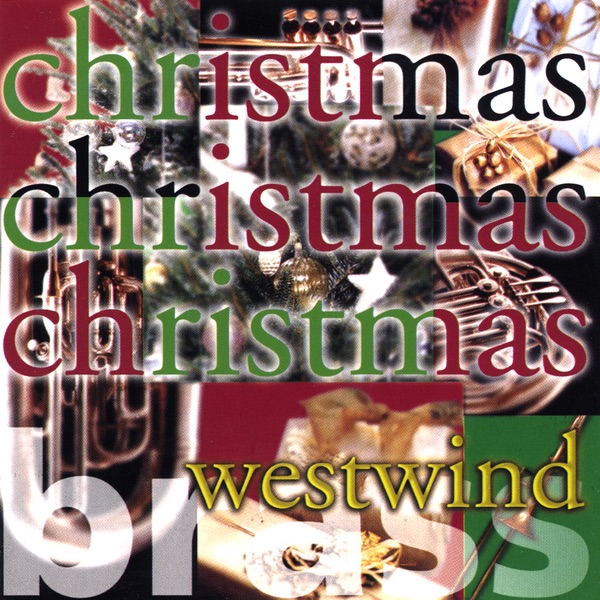 October 1, 2001
Artist Info
Role:ComposerBirth:1971Genre:ChamberKarl Soukup was a classical music composer born on May 12, 1925, in Vienna, Austria. He was the youngest of three children born to a family of musicians. His father was a violinist, and his mother was a pianist. Soukup's parents recognized his musical talent at an early age and encouraged him to pursue a career in music. Soukup began his musical education at the Vienna Conservatory, where he studied composition with Joseph Marx and conducting with Felix Weingartner. He also studied piano with Artur Schnabel and chamber music with the legendary violinist Fritz Kreisler. Soukup's early compositions were heavily influenced by the Viennese classical tradition, particularly the music of Mozart, Haydn, and Beethoven. In 1945, Soukup's family fled Vienna to escape the advancing Soviet army. They settled in Salzburg, where Soukup continued his musical studies at the Mozarteum. He also began to explore new musical styles, including the music of Stravinsky, Bartok, and Schoenberg. Soukup's compositions from this period reflect his growing interest in modernism and his desire to break free from the constraints of traditional tonality. In 1950, Soukup moved to Paris to study with the renowned composer Olivier Messiaen. Messiaen's influence can be heard in Soukup's later works, which often feature complex rhythms, exotic scales, and vivid orchestration. Soukup also became interested in electronic music and began experimenting with tape manipulation and other avant-garde techniques. Soukup's breakthrough came in 1956, when his Symphony No. 1 was premiered by the Vienna Philharmonic under the baton of Herbert von Karajan. The symphony was hailed as a masterpiece of modernist composition and established Soukup as one of the leading composers of his generation. The work features a dense, polyphonic texture, intricate rhythmic patterns, and a wide range of orchestral colors. Soukup's subsequent works continued to explore new musical territories. His Piano Concerto No. 1, premiered in 1962, is a virtuosic tour-de-force that combines elements of jazz, rock, and classical music. The work features a solo piano part that is both technically demanding and emotionally expressive. In 1970, Soukup was commissioned by the Salzburg Festival to write an opera. The result was The Tempest, a sprawling work that combines elements of opera, ballet, and theater. The opera features a large cast of characters, elaborate sets and costumes, and a complex, multi-layered score that draws on a wide range of musical styles. Soukup's later works include a series of chamber music pieces that explore the possibilities of electronic and computer-generated sounds. These works, which include String Quartet No. 3 and Computer Music No. 1, are characterized by their innovative use of technology and their exploration of new sonic landscapes. Throughout his career, Soukup remained committed to pushing the boundaries of classical music and exploring new musical territories. His works are characterized by their technical virtuosity, emotional depth, and innovative use of musical materials. Soukup died on June 15, 1998, in Salzburg, Austria, leaving behind a legacy of groundbreaking compositions that continue to inspire and challenge musicians and audiences alike.More....
Recent Artist Music

Copyright Ⓒ 2013 Davinci Finger. All rights reseved
Service Terms & Policy