


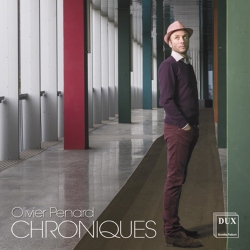
Olivier Penard
Released Album
Chamber
-
 January 8, 2016
 -
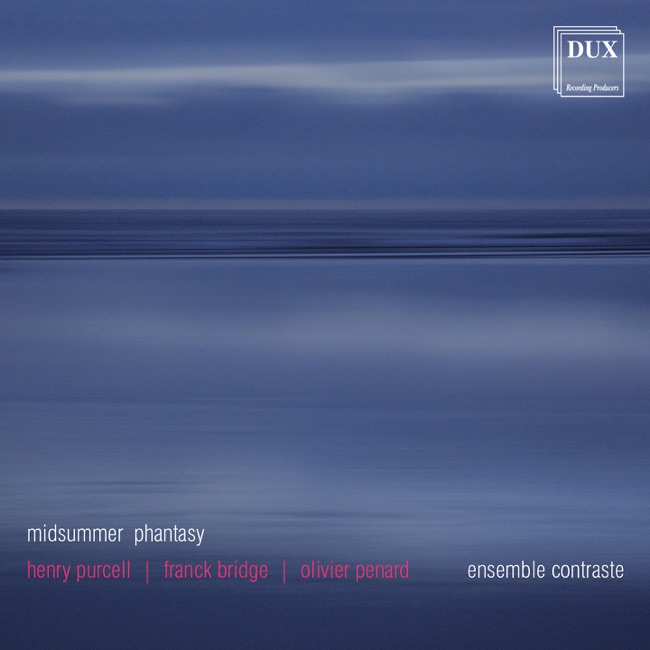 January 13, 2015
Artist Info
Role:ComposerOlivier Penard was a French composer born on May 12, 1965, in Paris, France. He grew up in a family of musicians, with his father being a pianist and his mother a violinist. From a young age, Penard showed a keen interest in music and began playing the piano at the age of five. He later went on to study music at the Conservatoire de Paris, where he honed his skills as a composer. Penard's early compositions were heavily influenced by the classical music of the 18th and 19th centuries, particularly the works of Mozart, Beethoven, and Chopin. However, as he matured as a composer, he began to incorporate more modern elements into his music, drawing inspiration from the likes of Debussy, Ravel, and Stravinsky. One of Penard's most notable works is his Symphony No. 1, which he composed in 1992. The piece is a grand, sweeping work that showcases Penard's mastery of orchestration and his ability to create complex, multi-layered textures. The symphony is divided into four movements, each of which explores a different mood and theme. The first movement is a lively, energetic piece that sets the tone for the rest of the symphony. The second movement is a slow, mournful piece that features a haunting melody played by the strings. The third movement is a lively, dance-like piece that features a playful, syncopated rhythm. The final movement is a triumphant, celebratory piece that brings the symphony to a rousing conclusion. Another notable work by Penard is his Piano Concerto No. 1, which he composed in 1998. The concerto is a virtuosic showcase for the solo pianist, featuring intricate, fast-paced passages that require great technical skill. The piece is also notable for its use of unconventional harmonies and rhythms, which give it a modern, avant-garde feel. The concerto is divided into three movements, each of which explores a different mood and theme. The first movement is a lively, energetic piece that features a driving rhythm and a playful, syncopated melody. The second movement is a slow, introspective piece that features a haunting, melancholy melody played by the solo piano. The final movement is a fast-paced, virtuosic piece that brings the concerto to a thrilling conclusion. In addition to his symphonies and concertos, Penard also composed a number of chamber works, including string quartets, sonatas, and trios. One of his most notable chamber works is his String Quartet No. 1, which he composed in 1995. The quartet is a complex, multi-layered work that showcases Penard's mastery of counterpoint and his ability to create intricate, interweaving textures. The piece is divided into four movements, each of which explores a different mood and theme. The first movement is a lively, energetic piece that features a driving rhythm and a playful, syncopated melody. The second movement is a slow, introspective piece that features a haunting, melancholy melody played by the first violin. The third movement is a lively, dance-like piece that features a playful, syncopated rhythm. The final movement is a fast-paced, virtuosic piece that brings the quartet to a thrilling conclusion. Throughout his career, Penard was known for his innovative approach to composition and his willingness to experiment with new sounds and techniques. His music was often characterized by its complex harmonies, intricate rhythms, and multi-layered textures.More....
Copyright Ⓒ 2013 Davinci Finger. All rights reseved
Service Terms & Policy