


Karol Józef Lipinski
Released Album
Chamber
-
 November 6, 2020
 -
 May 17, 2019
 -
 August 10, 2018
 -
 June 4, 2013
 -
 April 19, 2013
 -
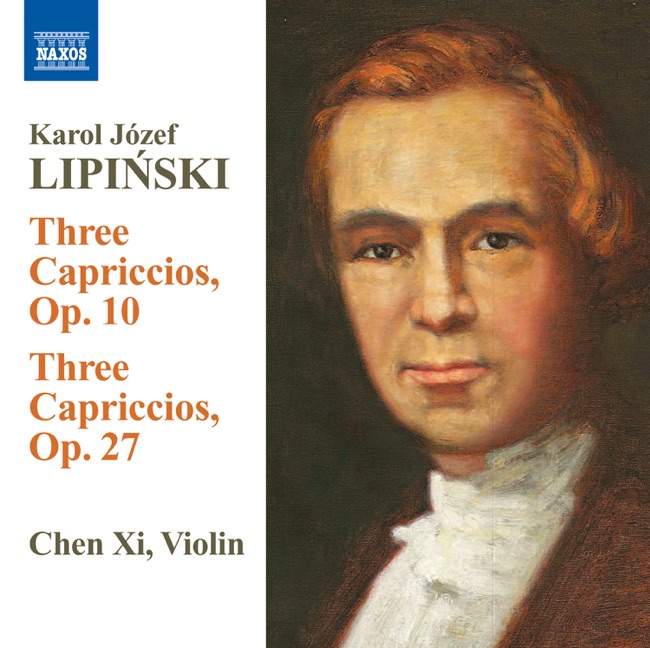 January 30, 2012
Concerto
-
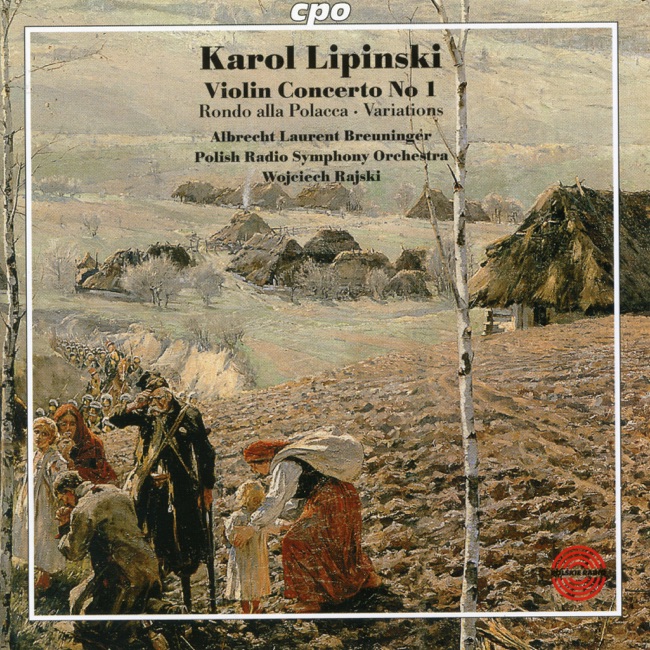
-
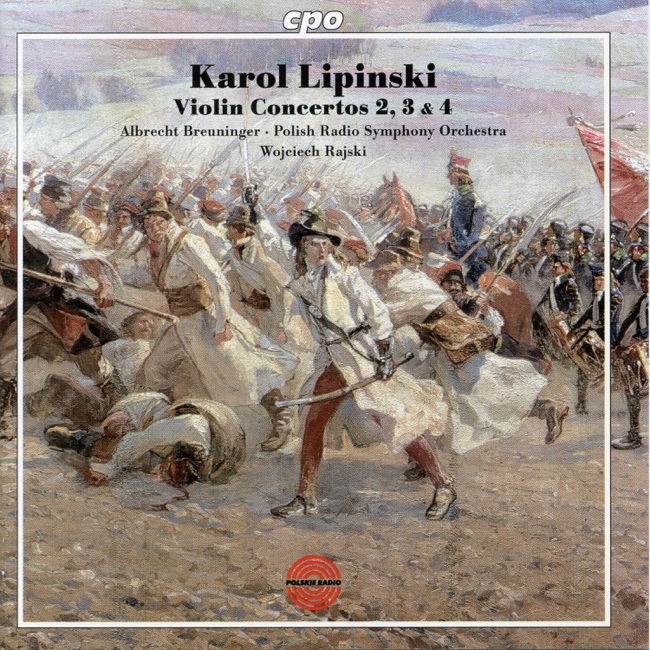 February 1, 2003
Orchestral
-
 May 22, 2020
Artist Info
Role:ComposerBirth:October 30, 1790Death:December 16, 1861Period:RomanticGenre:ChamberConcertoKarol Józef Lipiński was a renowned Polish composer and violinist who lived from 1790 to 1861. He was born in Radzyń Podlaski, Poland, on October 30, 1790, to a family of musicians. His father, Feliks Lipiński, was a violinist and composer, and his mother, Marianna Lipińska, was a singer. Karol Józef Lipiński showed an early interest in music and began playing the violin at the age of six. Lipiński's musical education began with his father, who taught him the basics of violin playing. Later, he studied with the renowned violinist and composer, Giovanni Battista Viotti, in Paris. Lipiński's talent was quickly recognized, and he made his debut as a soloist at the age of nine. He continued to perform in concerts throughout Europe, gaining a reputation as one of the most talented violinists of his time. In addition to his performing career, Lipiński was also a prolific composer. He wrote numerous works for the violin, including concertos, sonatas, and études. His compositions were influenced by the classical style of Mozart and Haydn, as well as the romantic style of Beethoven and Schubert. One of Lipiński's most famous works is his Violin Concerto No. 1 in E minor, Op. 21. The concerto was composed in 1828 and premiered in Warsaw the following year. It is a virtuosic work that showcases Lipiński's technical skill as a violinist. The concerto is in three movements, with the first and third movements in E minor and the second movement in A major. Another notable work by Lipiński is his Caprice in A minor, Op. 10, No. 2. The piece is a challenging étude that is often used as a technical exercise for violinists. It is known for its fast and intricate passages, as well as its use of double stops and harmonics. Lipiński's music was well-received during his lifetime, and he was praised for his technical skill and musicality. He was also known for his contributions to violin pedagogy, and his études and exercises are still used by violinists today. In addition to his musical career, Lipiński was also involved in politics. He was a member of the Polish National Government during the November Uprising of 1830-1831, which aimed to overthrow Russian rule in Poland. Lipiński served as a diplomat for the government, traveling to France and England to seek support for the uprising. Despite his involvement in politics, Lipiński remained dedicated to his music. He continued to perform and compose throughout his life, and his legacy as a violinist and composer lives on today. His works are still performed and studied by violinists around the world, and he is remembered as one of the greatest violinists of the 19th century.More....
Recent Artist Music
1
3:30
2
11:21
3
15:39
9
12:33
10
11:43

Copyright Ⓒ 2013 Davinci Finger. All rights reseved
Service Terms & Policy