


Heimo Erbse
Released Album
Chamber
-
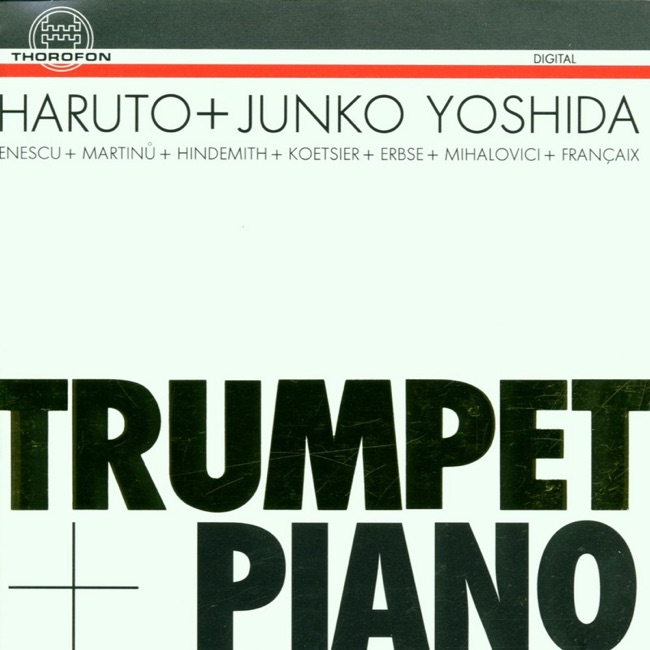 November 15, 2008
 -
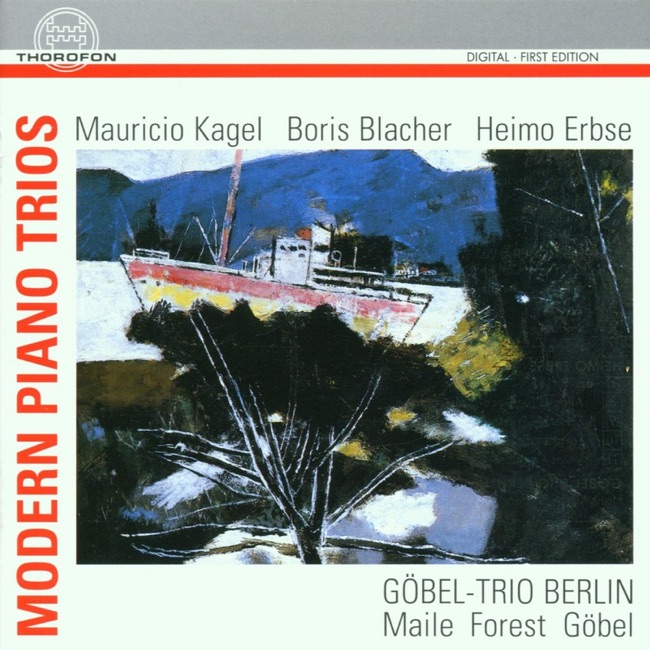 November 15, 2008
Artist Info
Role:ComposerHeimo Erbse was a German composer who was born on May 12, 1925, in Berlin. He was the son of a music teacher and grew up in a family that was deeply involved in music. His father was a pianist and his mother was a singer, and they both encouraged Heimo to pursue a career in music. Erbse began his musical education at a young age, studying piano and composition with his father. He later studied at the Berlin Conservatory, where he was taught by some of the most prominent composers of the time, including Paul Hindemith and Boris Blacher. After completing his studies, Erbse began working as a freelance composer, writing music for a variety of mediums, including film, television, and radio. He also worked as a music teacher, teaching composition and theory at various institutions throughout Germany. Erbse's early works were heavily influenced by the music of the Second Viennese School, particularly the works of Arnold Schoenberg. However, he soon began to develop his own unique style, which was characterized by a blend of tonal and atonal elements. One of Erbse's most notable works is his Symphony No. 1, which was composed in 1955. The symphony is a complex and challenging work that showcases Erbse's mastery of orchestration and his ability to create intricate musical textures. The piece was well-received by critics and helped establish Erbse as one of the leading composers of his generation. In addition to his symphonies, Erbse also wrote a number of chamber works, including string quartets, sonatas, and trios. These works are characterized by their intricate counterpoint and complex harmonies, and are considered some of the finest examples of contemporary chamber music. Erbse's music was also heavily influenced by his interest in literature and philosophy. He often drew inspiration from the works of writers such as Franz Kafka and Friedrich Nietzsche, and his music often explored themes of existentialism and the human condition. Despite his success as a composer, Erbse remained a relatively private individual throughout his life. He rarely gave interviews or made public appearances, preferring to let his music speak for itself. Erbse continued to compose throughout his life, and his later works were characterized by a more introspective and contemplative style. He died on December 22, 1999, at the age of 74, leaving behind a legacy of innovative and challenging music that continues to inspire and captivate audiences to this day.More....
Copyright Ⓒ 2013 Davinci Finger. All rights reseved
Service Terms & Policy