


Josef Matthias Hauer
Released Album
Keyboard
-
-
 August 17, 2000
 -
 April 1, 1997
 -
 June 1, 1995
Chamber
-
 October 30, 2012
Orchestral
-
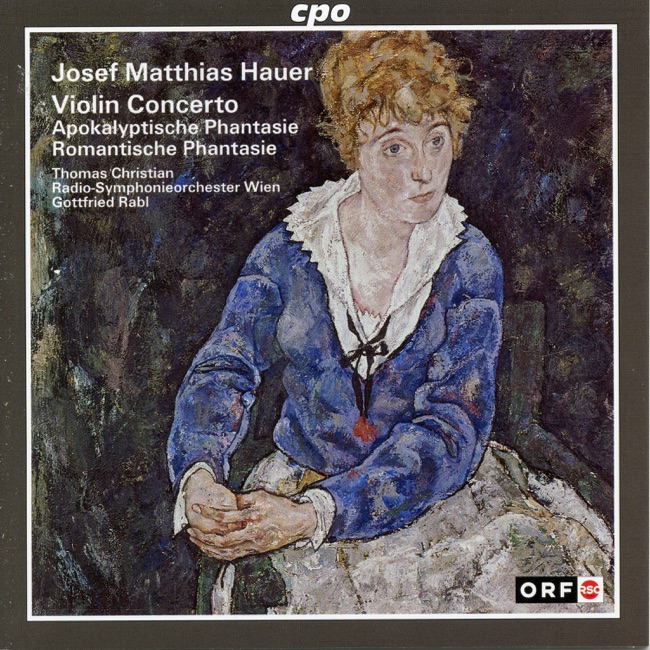 April 24, 2007
Artist Info
Role:ComposerCountry: AustriaBirth:March 19, 1883 in Wiener Neustadt, AustriaDeath:September 22, 1959 in Vienna, AustriaPeriod:ModernGenre:ChamberKeyboardJosef Matthias Hauer was a prominent Austrian composer and music theorist who was born on March 19, 1883, in Wiener Neustadt, Austria. He was the son of a shoemaker and grew up in a working-class family. Hauer showed an early interest in music and began studying the piano at the age of six. He later studied music theory and composition with Arnold Schoenberg, who would become a lifelong friend and colleague. Hauer's early compositions were influenced by the late Romantic style of composers such as Richard Wagner and Gustav Mahler. However, he soon became interested in exploring new musical forms and techniques. In 1919, he developed a new system of composition called "Zwölftonspiel" (twelve-tone play), which was based on the use of a twelve-tone row. This system would later become known as twelve-tone composition, which was also developed independently by Schoenberg. Hauer's music was characterized by its use of complex rhythms, unconventional harmonies, and intricate counterpoint. He was also interested in exploring the relationship between music and mathematics, and his compositions often featured mathematical structures and patterns. One of Hauer's most significant works is his Symphony No. 1, Op. 20, which was composed in 1921. The symphony is notable for its use of a twelve-tone row and its complex rhythmic and harmonic structures. It was premiered in Vienna in 1924 and received critical acclaim. Hauer also composed a number of chamber works, including string quartets, piano sonatas, and trios. His String Quartet No. 4, Op. 36, is particularly noteworthy for its use of a twelve-tone row and its intricate counterpoint. In addition to his work as a composer, Hauer was also a respected music theorist. He wrote extensively on the relationship between music and mathematics, and his theories influenced the development of serialism and other modernist musical styles. Hauer's career was interrupted by the rise of the Nazi party in Austria in the 1930s. He was forced to flee the country in 1938 and spent the rest of his life in exile in various countries, including Egypt, Turkey, and the United States. Despite these challenges, he continued to compose and write about music until his death in 1959. Today, Hauer is remembered as one of the pioneers of twelve-tone composition and a significant figure in the development of modernist music. His innovative approach to composition and his contributions to music theory continue to influence contemporary composers and musicians.More....
Recent Artist Music
1
4:45


6
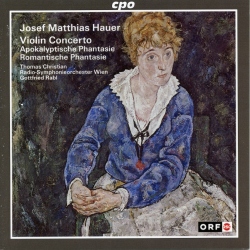
6:45
7

5:7
9

Piano pieces with inscriptions from the words of Friedrich Hölderlin, Op. 25
No. 15. Beweglicher eilt schon die wache Quelle
27

Copyright Ⓒ 2013 Davinci Finger. All rights reseved
Service Terms & Policy