


Christoph Nichelmann
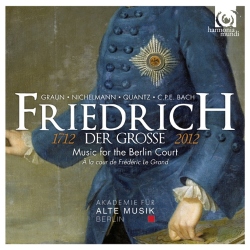
Released Album
Keyboard
-
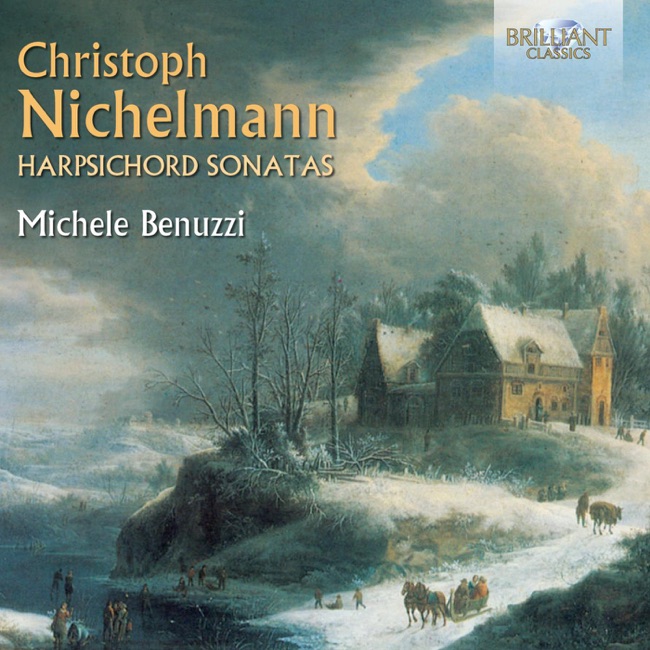 February 24, 2015
Concerto
Artist Info
Role:ComposerBirth:August 13, 1717 in Treuenbrietzen, GermanyDeath:July 20, 1762 in Berlin, GermanyGenre:ConcertoChristoph Nichelmann was a German composer and musician who lived during the 18th century. He was born on December 26, 1717, in Treuenbrietzen, a small town in the state of Brandenburg. His father, Johann Christoph Nichelmann, was a musician and organist, and he was the one who introduced his son to music at a young age. Nichelmann showed a great talent for music from an early age, and he began his formal musical education at the age of six. He studied with his father and later with Johann Sebastian Bach, who was a family friend. Bach recognized Nichelmann's talent and encouraged him to pursue a career in music. In 1735, Nichelmann moved to Leipzig to study at the University of Leipzig. He studied music theory, composition, and keyboard performance under the tutelage of Johann Gottlieb Graun and Johann Friedrich Fasch. During this time, he also became friends with Johann Joachim Quantz, a famous flutist and composer. After completing his studies, Nichelmann worked as a music teacher and composer in various cities in Germany. He worked as a court musician in Bayreuth, where he composed music for the Margrave of Bayreuth. He also worked as a music director in Frankfurt an der Oder and as a court musician in Berlin. Nichelmann's music was highly regarded during his lifetime, and he was considered one of the leading composers of his time. He composed music in various genres, including opera, chamber music, and keyboard music. His music was characterized by its elegance, clarity, and simplicity. One of Nichelmann's most famous works is his Sonata in G Major for Flute and Harpsichord. This piece is a beautiful example of the Baroque sonata form, with its three movements: Allegro, Adagio, and Allegro. The first movement is lively and energetic, while the second movement is slow and expressive. The final movement is a lively dance, with a catchy melody and a playful rhythm. Another notable work by Nichelmann is his Keyboard Sonata in C Major. This piece is a beautiful example of the Classical sonata form, with its four movements: Allegro, Andante, Menuetto, and Allegro. The first movement is lively and energetic, while the second movement is slow and expressive. The third movement is a graceful dance, while the final movement is a lively and playful romp. Nichelmann's music was highly influential during his lifetime, and it had a significant impact on the development of Classical music. His music was admired by many of his contemporaries, including Johann Sebastian Bach, Johann Joachim Quantz, and Carl Philipp Emanuel Bach. Despite his success as a composer, Nichelmann's life was not without its challenges. He suffered from poor health throughout his life, and he struggled with financial difficulties. He also experienced personal tragedies, including the death of his wife and two of his children. Nichelmann died on June 17, 1762, in Berlin, at the age of 44. Despite his relatively short life, he left behind a rich legacy of music that continues to be admired and studied by musicians and music lovers around the world. His music is a testament to his talent, his dedication to his craft, and his enduring contribution to the world of Classical music.More....
Copyright Ⓒ 2013 Davinci Finger. All rights reseved
Service Terms & Policy