


Andre Hajdu
Released Album
Orchestral
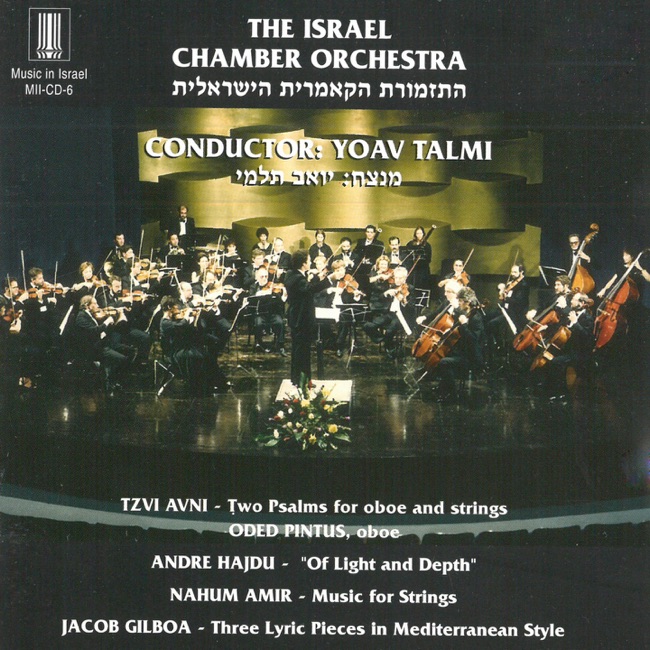
Keyboard
-
 January 1, 2007
Choral
-
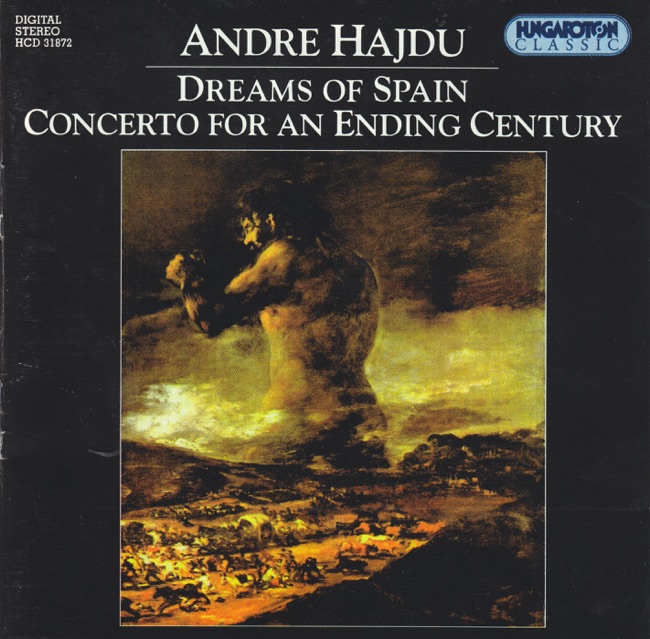 March 15, 2000
Artist Info
Role:ComposerGenre:ChamberConcertoAndré Hajdu was a Hungarian-born composer who made significant contributions to the world of classical music. Born on August 5, 1932, in Budapest, Hungary, Hajdu was raised in a family of musicians. His father, Lajos Hajdu, was a renowned pianist, and his mother, Margit Varro, was a singer. Hajdu began his musical training at a young age, studying piano and composition with his father. Hajdu's early years were marked by the turmoil of World War II and the subsequent Soviet occupation of Hungary. Despite these challenges, he continued to pursue his musical studies, attending the Franz Liszt Academy of Music in Budapest. There, he studied composition with Zoltán Kodály, one of Hungary's most celebrated composers. After completing his studies, Hajdu began his career as a composer, working in a variety of genres, including opera, ballet, and chamber music. His early works were heavily influenced by the folk music of Hungary and other Eastern European countries, as well as by the avant-garde music of the time. One of Hajdu's most significant works from this period was his opera, "The Well," which premiered in 1962. The opera tells the story of a young woman who is accused of witchcraft and sentenced to death by drowning in a well. The work was praised for its innovative use of electronic music and its powerful portrayal of the human condition. In the 1970s, Hajdu began to explore new musical styles and techniques, incorporating elements of jazz, rock, and world music into his compositions. He also began to experiment with new forms of electronic music, using synthesizers and other electronic instruments to create complex and layered soundscapes. One of Hajdu's most notable works from this period was his "Jazz Suite," which premiered in 1976. The work combines elements of jazz and classical music, featuring improvisation and complex rhythms. The suite was well-received by audiences and critics alike, and it remains one of Hajdu's most popular works. In the 1980s and 1990s, Hajdu continued to push the boundaries of classical music, incorporating elements of world music and other non-classical genres into his compositions. He also began to explore new forms of multimedia art, collaborating with visual artists and filmmakers to create works that combined music, video, and other forms of media. One of Hajdu's most significant works from this period was his "Kaddish Symphony," which premiered in 1993. The work is a tribute to the victims of the Holocaust, and it combines elements of Jewish liturgical music with contemporary classical music. The symphony was praised for its emotional power and its ability to convey the tragedy of the Holocaust through music. Throughout his career, Hajdu received numerous awards and honors for his contributions to classical music. In 1996, he was awarded the Kossuth Prize, Hungary's highest honor for artists and intellectuals. He was also a member of the Hungarian Academy of Arts and Sciences and a recipient of the Bartók-Pásztory Award. Hajdu continued to compose music until his death on December 28, 2016, at the age of 84. His legacy lives on through his numerous compositions, which continue to be performed and celebrated by musicians and audiences around the world.More....
Recent Artist Music
3
Sephardic Verses (4) by Alberto Hemsi
Quen supiense y etendiense (He who knows and He who understands)
2:49
Copyright Ⓒ 2013 Davinci Finger. All rights reseved
Service Terms & Policy