


László Weiner
Released Album
Chamber
-
 April 26, 2024
 -

-
 January 15, 2021
 -
 October 14, 2014
 -
 December 10, 2013
 -
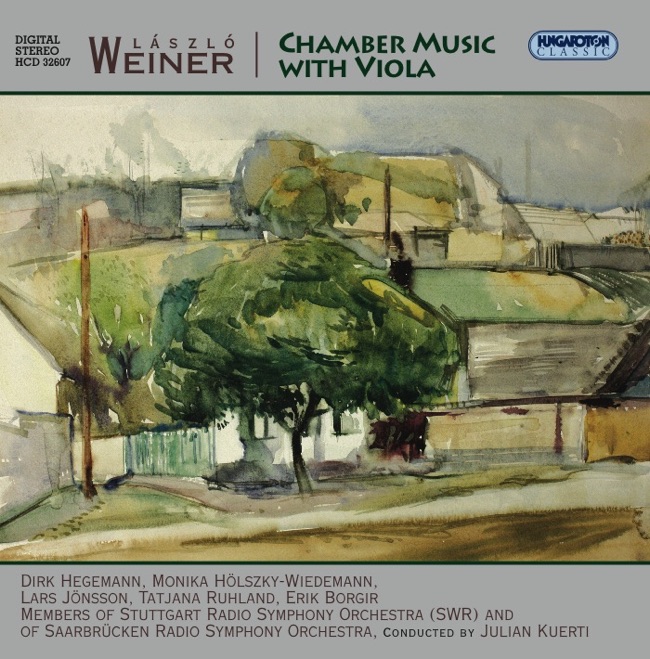 May 12, 2009
Artist Info
Role:ComposerCountry: HungaryBirth:April 9, 1916 in Szombathely, HungaryDeath:July 25, 1944 in Lukov, UkraineLászló Weiner was a Hungarian composer and pianist who was born on April 16, 1916, in Budapest, Hungary. He was the son of a prominent Jewish family, and his father was a well-known physician. Weiner showed an early interest in music and began studying piano at the age of six. He later studied composition with Zoltán Kodály and piano with Béla Bartók. Weiner's musical career began in the 1930s when he became a member of the Young Composer's Group, which was founded by Kodály. The group was dedicated to promoting the work of young Hungarian composers, and Weiner quickly became one of its most promising members. In 1937, he won the Franz Liszt Prize for his Piano Sonata No. 1, which was his first major composition. During World War II, Weiner was forced to flee Hungary due to the Nazi occupation. He spent several years in Switzerland, where he continued to compose and perform. In 1946, he returned to Hungary and became a professor at the Franz Liszt Academy of Music in Budapest. He remained at the academy for the rest of his life, teaching composition and piano. Weiner's music is characterized by its lyrical melodies, rich harmonies, and complex rhythms. He was heavily influenced by the folk music of Hungary and other Eastern European countries, and his compositions often incorporate elements of these musical traditions. He was also influenced by the music of Bartók and Kodály, as well as by the works of Bach, Beethoven, and Brahms. One of Weiner's most famous works is his Piano Concerto No. 2, which he composed in 1948. The concerto is a virtuosic showcase for the soloist, with fast runs and intricate passagework. It also features a lush, romantic second movement and a lively, dance-like finale. The concerto has been performed by many of the world's leading pianists, including György Cziffra and Zoltán Kocsis. Another notable work by Weiner is his String Quartet No. 2, which he composed in 1952. The quartet is a complex and challenging work, with intricate counterpoint and shifting harmonies. It is also deeply emotional, with moments of intense passion and moments of quiet introspection. The quartet has been performed by many of the world's leading string quartets, including the Emerson Quartet and the Takács Quartet. Weiner also composed several works for orchestra, including his Symphony No. 1, which he composed in 1955. The symphony is a grand and sweeping work, with lush orchestration and soaring melodies. It is also deeply emotional, with moments of intense drama and moments of quiet contemplation. The symphony has been performed by many of the world's leading orchestras, including the Berlin Philharmonic and the New York Philharmonic. In addition to his compositions, Weiner was also a highly respected pianist. He performed extensively throughout Europe and the United States, and was known for his virtuosic technique and sensitive interpretations. He was particularly admired for his performances of the music of Bach, Beethoven, and Brahms. Weiner's life and career were tragically cut short when he died of a heart attack on September 11, 1949, at the age of 33. Despite his short life, he left behind a rich legacy of music that continues to be performed and admired today. His works are a testament to his talent and his deep love of music, and they remain an important part of the classical music repertoire.More....
Recent Artist Music






Copyright Ⓒ 2013 Davinci Finger. All rights reseved
Service Terms & Policy