


Dulcie Holland
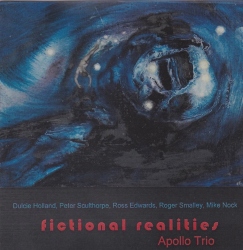
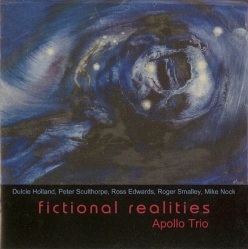
Released Album
Chamber
-
 March 6, 2020
 -
 March 15, 2019
Artist Info
Role:ComposerBirth:1913Death:2000Period:ModernGenre:ChamberKeyboardDulcie Holland was a prominent Australian composer, music educator, and writer. She was born on April 22, 1913, in Sydney, Australia, to a family of musicians. Her father, Albert Holland, was a violinist, and her mother, Ethel, was a pianist. Dulcie showed an early interest in music and began playing the piano at the age of four. She later learned to play the violin and the viola. Holland attended the Sydney Conservatorium of Music, where she studied composition with Frank Hutchens and Alfred Hill. She also studied piano with Winifred Burston and violin with Henri Verbrugghen. In 1934, she graduated with a diploma in music and won the Conservatorium's medal for composition. After graduation, Holland worked as a freelance composer and music teacher. She also wrote music criticism for various newspapers and magazines. In 1936, she married the composer and music educator, Roy Agnew. The couple had two children, a son, Peter, and a daughter, Jennifer. Holland's early compositions were influenced by the neoclassical style of Stravinsky and Hindemith. Her first major work, the String Quartet No. 1, was premiered in 1935 and received critical acclaim. She went on to compose a number of chamber works, including a second string quartet, a piano trio, and a sonata for violin and piano. In the 1940s, Holland's style began to evolve, and she became interested in incorporating Australian folk music into her compositions. She was one of the first Australian composers to do so, and her work helped to establish a distinctively Australian classical music tradition. Her most famous work from this period is the Sonata for Flute and Piano, which incorporates Aboriginal melodies and rhythms. Holland's music was also influenced by her interest in literature and poetry. She often set poems to music, including works by Shakespeare, Yeats, and Blake. Her song cycle, The Darkling Thrush, based on the poem by Thomas Hardy, is considered one of her finest works. In addition to her work as a composer, Holland was a respected music educator. She taught at the Sydney Conservatorium of Music from 1946 to 1974 and was the first woman to hold a full-time teaching position there. She also wrote several influential textbooks on music theory and composition, including Harmony, Counterpoint, and Orchestration. Holland's contributions to Australian music were recognized with numerous awards and honors. In 1970, she was made a Member of the Order of the British Empire (MBE) for her services to music. In 1983, she was awarded the Order of Australia (AO) for her contributions to music education. She was also a Fellow of the Australian Society of Musicology and Composition and a Fellow of the Royal Society of Arts. Dulcie Holland died on August 21, 2000, at the age of 87. She left behind a legacy of music that continues to be performed and studied today. Her work helped to establish a distinctively Australian classical music tradition and inspired generations of composers and musicians.More....
Copyright Ⓒ 2013 Davinci Finger. All rights reseved
Service Terms & Policy