


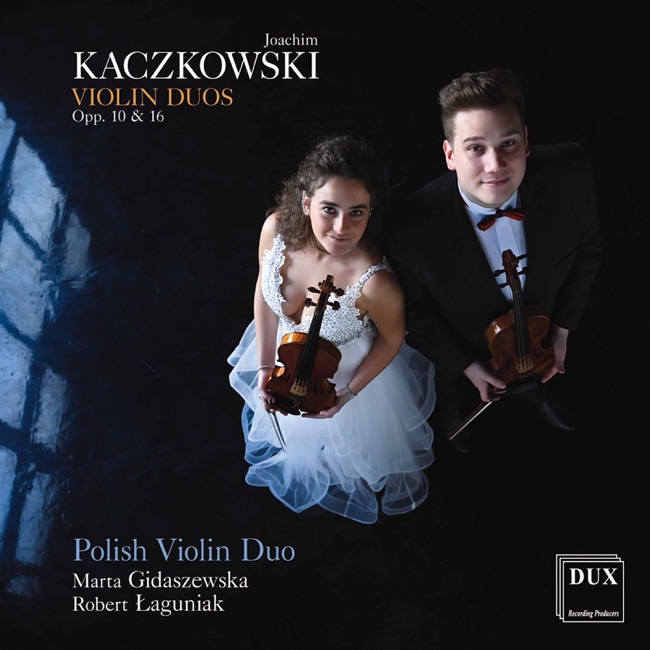
Joachim Kaczkowski
Artist Info
Role:ComposerBirth:1789Death:1829 in Warsaw, PolandJoachim Kaczkowski was a Polish composer and pianist who lived from 1885 to 1957. He was born in Warsaw, Poland, and showed an early interest in music. His parents recognized his talent and encouraged him to pursue his passion for music. Kaczkowski began his musical education at the Warsaw Conservatory, where he studied piano and composition. Kaczkowski's early compositions were heavily influenced by the Romantic era, particularly the works of Chopin and Liszt. He was also influenced by the music of his native Poland, incorporating elements of Polish folk music into his compositions. Kaczkowski's early works were well-received, and he quickly gained a reputation as a talented composer. In 1910, Kaczkowski moved to Paris to further his musical education. He studied with some of the most prominent composers of the time, including Maurice Ravel and Claude Debussy. Kaczkowski's time in Paris was a period of great growth and experimentation for him. He began to incorporate elements of Impressionism and Modernism into his compositions, creating a unique and innovative style. Kaczkowski's most famous work is his Piano Concerto No. 1, which he composed in 1921. The concerto is a virtuosic showcase for the soloist, with intricate and challenging piano passages. The work is also notable for its use of Polish folk melodies, which give the piece a distinctly nationalistic flavor. The concerto was premiered in Warsaw in 1922, and was an immediate success. It has since become one of the most popular piano concertos in the repertoire. Kaczkowski's other notable works include his Symphony No. 1, which he composed in 1925. The symphony is a grand and sweeping work, with lush orchestration and soaring melodies. The work is also notable for its use of Polish folk themes, which give the piece a distinctly nationalistic flavor. The symphony was premiered in Warsaw in 1926, and was well-received by audiences and critics alike. Kaczkowski's later works were more experimental and avant-garde, reflecting his interest in Modernism and atonality. His Piano Sonata No. 2, composed in 1935, is a prime example of this style. The work is dissonant and challenging, with complex rhythms and unconventional harmonies. The sonata was not well-received at the time of its premiere, but has since been recognized as a groundbreaking work of Modernism. Kaczkowski's legacy as a composer is significant. He was one of the most important Polish composers of the early 20th century, and his works continue to be performed and studied today. His use of Polish folk themes in his compositions helped to establish a nationalistic style of music in Poland, and his experimentation with Modernism and atonality helped to push the boundaries of classical music. Kaczkowski's contributions to the world of classical music are significant, and his legacy continues to inspire musicians and composers today.More....
Copyright Ⓒ 2013 Davinci Finger. All rights reseved
Service Terms & Policy