


Ernst Fischer
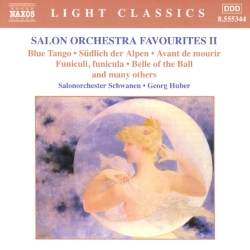
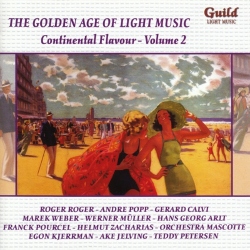
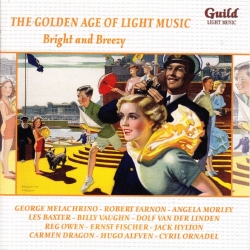
Released Album
Orchestral
-
-
 July 4, 2011
 -
 January 15, 2011
 -
 February 4, 2002
Artist Info
Role:ComposerBirth:1900Death:1975Period:ModernGenre:OrchestralErnst Fischer was a German composer and pianist who lived from 1900 to 1975. He was born in the city of Leipzig, which was a hub of musical activity at the time. His father was a music teacher, and his mother was a singer, so it was natural for him to be exposed to music from a young age. Fischer showed an early aptitude for the piano, and he began taking lessons at the age of six. Fischer's musical education continued throughout his childhood and adolescence. He studied at the Leipzig Conservatory, where he was taught by some of the most prominent musicians of the day. He also attended the Hochschule für Musik in Berlin, where he studied composition with Franz Schreker. Fischer's early works were heavily influenced by the German Romantic tradition, and he was particularly drawn to the music of Robert Schumann and Johannes Brahms. Fischer's career as a composer began to take off in the 1920s. He was awarded several prizes for his compositions, and his music was performed by some of the leading orchestras and ensembles of the day. In 1927, he was appointed as a professor of composition at the Leipzig Conservatory, where he remained for the rest of his career. Fischer's music is characterized by its lyricism, its harmonic richness, and its emotional depth. He was particularly skilled at writing for the piano, and many of his works are written for solo piano or piano and orchestra. His music is often compared to that of Brahms, but it also shows the influence of other composers such as Schumann, Chopin, and Debussy. One of Fischer's most famous works is his Piano Concerto No. 1, which was composed in 1930. The concerto is a virtuosic showcase for the soloist, with a sweeping first movement, a lyrical second movement, and a lively finale. The concerto was premiered by the Leipzig Gewandhaus Orchestra, with Fischer himself as the soloist. Another notable work by Fischer is his Symphony No. 1, which was composed in 1935. The symphony is a large-scale work that showcases Fischer's skill as an orchestrator. The first movement is a dramatic and powerful statement, while the second movement is a lyrical and introspective meditation. The third movement is a lively scherzo, and the final movement is a triumphant conclusion. Fischer's music was well-received during his lifetime, but it fell out of favor after World War II. This was partly due to the changing musical tastes of the time, but it was also due to Fischer's association with the Nazi regime. Fischer was a member of the Nazi party, and he composed several works that were explicitly political in nature. This has led to some controversy surrounding his legacy, and his music is still not widely performed today. Despite this, Fischer remains an important figure in the history of German music. His compositions are a testament to the rich tradition of German Romanticism, and they continue to be admired for their beauty and emotional power. While his political views may be problematic, his music remains a valuable contribution to the classical repertoire.More....
Recent Artist Music
2
2:45
Copyright Ⓒ 2013 Davinci Finger. All rights reseved
Service Terms & Policy