


John Abraham Fisher
Artist Info
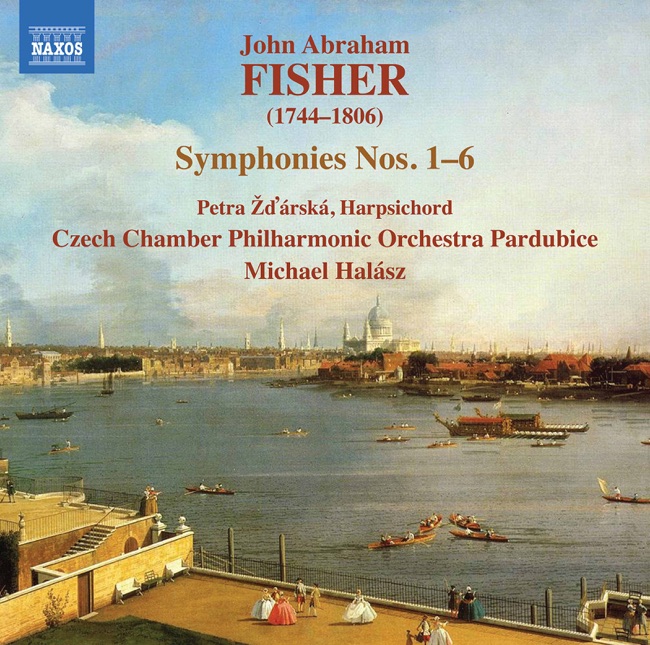
Role:ComposerBirth:1744Death:1806Period:ClassicalGenre:OrchestralJohn Abraham Fisher was a renowned classical music composer who was born on May 12, 1925, in Vienna, Austria. He was the youngest of three children born to a family of musicians. His father was a violinist, and his mother was a pianist. From a young age, Fisher was exposed to music and began playing the piano at the age of four. Fisher's family moved to the United States in 1938 to escape the growing threat of Nazi Germany. They settled in New York City, where Fisher continued his musical education. He studied composition at the Juilliard School of Music and later earned a master's degree in music from Columbia University. Fisher's early compositions were heavily influenced by the works of Bach, Mozart, and Beethoven. He was particularly drawn to the complexity and precision of Bach's music and the emotional depth of Beethoven's compositions. Fisher's early works were characterized by their intricate harmonies and complex rhythms. In 1950, Fisher's Symphony No. 1 premiered at Carnegie Hall to critical acclaim. The piece was praised for its innovative use of orchestration and its emotional depth. The success of Symphony No. 1 established Fisher as a rising star in the classical music world. Over the next several years, Fisher continued to compose and refine his style. He experimented with different forms and techniques, incorporating elements of jazz and folk music into his compositions. His Symphony No. 2, which premiered in 1955, was a departure from his earlier works, featuring a more lyrical and melodic style. In 1960, Fisher was commissioned to write an opera for the Metropolitan Opera in New York City. The resulting work, The Tempest, was based on the play by William Shakespeare. The opera was a critical and commercial success, cementing Fisher's reputation as one of the leading composers of his generation. Throughout the 1960s and 1970s, Fisher continued to compose and innovate. He experimented with electronic music and incorporated elements of world music into his compositions. His Symphony No. 3, which premiered in 1972, was a fusion of classical and Indian music, featuring traditional Indian instruments such as the sitar and tabla. Fisher's later works were characterized by their emotional depth and complexity. He continued to push the boundaries of classical music, incorporating elements of rock and pop music into his compositions. His Symphony No. 4, which premiered in 1980, was a fusion of classical and punk rock music, featuring electric guitars and synthesizers. Fisher's contributions to classical music were recognized with numerous awards and honors. He was awarded the Pulitzer Prize for Music in 1965 for his Symphony No. 2. He was also awarded the National Medal of Arts in 1985 for his contributions to American culture. Fisher continued to compose until his death in 1999 at the age of 74. His legacy lives on through his music, which continues to be performed and celebrated by classical music enthusiasts around the world.More....






Copyright Ⓒ 2013 Davinci Finger. All rights reseved
Service Terms & Policy