


Julius Burger
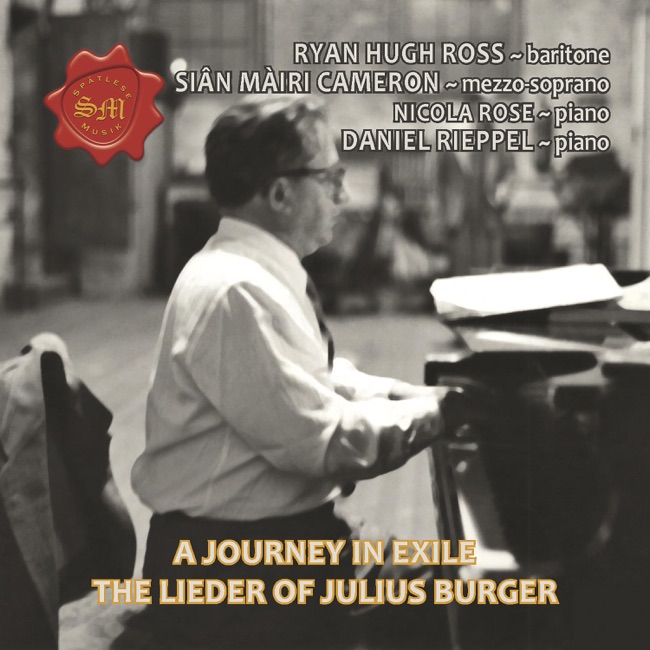
Artist Info
Role:ComposerJulius Burger was a classical music composer born on August 22, 1887, in Vienna, Austria. He was the son of a wealthy Jewish family and grew up in a musical household. His father was a successful businessman who loved music and played the piano, while his mother was a talented singer. From a young age, Julius showed a great interest in music and began taking piano lessons at the age of six. As a child, Julius was exposed to the works of great composers such as Mozart, Beethoven, and Brahms. He was particularly drawn to the music of Wagner and became fascinated with the way in which Wagner's music was able to convey powerful emotions and tell stories. This early exposure to classical music would have a profound impact on Julius and would shape his future as a composer. Julius continued to study music throughout his childhood and adolescence, and by the time he was a teenager, he had become an accomplished pianist and composer. He began to perform in public and quickly gained a reputation as a talented musician. In 1905, he enrolled at the Vienna Conservatory, where he studied composition with the renowned composer Franz Schreker. During his time at the conservatory, Julius began to experiment with different musical styles and techniques. He was particularly interested in the use of dissonance and atonality, which were relatively new concepts in classical music at the time. He also began to incorporate elements of folk music into his compositions, which gave his music a unique and distinctive sound. After completing his studies at the conservatory, Julius began to establish himself as a composer. He wrote a number of works for piano, including several sonatas and a set of variations on a theme by Brahms. He also wrote a number of chamber works, including a string quartet and a piano trio. In 1914, Julius was drafted into the Austrian army to fight in World War I. He served as a medic and was stationed on the Italian front. During his time in the army, he continued to compose music whenever he had the opportunity. He wrote a number of songs and piano pieces, as well as a string quartet that he dedicated to his fellow soldiers. After the war, Julius returned to Vienna and resumed his career as a composer. He continued to write music in a variety of styles, but he was particularly drawn to the music of the Second Viennese School, which included composers such as Arnold Schoenberg, Alban Berg, and Anton Webern. He became friends with these composers and was influenced by their use of atonality and serialism. In the 1920s and 1930s, Julius wrote a number of important works, including a piano concerto, a violin concerto, and a ballet. He also wrote a number of songs and choral works, many of which were based on texts by contemporary poets. His music was well-received by critics and audiences alike, and he became known as one of the leading composers of his generation. However, Julius's career was cut short by the rise of the Nazi party in Germany. In 1938, Austria was annexed by Germany, and Julius, who was Jewish, was forced to flee the country. He emigrated to the United States, where he settled in New York City. In the United States, Julius continued to compose music, but he struggled to establish himself in the competitive American music scene. He wrote a number of works, including a piano sonata and a string quartet, but his music was not as well-received as it had been in Europe.More....
Recent Artist Music
Copyright Ⓒ 2013 Davinci Finger. All rights reseved
Service Terms & Policy