


Gracià Tarragó
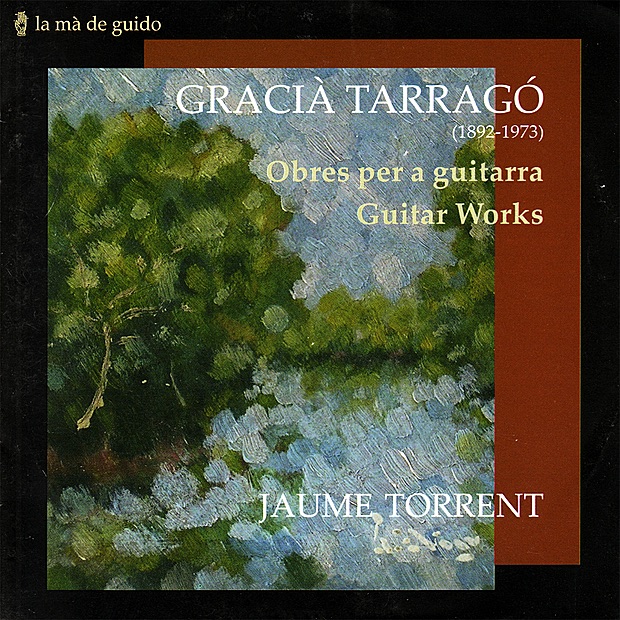
Artist Info
Role:ComposerCountry: SpainBirth:1892 in CastellóDeath:1973Gracià Tarragó was a Spanish composer and pianist who was born on January 3, 1912, in the town of Lleida, Catalonia. He was the youngest of six children and grew up in a family that was passionate about music. His father, a music teacher, taught him to play the piano at a young age, and he quickly showed a natural talent for the instrument. Tarragó's musical education began at the Lleida Conservatory, where he studied piano, harmony, and composition. He later continued his studies at the Barcelona Conservatory, where he was a student of the renowned composer Joaquín Rodrigo. Tarragó's early compositions were heavily influenced by the music of his Catalan heritage, and he often incorporated traditional Catalan folk melodies into his works. In 1936, Tarragó moved to Paris to study with the composer and pianist Nadia Boulanger. Boulanger was a highly respected teacher who had taught many of the leading composers of the time, including Aaron Copland, Philip Glass, and Quincy Jones. Under her guidance, Tarragó developed a more modern and experimental style of composition, which incorporated elements of jazz and other popular music genres. During his time in Paris, Tarragó also became involved in the city's vibrant artistic community. He collaborated with a number of artists and writers, including the surrealist painter Salvador Dalí and the poet Federico García Lorca. He also performed regularly as a pianist, both as a soloist and as an accompanist for other musicians. In 1940, Tarragó returned to Spain, where he continued to compose and perform. He became a professor of composition at the Madrid Conservatory, where he taught many of the leading Spanish composers of the next generation. He also continued to collaborate with other artists, including the filmmaker Luis Buñuel and the poet Pablo Neruda. Tarragó's music was highly regarded by his contemporaries, and he received numerous awards and honors throughout his career. In 1952, he was awarded the National Music Prize by the Spanish government, and in 1962 he was elected to the Royal Academy of Fine Arts of San Fernando. He also received international recognition, including the Grand Prix de la Ville de Paris in 1955 and the UNESCO International Music Prize in 1961. Tarragó's compositions are characterized by their lyrical melodies, rich harmonies, and inventive use of rhythm and texture. He was particularly skilled at writing for the piano, and many of his works for the instrument are considered to be among the finest in the Spanish classical repertoire. His music often reflects his Catalan heritage, with many of his works incorporating traditional Catalan folk melodies and rhythms. Some of Tarragó's most notable works include his Piano Concerto No. 1, which was premiered in 1947 and is considered to be one of the finest Spanish piano concertos of the 20th century. He also wrote a number of works for solo piano, including his Suite Catalana, which is based on traditional Catalan folk songs and dances. Other notable works include his String Quartet No. 1, his Sonata for Violin and Piano, and his Symphony No. 1. Tarragó continued to compose and perform until his death in 1973. His legacy as one of Spain's greatest composers and pianists continues to be celebrated today, and his music remains an important part of the Spanish classical repertoire.More....
Recent Artist Music
Copyright Ⓒ 2013 Davinci Finger. All rights reseved
Service Terms & Policy